
Indonesia Vows to Keep Budget Deficit in Check Amid Global Economic Jitters
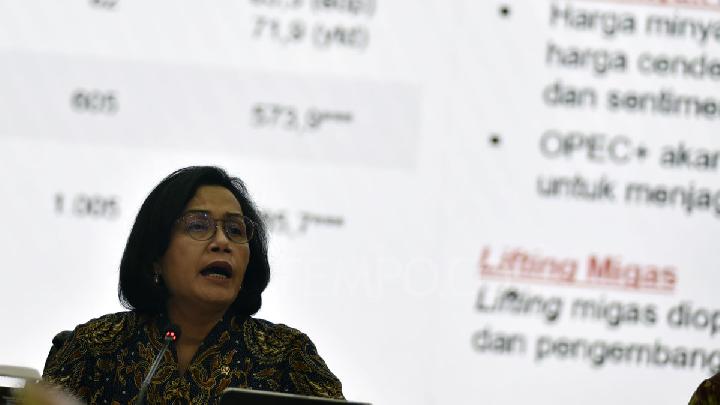
As worldwide economic uncertainty persists, Indonesia’s Finance Minister, Sri Mulyani Indrawati, has pledged to maintain a tight rein on the country’s budget deficit. This commitment aims to fortify the nation’s financial stability, navigating a volatile global landscape.
Maintaining Fiscal Discipline
During a meeting with the International Monetary Fund (IMF), represented by First Deputy Managing Director Gita Gopinath, Sri Mulyani reiterated that the state budget deficit would stay below 3 percent. The primary focus of discussions centered on global economic instability, compelling nations to prioritize domestic economic resilience. In response, Indonesia is committed to safeguarding its state budget. Sri Mulyani shared this information on her Instagram account on Friday, June 20, 2025.
“In this context, Indonesia is committed to maintaining the health of the state budget as a measure to anticipate various global risks,”
—Sri Mulyani, Finance Minister
The state budget is being managed cautiously, safeguarding public purchasing power through various incentives, which will hopefully stimulate household consumption. Indonesia is also working to keep the deficit under control, as mandated by the state budget law. The current deficit is well below the target set by the state budget law, with a deficit of Rp21 trillion, or 0.09 percent of the Gross Domestic Product (GDP), as of May 2025. The World Bank forecasts Indonesia’s GDP to grow by 5.1% in 2025 (World Bank 2024).
Strategic Financial Planning
Sri Mulyani emphasized that Indonesia remains optimistic while exercising caution to ensure development continues despite external challenges. She made a similar statement at the Economic Update 2025 forum in Jakarta on Wednesday, June 18, 2025. According to her, today’s global uncertainty could lead to lasting changes, necessitating a state budget prepared to absorb future pressures. Under President Prabowo Subianto‘s leadership, Indonesia is progressing its national vision, Asta Cita, with the state budget playing a crucial role in supporting key programs. The state budget is designed to be a countercyclical tool, ready to mitigate shocks.
State revenue reached Rp995.3 trillion, while expenditures totaled Rp1,016.3 trillion. Despite this, the deficit remains significantly below the target outlined in the state budget law: Rp616.2 trillion or 2.53 percent of GDP.
