
Fighting in DR Congo Hampers Ebola Response, WHO Says
The Democratic Republic of Congo recorded 12,021 confirmed Ebola cases and 5,904 deaths as of November 24, according to government data cited by Latin Times.
- The outbreak’s 49.1 percent fatality rate makes it the second-deadliest toll in the history of the disease worldwide, according to Latin Times.
- Fighting between the army and rebels resumed on Thursday near Bunia, disrupting contact tracing and forcing evacuations, NPR reported.
- The World Health Organization reported that more than 80 percent of newly reported infections continue to be detected outside known contact lists.
Armed Conflict Threatens Bunia Hub
Clashes between the Congolese army and the Convention pour la révolution populaire (CRP) resumed on Thursday morning in Iga-Barrière, a mining town roughly 15 miles north of Bunia, NPR reported. The fighting sent new waves of displaced people toward Bunia, which serves as the capital of Ituri province and a major hub for the Ebola response.
The CRP was founded last year by former warlord Thomas Lubanga, who was convicted by the International Criminal Court in 2012 of recruiting children under 15 and using them in fighting, according to NPR. The World Health Organization said that ongoing violence and logistical hurdles continue to hamper the delivery of medical supplies and testing capacity.
WHO has updated its recommendations for the #Ebola outbreak caused by Bundibugyo virus disease in the Democratic Republic of Congo (#DRC), following a meeting of its Emergency Committee convened by @DrTedros under the International Health Regulations (2005). The Ebola outbreak… pic.twitter.com/dU9rzvMi23
“They were caught really in the crossfire, very intense fighting, and we managed to evacuate them,” Catherine Smallwood, the WHO’s Ebola incident manager, said in remarks reported by the Associated Press and Bignewsnetwork.
Vaccine Trials and Outbreak Pressures
The outbreak is driven by the rare Bundibugyo virus strain, which has no approved medical countermeasures, though research is underway on potential vaccines including Ervebo, an mRNA-based vaccine from Moderna, and a University of Oxford vaccine specifically targeting Bundibugyo, according to health officials.
Clinical trials for treatments and ring vaccinations operate out of Bunia, where contact tracing relies on monitoring exposed people that the World Health Organization says fighting has disrupted.
Recommendations of the IHR Emergency Committee on Bundibugyovirus https://t.co/XTtcnpNf5Z Biggest concerns: the security situation, delays in case finding and contact tracing, and healthcare associated transmission
“The physical access to some of the affected areas is severely compromised,” the British aid worker Anna Halford, who coordinates MSF's response to the outbreak across the DRC, said.
Professor Lucille Blumberg, chair of the WHO Emergency Committee, expressed deep concern over continued transmission and high death rates amid insecurity that makes every aspect of response more difficult. WHO Director-General Dr. Tedros Adhanom Ghebreyesus determined that the epidemic continues to constitute a public health emergency of international concern following recommendations from the Emergency Committee.
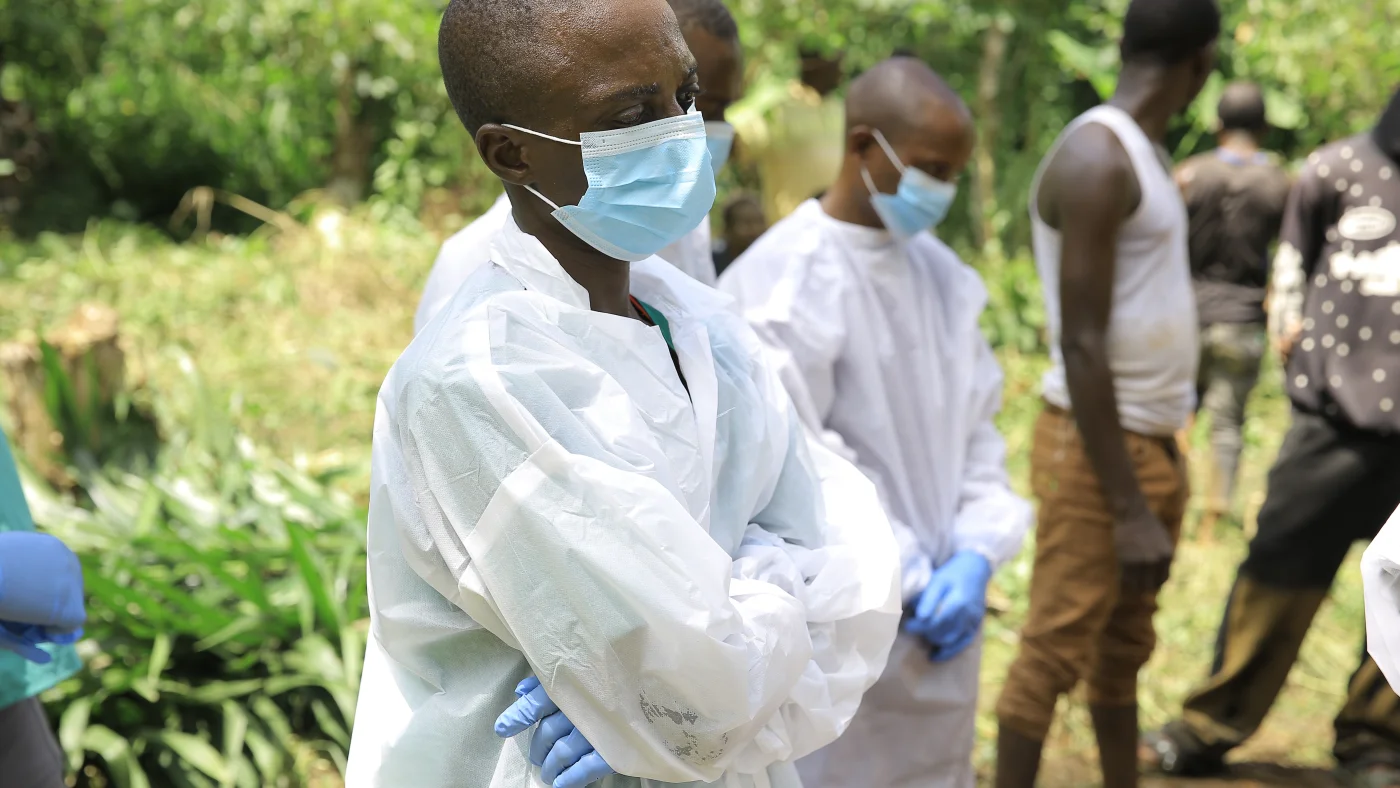
Stigma, Mistrust, and Aid Gaps
“The people here live in poverty and insecurity; every day is a struggle to survive,” said Congolese physician Alex Bonane Murutsi, who works at the Ebola treatment centre in Bunia.
Financial and logistical strains have further complicated containment. Jeremy Konyndyk, who led the United States response to the West African Ebola outbreak in 2014, argued that the dismantling of USAID contributed to delayed detection and shortages of protective equipment, Al Jazeera reported. Meanwhile, international donors have pledged resources, but Javid Abdelmoneim, the international president of Médecins Sans Frontières (MSF), warned that funds often fail to reach front-line responders.
The Convention pour la révolution populaire (CRP) is an armed movement established in March 2025 that opposes the government of President Félix Tshisekedi. As of November 2026, the group characterizes its recent territorial advances in Ituri as defensive reactions against recurrent attacks by the FARDC army and its allies.
Despite these hostilities, the organization maintains that it remains committed to a peace process mediated by Uganda, citing a commitment to ceasefire agreements signed during an October 2026 meeting in Entebbe. By late November 2026, the movement issued a directive to halt its advance toward Bunia, describing the decision as a gesture of respect for its stated peace obligations.
Every order matters in the #Ebola response in #DRC. Deployed to Bunia, Ituri Province, Lucille Kavira coordinates procurement and deliveries to help ensure response teams have the resources they need, when they need them. pic.twitter.com/Ofb5rAmB42
“Despite the vast amounts of money provided for the response, many front-line responders are left trying to contain the outbreak with empty hands and empty pockets,” Abdelmoneim said in an MSF statement cited by Al Jazeera.