
Lisbon Planners Envision Car-Free Streets for Cooler City
Urban planners in Lisbon are exploring strategies to combat rising temperatures by reimagining streets without heavy car traffic, creating greener, cooler public spaces. The initiative focuses on increasing vegetation and reducing the urban heat island effect.
Rethinking Urban Space
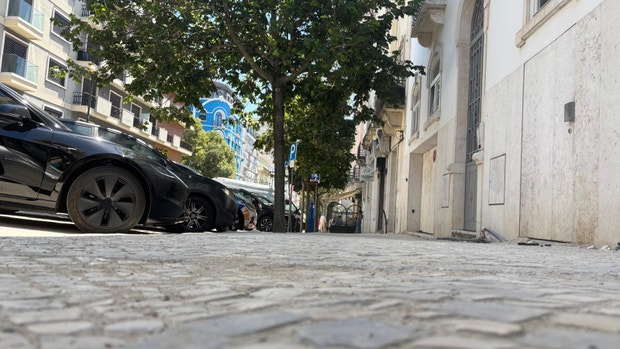
Daniel Casas Valle, an urban planner, envisions Lisbon’s central avenues transformed into spaces for markets, fairs, and community events, achieved by opening streets on Sundays to start. He emphasizes the existing afforestation and shade as a foundation for change.
“It’s a sea of opportunities because we have the afforestation, the shadow is already here,”
says Casas Valle, highlighting the potential for cooling the city.
Regarding residents’ parking concerns, Casas Valle acknowledges the emotional aspect but suggests shifting away from private car dependency towards public transport and car sharing. A 2023 study by the European Environment Agency found that Lisbon has the 13th worst air quality among European capital cities, with traffic being a major contributor. EEA 2023.
Transforming Specific Locations
Casas Valle also critiques the wide roads on Tomás Ribeiro Street, advocating for more trees to provide shade. He praises Largo São Sebastião da Pedreira, renewed a year ago, as a good example of urban space transformation, while noting that newly planted trees need time to mature.
“We have to have a little patience,”
asks Daniel Casas Valle, remembering that “they bring very beautiful things to these spaces.”
Expert Group Strategy
Daniel Casas Valle is part of an expert group developing an urban strategy coordinated by Architecture Studio Hori-Zonte. Diogo Lopes Teixeira, co-founder of the studio, recognizes the disparities in heat distribution across Lisbon, influenced by topography, building density, and tree coverage, which can create temperature differences of up to ten degrees.
“There are greener zones and with another type of natural ventilation, much because of the city’s topography, the density of buildings or the tree coverage,”
he explains.
Lopes Teixeira acknowledges Lisbon’s efforts in combating climate change but stresses the need for “strategies [that] are short and need more applicable measures.”
He advocates for a gradual reduction in car use to encourage people to enjoy green spaces.
Looking Ahead
The urban strategy, involving experts such as scientist Filipe Duarte Santos and architects Manuel Aires Mateus and Inês Lobo, is set to be presented at the Archi Summit in Lisbon. The group hopes the strategy will guide sustainable policies and projects in the city.
