
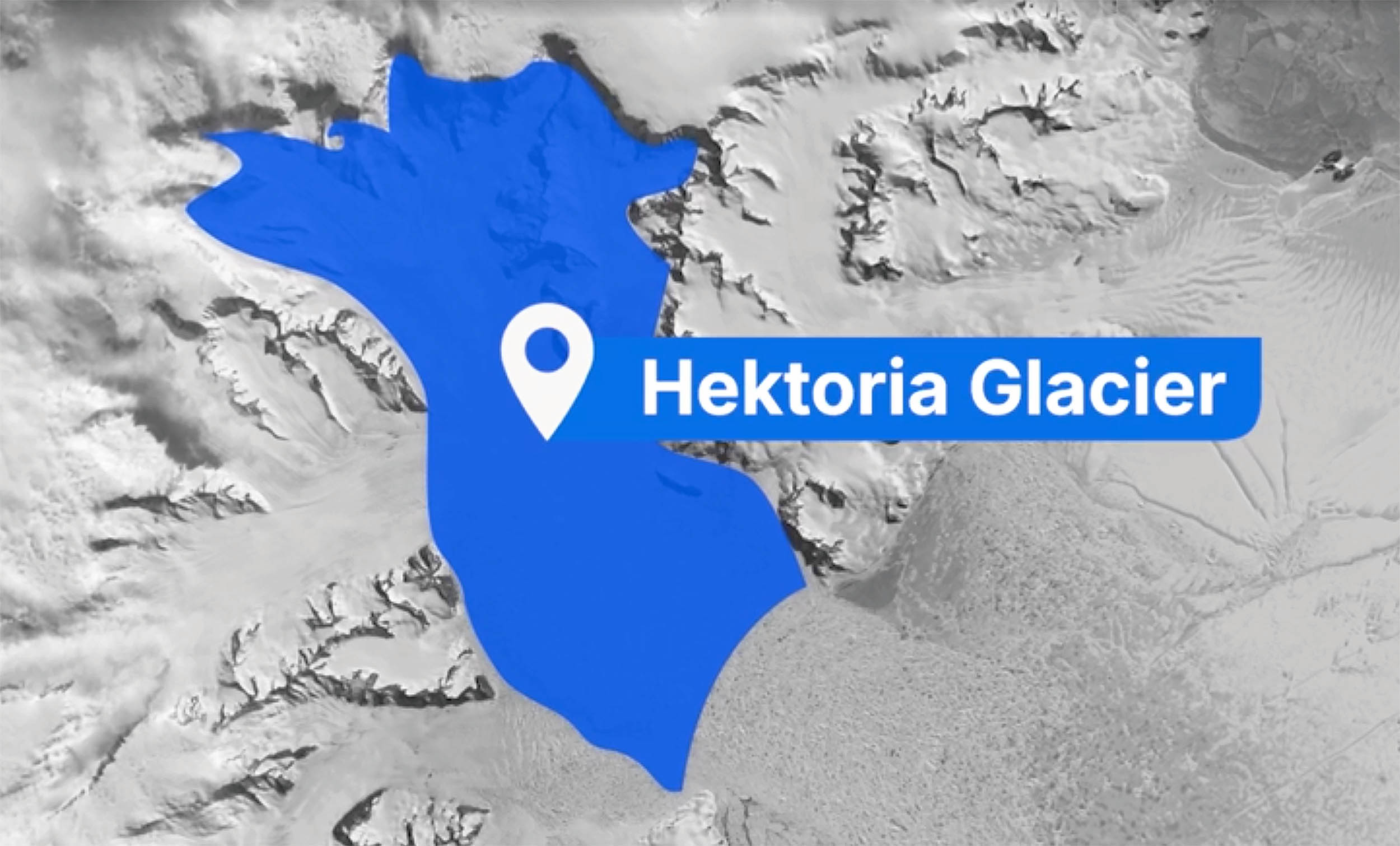
Antarctic Glacier Suffers Fastest Retreat on Record, Raising Sea Level Rise concerns
Antarctica – Scientists have documented the most rapid glacial retreat ever recorded, observing the near-total collapse of Hektoria Glacier on the Antarctic Peninsula. The glacier experienced a dramatic acceleration in ice loss, prompting researchers to reassess models of glacial behavior and potential sea-level rise impacts.
The collapse began with a fast ice break-up in March 2022,initiating a retreat of the glacier’s ice tongue. By March 2023, the glacier had lost a meaningful portion of its ice plain, shifting its terminus to a more stable location. The event was notably striking due to the glacier’s unusual foundation - a flat, gently sloping seabed. this configuration allowed the glacier to rapidly lift off the seafloor as it thinned, triggering a cascade of instability and accelerating its disintegration.
Researchers pinpointed the key factor as the glacier “flotation” on the flat bed, leading to a forward toppling of thick ice slabs and a surge in glacial movement. This process unfolded at an unprecedented rate, exceeding previous estimates of glacial retreat speed.
“These areas are early-warning zones, where a few feet of thinning could cause glaciers to lift off the seafloor and break apart like Hektoria did,” explained researchers.
The findings, published in Nature Geoscience, highlight the need to refine climate models to account for these sudden buoyancy events. Current projections often treat glacial retreat as a gradual process, failing to capture the potential for tenfold acceleration once flotation begins. Incorporating this new understanding could significantly alter timelines for future sea-level rise, particularly in West Antarctica, where ice streams are already nearing critical tipping points.
Future research will focus on identifying other antarctic glaciers situated on similar flat beds using radar, seismic data, and satellite altimetry.Scientists are also investigating the role of sea ice and ice mélange – a mixture of icebergs and sea ice - in providing backstress to glacier fronts and slowing retreat. The return, or continued absence, of this mélange will be crucial in determining the future stability of vulnerable glaciers.
The study underscores the importance of incorporating sudden flotation, forward toppling, and short-lived surges into glacier models to accurately predict glacial collapse in a warming climate.
