Exxon and Chevron Warn of Imminent Oil Price Surge as Global Inventories Hit Critical Lows
Oil executives from Exxon and Chevron warn of imminent price spikes as global inventories hit critical lows. With the Strait of Hormuz blocked and Strategic Petroleum Reserves depleted, the market’s “shock absorbers” have vanished, threatening a systemic price shock across global energy markets by early June 2026.
The global energy market is currently operating on a knife’s edge. For months, the illusion of stability was maintained through aggressive drawdowns of national stockpiles and a desperate reliance on the U.S. Strategic Petroleum Reserve (SPR). But the buffer is gone. We are no longer talking about theoretical volatility; we are talking about physical exhaustion.
This collapse in inventory creates a violent fiscal vacuum for any company with a heavy energy footprint. When spot prices decouple from futures due to physical scarcity, the resulting margin compression can bankrupt mid-sized industrial players overnight. To survive this, firms are increasingly pivoting toward U.S. Energy Information Administration (EIA) data to time their hedges, while engaging [Risk Management Consultants] to rewrite their procurement strategies in real-time.
The Cushing Collapse and the End of the Buffer
The data coming out of Cushing, Oklahoma—the primary delivery point for West Texas Intermediate (WTI)—is alarming. According to raw data from Kpler, inventories have plummeted from 33 million barrels to roughly 24.5 million in just eight weeks. We are flirting with the 20-million-barrel operational floor. When a hub hits its operational low, the market enters a state of extreme backwardation, where immediate delivery commands a massive premium over future contracts.
Exxon Senior Vice President Neil Chapman didn’t mince words during Thursday’s industry conference. He signaled that the window for a “soft landing” has closed. The debate is no longer whether prices will rise, but whether the spike happens in fourteen days or twenty-one.

The math is brutal.
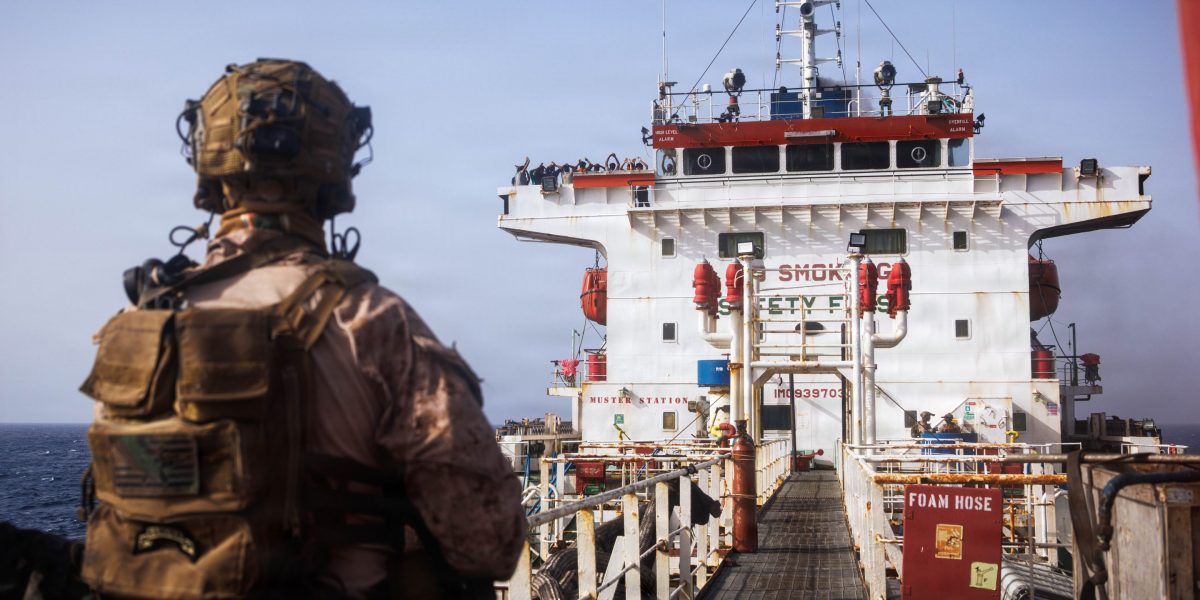
The U.S. Has already bled 50 million barrels from the SPR, leaving the stockpile at 365 million barrels—its lowest point since April 2024. This isn’t just a strategic loss; it’s a loss of geopolitical leverage. Without a reserve to deploy, the U.S. Cannot dampen the price shocks caused by the ongoing blockade of the Strait of Hormuz.
“The market is currently pricing in a geopolitical risk premium, but it hasn’t yet priced in the physical reality of empty tanks,” says Marcus Thorne, a Senior Commodities Strategist at a top-tier global hedge fund. “We are moving from a financial crisis of confidence to a physical crisis of availability.”
The Macro Shift: Three Ways the Energy Paradigm is Breaking
The current deadlock in U.S.-Iran ceasefire talks suggests that the “temporary” nature of this disruption is a myth. We are entering a period of systemic rebalance. This isn’t a dip to be traded; This proves a structural shift in how global industry must perceive energy security.
- The Death of ‘Just-in-Time’ Energy: For decades, the global economy thrived on lean inventories. That era is over. Companies are now forced to transition to a ‘Just-in-Case’ model, requiring massive capital expenditure to build private storage capacities. This shift is driving a surge in demand for [Energy Infrastructure Engineers] capable of designing redundant storage systems that can withstand asymmetrical warfare.
- The Feedstock Pivot: With the Strait of Hormuz remaining a contested waterway, the reliance on Middle Eastern crude is becoming a liability. We are seeing an acceleration in CAPEX toward Permian Basin expansion and North Sea recovery. Per the latest ExxonMobil Investor Relations filings, the focus has shifted aggressively toward low-cost-of-supply assets that bypass traditional maritime chokepoints.
- The Legalization of Force Majeure: As deliveries fail and prices skyrocket, corporate boardrooms are seeing a spike in contract disputes. The inability to fulfill energy-dependent contracts is leading to a wave of litigation. Firms are scrambling to retain [Corporate Legal Counsel specializing in Force Majeure] to insulate themselves from breach-of-contract claims as the supply chain fractures.
Chevron CEO Mike Wirth highlighted the most dangerous element of this trajectory: the “insurance” effect. Once governments realize how close they came to total depletion, they will not simply return to previous levels; they will over-buy to create a larger safety net. This artificial demand spike will keep prices elevated long after the physical blockade is lifted.
The Bottom Line: A New Regional Normal
The financial fallout will extend far beyond the gas pump. When energy costs spike, EBITDA margins for transport, chemicals, and manufacturing are the first to bleed. We are looking at a scenario where the “cost of doing business” is permanently recalibrated upward.

Karen Young of Columbia’s Center on Global Energy Policy describes this as a “systemic rebalance.” In plain English: the cheap energy era that fueled the last thirty years of globalization is dead. We are replacing it with a hardened security state where energy is treated as a weapon of war rather than a commodity of trade.
The firms that survive this will be those that stop waiting for the “return to normal” and start building for the volatility. Whether it’s through aggressive hedging, infrastructure redundancy, or diversifying their supply chains, the cost of inaction is now higher than the cost of investment.
As the market prepares for the June-July price surge, the priority for the C-suite is no longer growth—it is resilience. Finding vetted, high-capacity partners to navigate this volatility is the only viable strategy. For those seeking the institutional expertise required to weather this storm, the World Today News Directory remains the definitive resource for connecting with the B2B firms capable of solving these systemic failures.