Euclid Telescope Discovers the Universe’s Oldest Quasar
Euclid Space Telescope Identifies Oldest Known Quasars
The Euclid space telescope has detected the oldest known quasars in the universe, providing astronomers with data from the early stages of cosmic history. According to reports from NOS and Scientias.nl, these findings bring researchers closer to understanding the “childhood of the universe” by observing extremely distant, high-energy galactic nuclei.
Euclid Mission and Quasar Detection
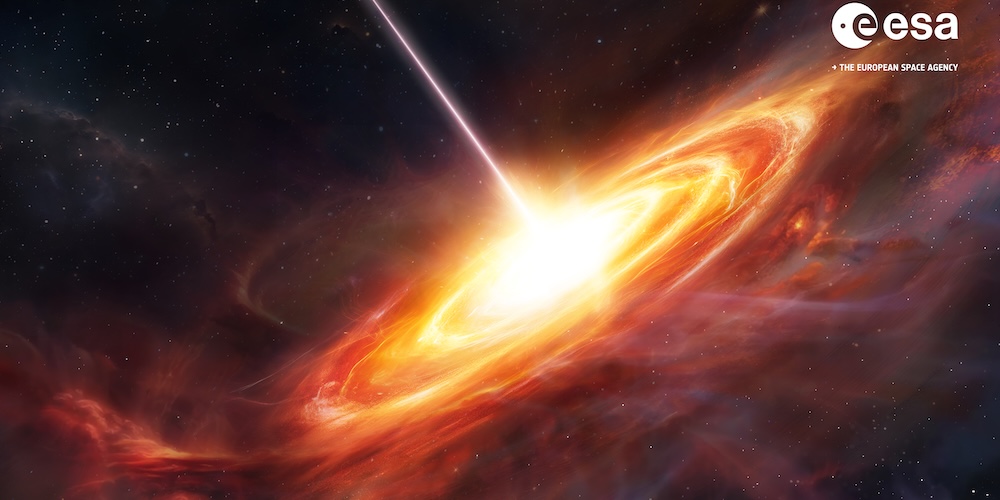
Quasars are the brightest objects in the universe, powered by supermassive black holes at the centers of galaxies that consume vast amounts of gas and dust. Because they emit such intense light, they can be seen across billions of light-years, acting as beacons from the deep past. The Euclid telescope, operated by the European Space Agency (ESA), is specifically designed to map the geometry of the dark universe, but its wide-field survey capabilities have allowed it to identify these ancient objects.

The discovery is described by researchers via Scientias.nl as standing “at the edge of a new cosmic insight.” By identifying these quasars, Euclid allows scientists to probe the environment of the early universe, where the first stars and galaxies were forming.
Impact on Early Universe Research
The detection of these specific quasars is significant because it challenges or refines existing models of how supermassive black holes grew so quickly after the Big Bang. According to NOS, the ability to locate these objects helps astronomers study the transition from the “dark ages” of the universe to the era of reionization, when the first light sources began to clear the cosmic fog of neutral hydrogen.
Unlike telescopes that focus on a single small patch of sky with high resolution, Euclid’s strength lies in its ability to scan vast areas of space. This allows it to find rare, extremely distant quasars that previous missions might have missed due to a limited field of view.
Comparison of Observation Goals
The Euclid mission differs from other deep-space observatories in its primary objective. While the James Webb Space Telescope (JWST) focuses on the detailed infrared composition of specific early galaxies, Euclid is tasked with creating a three-dimensional map of the universe to study dark energy and dark matter. The identification of the oldest quasars is a result of this broad mapping effort, providing a census of the early universe’s most luminous objects.
Data from Euclid will now be used to coordinate follow-up observations with other instruments to analyze the chemical composition and mass of these ancient black holes.