
Six hundred and thirty-two Members of the European Parliament voted on January 21, 2026, to mandate two pieces of cabin baggage free of charge on all flights within Europe. A month later, a Ryanair booking still displays a €12 surcharge for bringing a suitcase onboard. What transpired between the vote and the ticket purchase? The current impasse is the latest chapter in a decade-long legislative struggle.
The European Parliament’s vote on January 21st was decisive: 632 in favor, 15 against, and 9 abstentions. The Parliament adopted its position on the revision of Regulation (EC) No 261/2004, the framework governing air passenger rights since 2004. Here’s the first substantial update to the regulation in over twenty years.
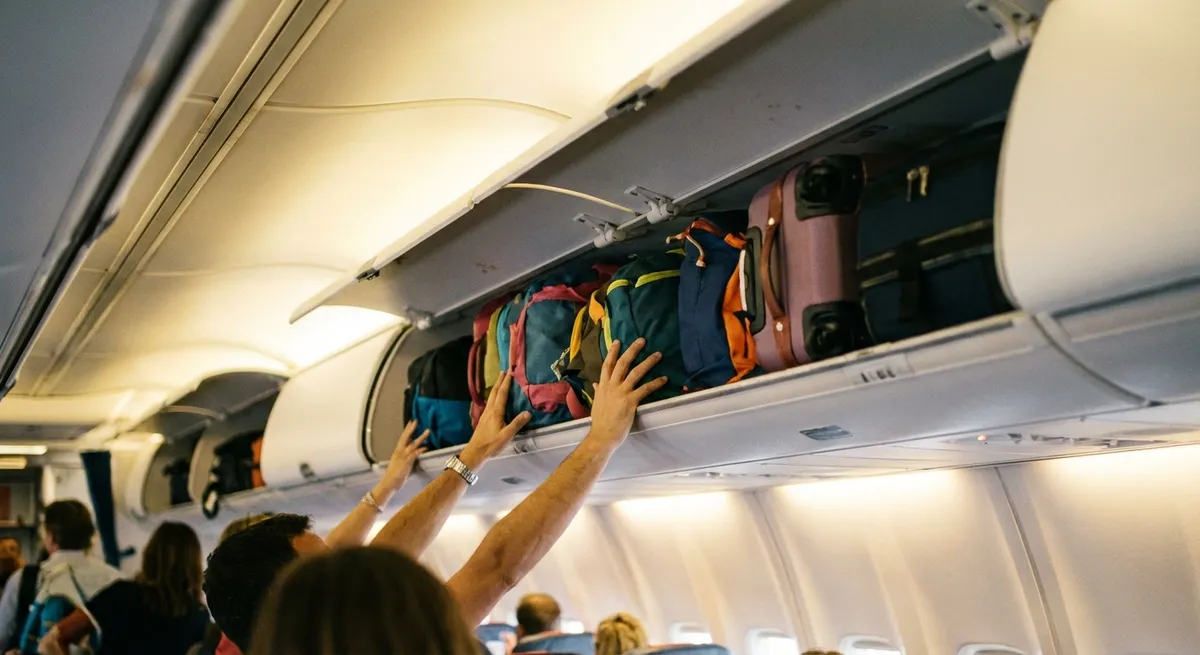
Specifically, MEPs want each passenger to be able to board without extra cost with two items: a personal item (handbag, backpack, laptop bag) and a cabin bag with combined dimensions not exceeding 100 cm (length + width + height) and a maximum weight of 7 kg.
The proposed legislation extends beyond free cabin baggage. It likewise includes maintaining the compensation threshold at 3 hours of delay (€300 to €600 depending on distance), mandatory sending of a pre-filled form within 48 hours of disruption, and the right for families with children under 14 to be seated together without additional fees.
“We are determined to improve, and not weaken, the rights of air passengers,” stated rapporteur Andrey Novakov (PPE, Bulgaria), according to a European Parliament press release.
However, the Council of the European Union, representing member states, is blocking the Parliament’s position. The Council favors a more lenient approach towards airlines, proposing no mandatory form in case of delay (only cancellation), and raising the compensation threshold to 4 or even 6 hours instead of 3. Negotiations between the two institutions stalled in December 2025 due to this fundamental disagreement over the scope of the regulation.
Behind the scenes, airline lobbying is significant. Airlines for Europe (A4E), representing 17 airlines accounting for over 80% of European traffic – including Ryanair, EasyJet, Air France-KLM, and Wizz Air – argues that delays have increased by 114% over fifteen years and that stricter compensation rules “will not make planes arrive faster,” according to a report by Euronews.
Low-cost carriers have reacted strongly. EasyJet CEO Kenton Jarvis labeled the text “terrible for the consumer” and “crazy European legislation,” warning that free cabin baggage would revert to “the days of offloading cabin bags into the hold, one of the main causes of boarding delays,” as reported by The European Conservative. Ryanair defends the principle of choice, stating that “passengers should be free to choose what they want to pay for, and especially what they don’t want to pay for.”
The next step is a “trilogue” – a negotiation involving the Parliament, Council, and European Commission. The Cypriot presidency (January-June 2026) has indicated its intention to restart discussions “as soon as possible.”
However, history suggests caution. The European Commission first proposed a revision of Regulation (EC) No 261/2004 in March 2013. The Parliament adopted its position in 2014. Since then, three Council presidencies have failed to reach an agreement. The dossier was even removed from the Commission’s work program in 2015 before being revived.
A best-case scenario involves a political agreement before June 2026, national transposition within 12 to 24 months, and implementation in 2027 or 2028. A realistic scenario anticipates continued disagreement, referral to a conciliation committee, and implementation delayed until 2028 or 2029. Travelers should not expect this law to affect their summer vacations.
In the meantime, airlines have begun to respond to political and competitive pressure. Since the summer of 2025, the 17 members of A4E have committed to guaranteeing a free personal item of at least 40 × 30 × 15 cm on all their flights. This is a voluntary commitment, not a legal obligation.
As of February 2026, passengers can bring the following onboard for free:
- Ryanair: Personal bag 40 × 30 × 20 cm (under the seat). Cabin bag 55 × 40 × 20 cm = Priority surcharge of €8 to €12.
- EasyJet: Bag 45 × 36 × 20 cm (the most generous of the low-cost carriers). Cabin bag 56 × 45 × 25 cm = surcharge of €20 to €50.
- Transavia: Personal bag + cabin bag included in certain fares since May 2025.
- Air France: Cabin bag 55 × 35 × 25 cm included in all fares.
The dispute extends beyond cabin baggage. It touches upon the low-cost carrier business model, which relies on unbundling: a base fare of €19.99 plus charges for assigned seating, baggage, and priority boarding. Mandating two free bags would eliminate one of the primary ancillary revenue streams for Ryanair and Wizz Air.
The precedent exists. In 2024, Spain fined four low-cost airlines for abusively charging for cabin baggage, demonstrating that the legal framework can evolve on a country-by-country basis. France, Germany, and Spain support strengthening passenger rights at the European level.
The Parliament has demonstrated near-unanimous support. The question remains whether member states, under pressure from airlines threatening to cut routes and raise fares, will follow suit. The Council’s position, expected in the coming months under the Cypriot presidency, will be crucial.
