
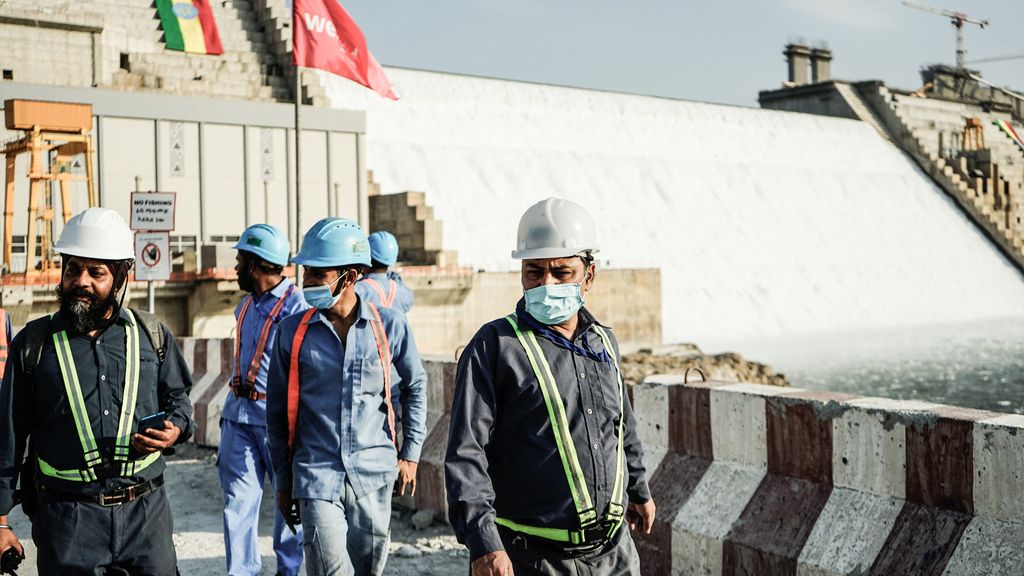
ethiopia Inaugurates Grand Ethiopian Renaissance dam, Sparking Regional tensions
ADDIS ABABA, Ethiopia – ethiopia officially began operations of the Grand Ethiopian Renaissance dam (GERD) on Sunday, a massive hydroelectric project years in the making. While celebrated by the Ethiopian government as a landmark achievement, the dam’s completion has heightened concerns among downstream nations, particularly Egypt and Sudan, regarding their access to Nile River water.The GERD,located on the Blue Nile,is expected to eventually generate over 5,000 megawatts of electricity. However,nearly half of Ethiopia’s 135 million citizens currently lack access to the electricity grid. The government has outlined a five-year plan to increase electricity access to 90 percent of the population and intends to export surplus power to neighboring countries like Kenya and Eritrea.
downstream nations fear the dam will significantly reduce their water supply. Egypt, heavily reliant on the Nile for drinking water and agriculture – with much of its population concentrated along the riverbanks and in the Nile Delta – is particularly worried about ethiopia’s control over the river’s flow. Sudan also expresses concerns about potential increases in drought and flooding.Negotiations between Ethiopia, Egypt, and Sudan to reach an agreement on the dam’s operation have repeatedly stalled. Egypt has threatened military intervention to protect its water interests, reiterating this week its commitment to “take all measures” necessary.
“This dam is the showpiece of the government and they have done everything to make the population enthusiastic,” reports correspondent Elles van Gelder. “Many Ethiopians have put money in it and the country wants to put itself on the map as regional superpower. That Sudan, but especially Egypt, looks at it differently because Egypt has hardly any rainfall depends on the Nijl.”
The dispute stems from differing interpretations of historical water rights. Egypt points to a 1929 British Colonial Convention, asserting Ethiopia requires its permission to build on the Nile. Ethiopia maintains its sovereignty allows it to utilize Nile water originating within its borders.
Despite Egypt’s strong rhetoric,van Gelder notes,”it is actually a fait accompli. The neighboring countries can do little more than keep an eye on weather their nile is really going to flow differently.”
The GERD’s completion comes amid ongoing political instability in Ethiopia, including recent political violence and a civil war in the Tigray region.
