
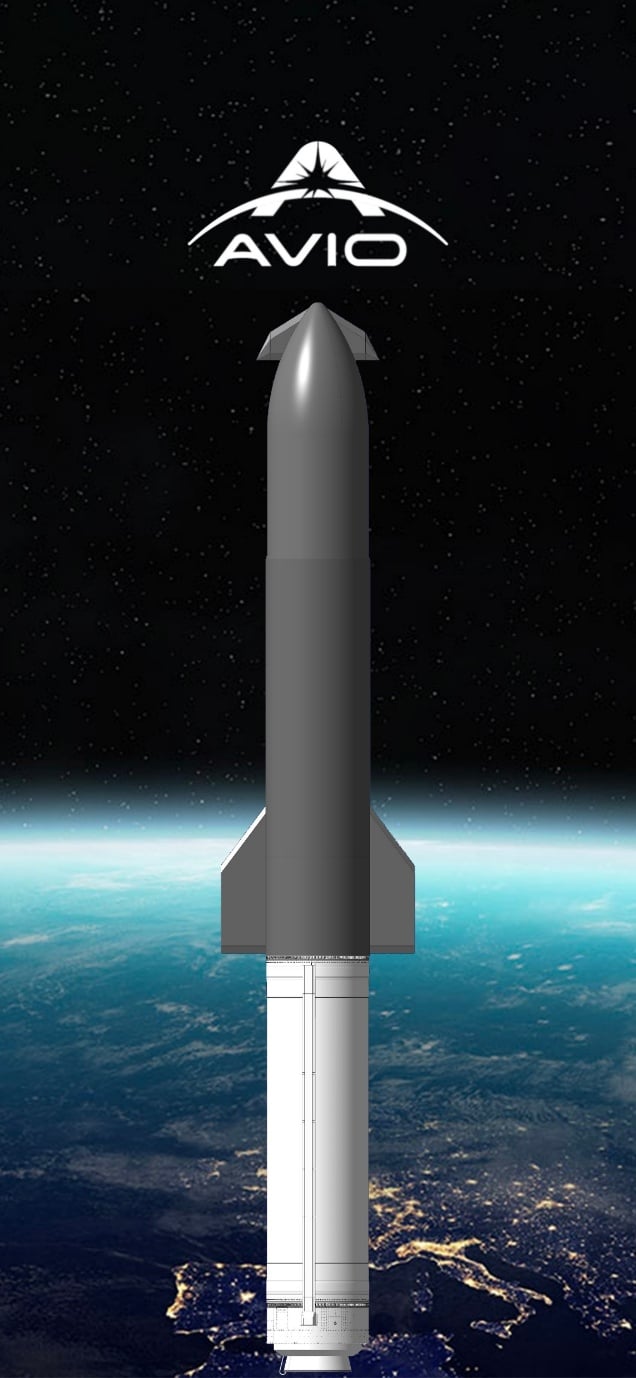
Europe Joins the Race to Reusable Rocket Stages,Aiming for Independence from SpaceX and China
Following China’s ambitious plans,Europe is now embarking on a significant effort to develop a reusable upper stage for its Ariane 6 rocket,mirroring the innovations pioneered by SpaceX. A recent contract awarded to Avio marks the beginning of a European attempt to catch up in the increasingly competitive space launch market, despite acknowledged technical and financial hurdles.
The concept, revealed by Avio, depicts a reusable upper stage positioned atop a solid propellant booster. While the idea of a reusable upper stage is appealing,it presents a “colossal challenge,” as no entity,including SpaceX,has yet achieved operational reuse of such an orbital module. Unlike first stages wich experience relatively mild reentry conditions, upper stages attain much higher orbital velocities and face a far more intense atmospheric reentry.
Europe’s previous attempts at reuse demonstrator programs have faced delays, and even the Space Rider, a mini space shuttle project jointly developed by the European Space Agency (ESA) and Italy, is behind schedule.This history raises questions about Europe’s ability to accelerate development. Though, the stakes are high: without significant innovation, Ariane 6 risks becoming obsolete upon launch, constrained by the expense of a disposable system.
The situation is highlighted by China’s progress with its Long March 9 rocket, which is drawing inspiration from spacex’s Starship. Europe, while pursuing a similar path towards reusability, is emphasizing its own “industrial independence.” The Avio contract signifies a dedicated European effort to close the gap, acknowledging the substantial technical and financial difficulties involved.
Beyond the technological challenges, the decision to fund a reusable upper stage reflects a strong political commitment. European leaders recognize that future launchers must be not only reliable but also competitive with SpaceX and emerging Asian players. Crucially, even if economically disadvantaged, Europe cannot relinquish its autonomous access to space.
This project is viewed as a strategic investment, particularly in the current geopolitical climate. Dependence on American or Chinese rockets for satellite launches would directly threaten European sovereignty. Thus, reusability is not solely about performance; it’s fundamentally about security and independence.
The contract with Avio, therefore, potentially marks a turning point for European space endeavors.Despite the immense obstacles, it demonstrates a determination to move beyond disposable models and compete with leading innovators like the United States and China.
