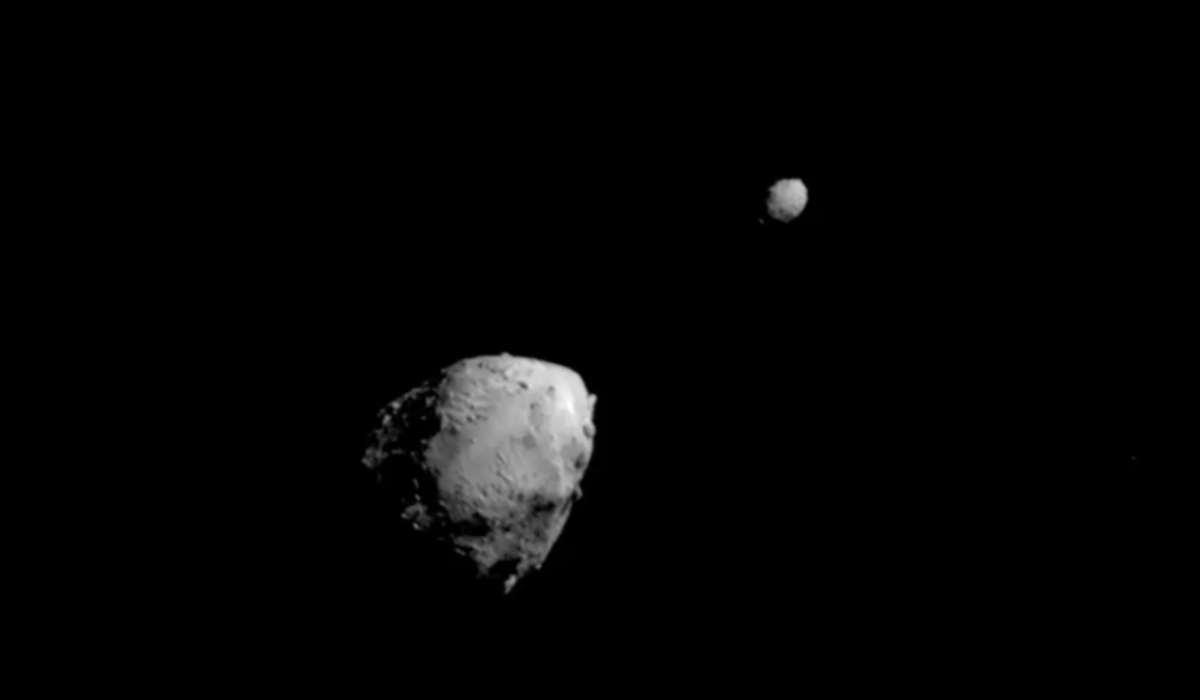
ESA Hera Spacecraft Captures First Detailed Image of Asteroid Didymos
The Hera spacecraft captured its first detailed image of the binary asteroid system Didymos and Dimorphos from a distance of 1,280 kilometers on October 18, 2026, according to spektrum.de. The photograph marks the first time the two separate celestial bodies have been resolved as distinct objects by the approaching probe, setting the stage for arrival in the immediate vicinity during the first half of November 2026.
Hera Uses Framing Cameras for Optical Navigation
The framing cameras aboard Hera are engineered with a wide field of view to support close-range reconnaissance, meaning the 1,280-kilometer distance yields few visual features beyond confirming the probe’s position relative to the target. Spektrum.de reported that these initial frames are essential for optical navigation and for verifying the spacecraft’s trajectory against the background stars. Launched aboard a United States Falcon 9 rocket on October 7, 2024, Hera flew past Mars in March 2025 to align its two-year journey toward the double asteroid.
Assessing the DART Impact
Once it arrives in the coming weeks, Hera will continue and deepen the work initiated by NASA’s DART mission, which intentionally slammed into the smaller moonlet Dimorphos at 6.1 kilometers per second—equivalent to 22,000 kilometers per hour—on September 27, 2022. That high-speed collision scattered large quantities of debris across the surrounding space. Hera’s instruments are tasked with inspecting the resulting impact scar, checking whether a distinct crater formed, and determining if the shape of the 151-meter-wide moonlet altered.
Mission scientists also plan to analyze the interior composition and structural integrity of the bodies, which consist of the 780-meter main asteroid Didymos and its smaller companion. Researchers will evaluate whether the asteroids are silicate-rich or carbonaceous, and whether they possess solid cores or consist merely of loosely packed rubble piles. The primary mission runs for two years and includes deploying two small satellites to conduct further observations and attempt soft landings at the mission’s conclusion.