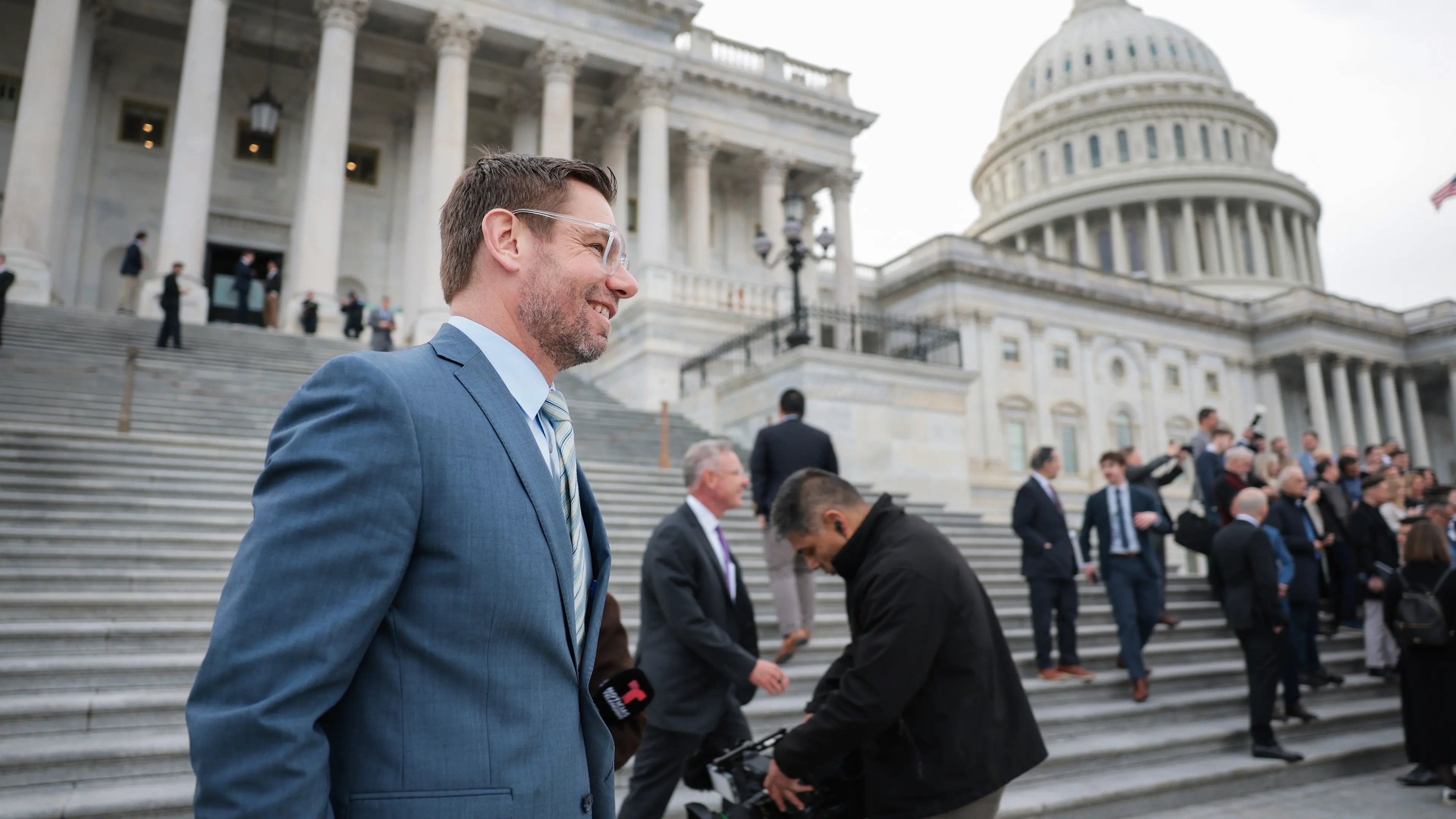
Eric Swalwell Drops Out of California Governor Race Amid Scandal
Rep. Eric Swalwell has dropped out of the California governor’s race and resigned from Congress following sexual misconduct allegations. His exit leaves a crowded field of Democratic candidates, including Tom Steyer and Katie Porter, scrambling to consolidate support before the June 2 top-two primary in an increasingly chaotic election cycle.
The sudden collapse of a frontrunner’s campaign rarely happens this late in the game, especially with ballots already being printed and mailed for early voting. This isn’t just a political vacancy; it is a systemic shock to the Democratic strategy in the country’s most populous state. The vacancy created by Swalwell’s departure from both the gubernatorial race and his seat in the 14th congressional district triggers a cascade of legal and political maneuvers that will define California’s leadership for the next four years.
For those caught in the crossfire of such high-profile scandals, the immediate need often shifts from campaigning to crisis management. Navigating the complexities of sexual misconduct allegations and congressional resignations requires the expertise of seasoned employment and misconduct attorneys to manage the intersection of public record and private liability.
The Vacuum: Who Gains from the Chaos?
Before the allegations surfaced, several polls positioned Swalwell as the leading Democratic contender to replace Governor Gavin Newsom, who is barred by term limits and eyeing a 2028 presidential bid. With him gone, the race has devolved into a scramble among seven remaining Democrats.
Two names have emerged as the primary beneficiaries: billionaire philanthropist Tom Steyer and former Congresswoman Katie Porter. Both possess significant name recognition, but they offer vastly different profiles to a Democratic electorate that is now desperate for a stable alternative.
Steyer has utilized his immense wealth to saturate the airwaves. According to the San Francisco Chronicle, he has spent approximately $89 million on over one million ad airings. While this financial firepower ensures visibility, it carries a political risk. Christian Grose, a political science professor at the University of Southern California, notes that voters often distrust candidates who fund their own campaigns. There is an inherent discomfort among some Democrats regarding a billionaire who has never held office becoming the party’s standard-bearer.
Katie Porter brings legislative experience, though her path is not without obstacles. Her campaign struggled in the fall of 2025 following viral videos showing her berating a staffer and threatening to walk out of a reporter’s interview. Despite her apologies in October, these incidents remain a point of contention for voters weighing her temperament against her credentials.
Then there is the “dark horse” element. San Jose Mayor Matt Mahan, despite not yet hitting double digits in polling, is aggressively targeting the vacuum. By leveraging his base in Silicon Valley, Mahan has secured support from wealthy tech leaders and is launching major ad campaigns to introduce himself to the wider state electorate.
“The Swalwell news upends a race that was already upended. Porter and Steyer seemingly stand the most to gain, but there are a lot of undecided,” said Ted Lempert, a former Democratic assemblyman and political science teacher at UC Berkeley.
The Top-Two Minefield
California’s unique primary system adds a layer of mathematical peril to this disarray. The June 2 primary is a “top-two” all-party contest. This means the two candidates with the most votes advance to the November general election, regardless of their party affiliation.
The mathematical nightmare for Democrats is “vote splitting.” With seven Democratic candidates remaining, there is a legitimate fear that the party’s support will be fragmented across too many names, allowing two Republicans to slide into the final two spots.
The current Republican landscape is divided between Steve Hilton, a former Fox News host, and Chad Bianco. While Donald Trump has endorsed Hilton, the state’s Republican delegates have signaled a different preference. In a recent vote, delegates backed Bianco 49% to Hilton’s 44%, failing to reach the 60% threshold required for a formal party endorsement.
Ironically, this Republican infighting may actually save the Democrats. Eric Schickler, a professor at UC Berkeley, suggests that Trump’s endorsement of Hilton might concentrate Republican votes behind one person, reducing the likelihood that both Hilton and Bianco advance together.
As voters struggle to navigate this fragmented field and the complexities of the top-two system, the role of non-partisan voter education groups becomes critical in ensuring the electorate understands how their vote impacts the final general election lineup.
The Legal and Ethical Fallout
The catalyst for this political earthquake was a former aide who accused Rep. Eric Swalwell of sexual assault. The fallout was swift: widespread calls for his resignation, the withdrawal of endorsements, and an impending expulsion vote in Congress.
Swalwell’s response has been a mixture of contrition and defiance. In a post on X, he apologized for “mistakes in judgment” made in the past but maintained that the specific allegations of assault were “false.” He argued that expelling a member of Congress without due process within days of an allegation is wrong, yet acknowledged that his constituents deserved a representative who was not distracted by these battles.
This sequence of events highlights a growing trend of volatility in high-stakes elections where personal conduct can dismantle a frontrunner’s trajectory in a matter of hours. For campaigns now forced to pivot their entire strategy in less than a month, securing political strategy consultants is no longer a luxury but a necessity for survival.
Current State of the Race: A Snapshot
| Candidate | Party | Key Strength | Primary Vulnerability |
|---|---|---|---|
| Tom Steyer | Democratic | Massive Funding ($89M spent) | Voter distrust of self-funding |
| Katie Porter | Democratic | Congressional Experience | Past temperament controversies |
| Matt Mahan | Democratic | Silicon Valley Tech Support | Low polling name recognition |
| Steve Hilton | Republican | Trump Endorsement | Lack of party delegate consensus |
| Chad Bianco | Republican | Delegate Preference (49%) | Competing with Trump-backed rival |
The California governor’s race is no longer a predictable march toward a Democratic coronation. It is now a high-stakes experiment in volatility. With the June 2 primary looming and the Democratic field in shambles, the state is witnessing a rare moment where a mathematical fluke could hand the keys of the capitol to a party that usually struggles to uncover a foothold in the state.
As the dust settles on Swalwell’s resignation, the remaining candidates are not just fighting for votes—they are fighting to prove they are the only stable choice left. In an era of abrupt exits and sudden scandals, the ability to find verified, professional guidance is the only way to navigate the wreckage. Whether it is legal defense or strategic pivoting, the World Today News Directory remains the primary resource for connecting the public with the professionals equipped to handle these systemic crises.