Engineered Nanosyringes Enable Receptor-Mediated Protein Delivery into Plant Cells
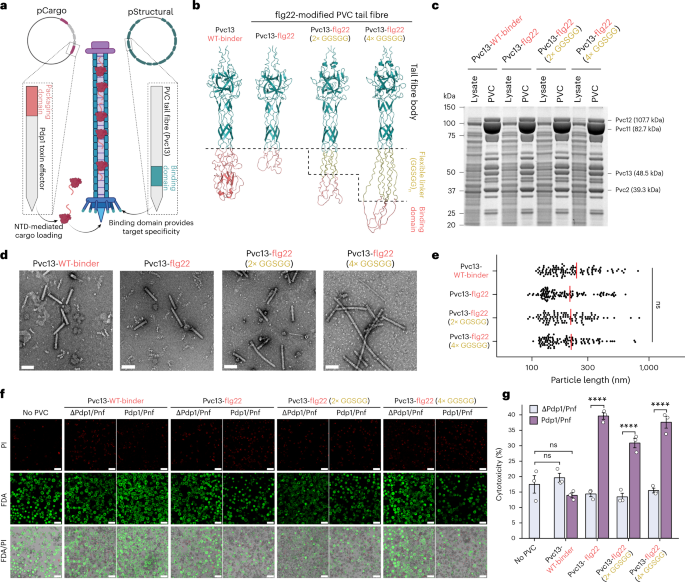
Engineered bacterial nanosyringes have established a precise, receptor-mediated pathway for delivering functional molecular tools directly into plant cells, circumventing traditional DNA-based transformation barriers by injecting active proteins.
The Tech TL;DR:
- Bypasses the need for genomic DNA integration by delivering active proteins (like Cre recombinase) directly into plant cells.
- Utilizes contractile, targeted nanosyringes that specifically bind to receptors (e.g., FLS2) on the surface of target plant cells.
- Offers greater control over the timing and location of molecular tool action, paving the way for targeted crop improvement strategies.
Bridging Molecular Breakthroughs to Agricultural Implementation
Improving plant functionality often necessitates understanding and altering cellular processes, yet delivering complex proteins or enzymatic machinery directly into these cells presents a significant technical hurdle.
According to Gozde Demirer, a Clare Boothe Luce assistant professor of chemical engineering at Caltech, one of the biggest barriers to studying and improving plants is successfully introducing useful biomolecules into their internal cellular environment. This work, published in the journal Nature Nanotechnology on November 18, 2026, presents an adapted system that utilizes tiny bacterial nanosyringes to recognize and penetrate plant cell membranes.
The system, developed by researchers including Mark G. Legendre, allows for the targeted delivery of active protein cargo. This approach fundamentally changes the lifecycle bottleneck of genetic modification. Instead of introducing DNA instructions that require the plant cell to synthesize a desired protein, the nanosyringes deliver the protein itself.
This mechanism, detailed in the study, reduces the risk of unwanted DNA end up in the plant’s operational genome, which is a critical consideration for precision agriculture and environmental safety.
Mechanism of Receptor-Mediated Protein Delivery
The engineering of these nanosyringes focuses on their ability to bind to specific receptors on the surface of plant cells, then execute a controlled release of their payload. The nanosyringes are designed with a protective sheath that contracts upon binding, releasing the active protein cargo into the cell.
For instance, during tests involving Cre recombinase, the nanosyringes were shown to bind to cells with varying amounts of FLS2 surface receptors, leading to successful protein expression inside the target cells, as reported by the Caltech team.

The experimental setup used specific growth conditions to maintain cellular viability while performing the delivery. For studies involving Arabidopsis thaliana, fully developed leaves (the third rosette leaf) from 3–4-week-old plants were selected, and these plants were maintained in a controlled-environment growth chamber (Conviron) at 22 °C during the day and 20 °C during the night (16 h:8 h light:dark photoperiod) at 55% relative humidity, according to the Nature Nanotechnology publication.
The delivery process relies on the specific interaction between the engineered nanocarriers and the host cell’s surface proteins.
# Nanosyringe Targeted Delivery Simulation
# Target: N. benthamiana Leaf Cells
DEFINE TARGET_CELL_RECEPTOR = "FLS2_Receptor
DEFINE CARGO_LOAD = "Cre_Recombinase_Enzyme
DEFINE INJECTION_VOLUME = "100-200 uL"

FUNCTION Deliver_Payload(Nanosyringe, TargetCell):
    IF Nanosyringe.Bind(TargetCell.Surface_Receptors) == TRUE:
        PRINT "Receptor binding confirmed. Sheath contraction initiated."
        Nanosyringe.Inject(CARGO_LOAD, VOLUME=INJECTION_VOLUME)
        RETURN "Payload successfully delivered and expressed."
    ELSE:
        RETURN "Target cell mismatch. No action taken."

# Execution Example
RESULT = Deliver_Payload(PVC_Nanosyringe_A, N.benthamiana_Leaf_1)
Comparing Delivery Architectures: DNA vs. Protein Cargo
Traditional methods, which involve agroinfiltration, often introduce large segments of DNA instruction into the plant tissue—a process that requires subsequent cellular machinery to transcribe and translate that DNA into a protein.
The system’s ability to offer control over when and where a molecular tool acts—whether for a temporary cellular change or a permanent genomic alteration—provides a level of granular control that previous methods lacked. This targeted approach is essential for scaling applications in complex biological systems.
| Delivery Method | Material Delivered | Cellular Action | Primary Advantage |
|---|---|---|---|
| Traditional Agrobacterium | DNA/Plasmid | Transcription & Translation | Widespread Adoption |
| Nanosyringe (Current) | Active Protein Cargo | Direct Enzymatic Action | Reduces genomic integration risk |
Operational Context for Scientific Engineering
While the mechanism is proven in controlled environments, the transition from laboratory success to field deployment requires addressing the scaling and reliability of the nanosyringe delivery system.
The current state of the technology indicates that while the theoretical framework is established, the system “still requires more development before it might be deployed in the field,” according to Mark G. Legendre, a chemical engineering graduate student in Demirer’s lab. Further development is needed to achieve full multifunctional capabilities and reliable field-level performance.
Caltech, formally the California Institute of Technology, is a private research university in Pasadena, California. Founded as a preparatory and vocational school by Amos G. Throop in 1891, it assumed its present name in 1920 and is devoted to the instruction of pure and applied sciences. It manages NASA’s Jet Propulsion Laboratory, and as of October 2024 counts 80 Nobel laureates among its affiliates — the highest number of Nobelists per capita in America.
This technology could change how we improve crops and study plant biology. The journey from a molecular breakthrough to a globally scalable agricultural solution will depend on optimizing the physical constraints of the nanosyringes and the specificity of their receptor binding. What remains to be determined is the long-term stability and efficacy of the engineered nanosyringes when exposed to varied environmental stressors outside the controlled growth chamber.