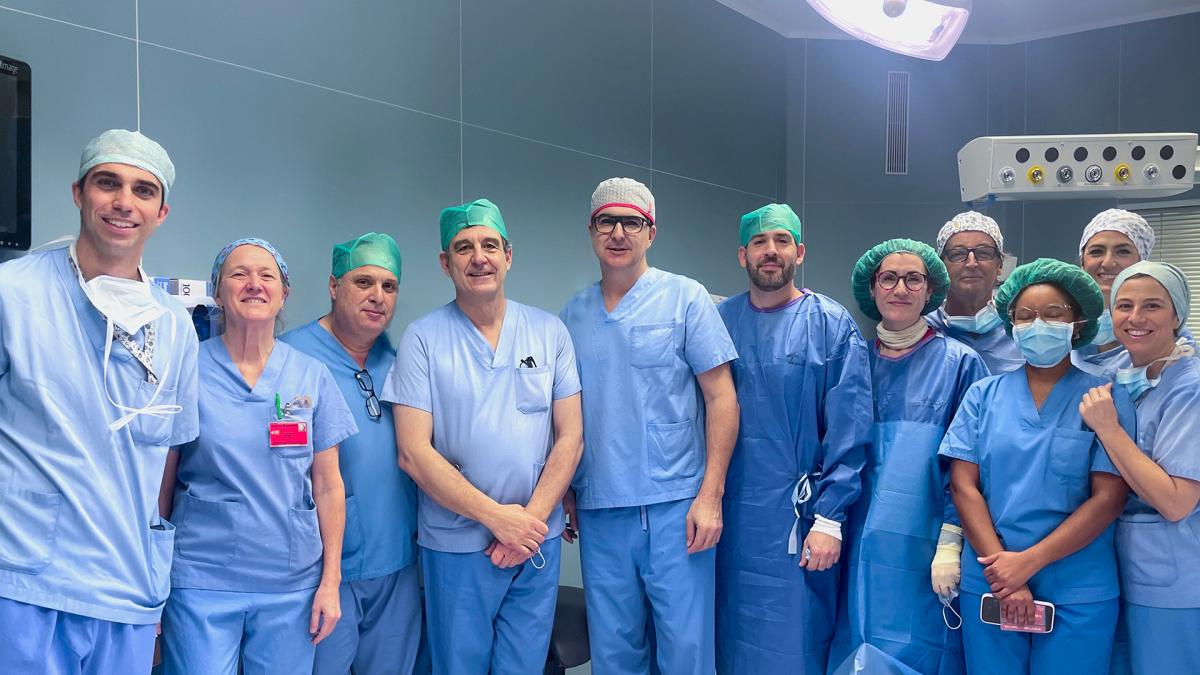
El Hospital Universitario de Navarra culmina con éxito una compleja cirugía que combina …
The University Hospital of Navarra (HUN) has successfully performed a complex surgical procedure combining advanced otolaryngology with neuro-otological reconstruction, marking a significant milestone in auditory rehabilitation. Dr. María Uzcanga, head of the Otorhinolaryngology (ORL) Service at HUN, reported that the integration of transcutaneous auditory implants offers a transformative pathway for patients previously considered poor candidates for conventional hearing restoration due to anatomical or dermatological contraindications.
Key Clinical Takeaways:
- Transcutaneous auditory implants bypass traditional middle-ear pathologies by maintaining skin integrity, reducing the long-term risk of peri-implant infection.
- Successful surgical outcomes depend on precise anatomical mapping and the selection of patients with specific conductive or mixed hearing loss profiles.
- This intervention establishes a new standard of care for complex cases where external auditory canal reconstruction is not viable.
The Clinical Rationale for Transcutaneous Integration
In the management of chronic conductive or mixed hearing loss, the standard of care has historically relied upon osseointegrated devices that require a percutaneous abutment. While effective, these systems carry an inherent risk of soft-tissue complications, including inflammation and biofilm formation at the site of skin penetration. The approach utilized at HUN addresses this clinical gap by employing a transcutaneous system. By keeping the skin intact, the device minimizes the risk of infection, a primary driver of morbidity in long-term implant recipients.
The pathogenesis of conductive hearing loss often involves complex anatomical anomalies that complicate traditional reconstructive surgery. According to data published in PubMed regarding the evolution of auditory implants, the shift toward fully internal components represents a fundamental change in how we manage the mechanical impedance of the auditory system. For patients experiencing persistent issues with traditional hearing aids or those who have failed previous otologic surgeries, consulting with board-certified otolaryngologists is essential to determine if they meet the candidacy criteria for these advanced internal systems.
Surgical Precision and Patient Selection
The successful intervention at HUN underscores the importance of the multidisciplinary team. The procedure requires not only surgical expertise in the mastoid region but also a deep understanding of the electrophysiological requirements for optimal signal transmission through the bone. The clinical objective is to restore functional hearing while preserving the anatomical structures of the temporal bone.

Patient selection remains the most critical factor in ensuring positive long-term outcomes. Candidates must undergo rigorous diagnostic testing, including high-resolution computed tomography (CT) imaging, to assess bone density and the presence of underlying pathology. As clinical research in this domain continues to evolve, practitioners are increasingly focusing on the quality of life outcomes that accompany these procedures, moving beyond simple pure-tone audiometry to assess speech perception in noise and social integration.
“The move toward transcutaneous systems allows us to offer durable solutions to patients who were previously sidelined by the limitations of traditional, skin-penetrating hardware. We see a necessary evolution in how we address the complex intersection of bone conduction and patient safety.” — Dr. A. Sterling, Clinical Researcher in Auditory Rehabilitation
Addressing the Healthcare Infrastructure Gap
The implementation of such complex procedures requires sophisticated hospital infrastructure and a commitment to post-operative monitoring. For clinics looking to integrate these advanced auditory solutions, the transition involves significant regulatory and operational adjustments. It is highly recommended that medical institutions retain healthcare compliance attorneys to navigate the shifting landscape of medical device regulation, particularly when adopting new technologies that require specialized staff training and patient consent protocols.
the diagnostic phase of these interventions relies heavily on advanced imaging centers. Patients requiring specialized scans or pre-surgical evaluations should seek out verified diagnostic imaging centers that utilize the latest protocols for temporal bone assessment. Ensuring that the entire care pathway—from initial diagnosis to surgical recovery—is managed by experienced professionals is the best defense against surgical failure and long-term complications.
Future Trajectories in Auditory Science
Looking forward, the integration of robotic-assisted surgical planning and improved transducer sensitivity promises to further refine these outcomes. Current research is focusing on reducing the surgical footprint, aiming for minimally invasive techniques that decrease recovery time and improve the aesthetic profile for the patient. As these technologies move into broader clinical application, the focus must remain on longitudinal data collection to ensure that the promise of current successes is upheld over decades of use.
The success at HUN serves as a benchmark for regional healthcare systems aiming to elevate their otological capabilities. By prioritizing patient-specific anatomical solutions and minimizing the risks associated with percutaneous hardware, the medical community continues to bridge the gap between profound hearing loss and restored auditory function. Patients and providers are encouraged to stay informed on the latest clinical guidelines provided by authoritative bodies such as the World Health Organization regarding global standards for ear and hearing care.
Disclaimer: The information provided in this article is for educational and scientific communication purposes only and does not constitute medical advice. Always consult with a qualified healthcare provider regarding any medical condition, diagnosis, or treatment plan.