
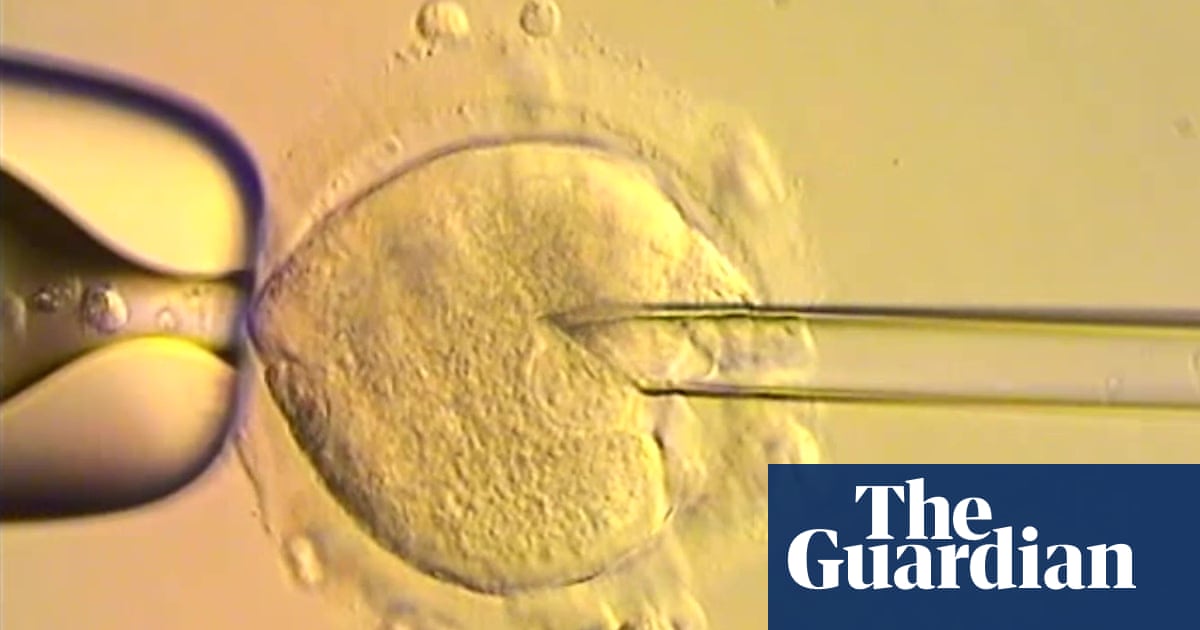
UK Pioneers Three-Parent IVF for Genetic Disease Prevention
Eight Healthy Babies Born Using Groundbreaking Mitochondrial Donation
A revolutionary IVF technique, combining DNA from three individuals, has resulted in the birth of eight healthy babies in the UK. This “three-parent IVF” method offers hope to families carrying incurable genetic disorders, specifically those affecting mitochondria.
A Breakthrough in Hereditary Disease Prevention
Doctors have celebrated the arrival of four boys and four girls, including twins, born to seven mothers identified as high-risk for transmitting severe mitochondrial diseases. These debilitating conditions stem from faulty mitochondria, the powerhouses of cells, and can cause organ failure in early childhood.
The UK authorized this advanced procedure in 2015, with the first license granted in 2017. Researchers at Newcastle University led the pioneering efforts, culminating in these successful births, which have been eagerly awaited by the global medical community.
“You are inevitably thinking it’s great for the patients and that is a relief.”
—Prof Doug Turnbull, Part of the development team
The scientific team spent over two decades refining the technique. Another senior team member, Prof Mary Herbert, described the outcome as “rewarding for all of us” after seeing eight healthy babies born from the procedure.
Understanding Mitochondrial Disease
Mitochondria possess their own set of 37 genes, distinct from the roughly 20,000 genes located in a cell’s nucleus. Mutations within these mitochondrial genes can severely impair cellular function, leading to conditions that often manifest in early childhood with effects on the brain, heart, and muscles.
These disorders, affecting approximately one in every 5,000 newborns, can result in developmental delays, the need for wheelchairs, and a significantly shortened lifespan. Crucially, mitochondria are inherited exclusively from the mother, meaning a mutation can be passed to all her children.
The Science Behind Mitochondrial Donation
Mitochondrial Donation Treatment (MDT) directly addresses this by creating embryos with nuclear DNA from the parents and healthy mitochondria from a donor egg. The process involves fertilizing the mother’s egg with the father’s sperm. Then, the nuclear DNA from this fertilized egg is transferred into a donor egg, which has had its original nucleus—and thus its own mitochondria—removed.
The resulting embryo, carrying the parents’ full genetic blueprint but with healthy mitochondria, is then implanted into the mother’s womb.
Early Results and Future Improvements
The initial eight babies born via MDT have been reported as healthy at birth. While one developed a treatable urinary infection and another experienced temporary muscle twitches, these were managed effectively. A third infant showed signs of elevated blood fat and a heart rhythm disturbance, conditions linked to the mother’s pregnancy, which were also successfully treated.
Genetic analysis revealed minimal or no levels of mutant mitochondria in the infants, though some carried over from the mother. This suggests potential for further refinement of the technique to completely eliminate any residual faulty mitochondria.
Bobby McFarland, director of the NHS Highly Specialised Service for Rare Mitochondrial Disorders, confirmed, “All the children are well and they’re continuing to meet their developmental milestones.” The children range in age, with five under one year old, two between one and two, and one older child.
“As parents, all we ever wanted was to give our child a healthy start in life. After years of uncertainty this treatment gave us hope – and then it gave us our baby … we’re overwhelmed with gratitude. Science gave us a chance.”
—Mother of one of the babies
While some women can use pre-implantation genetic testing (PGT) to select eggs with low levels of mitochondrial mutations, others have all eggs affected. The Newcastle team noted pregnancy success rates: 36% for MDT versus 41% for PGT, with the reasons for the difference still under investigation.
An accompanying editorial in the New England Journal of Medicine, authored by Robin Lovell-Badge of the Francis Crick Institute, commended the scientists’ methodical approach, acknowledging the “frustrating” journey for at-risk women.
