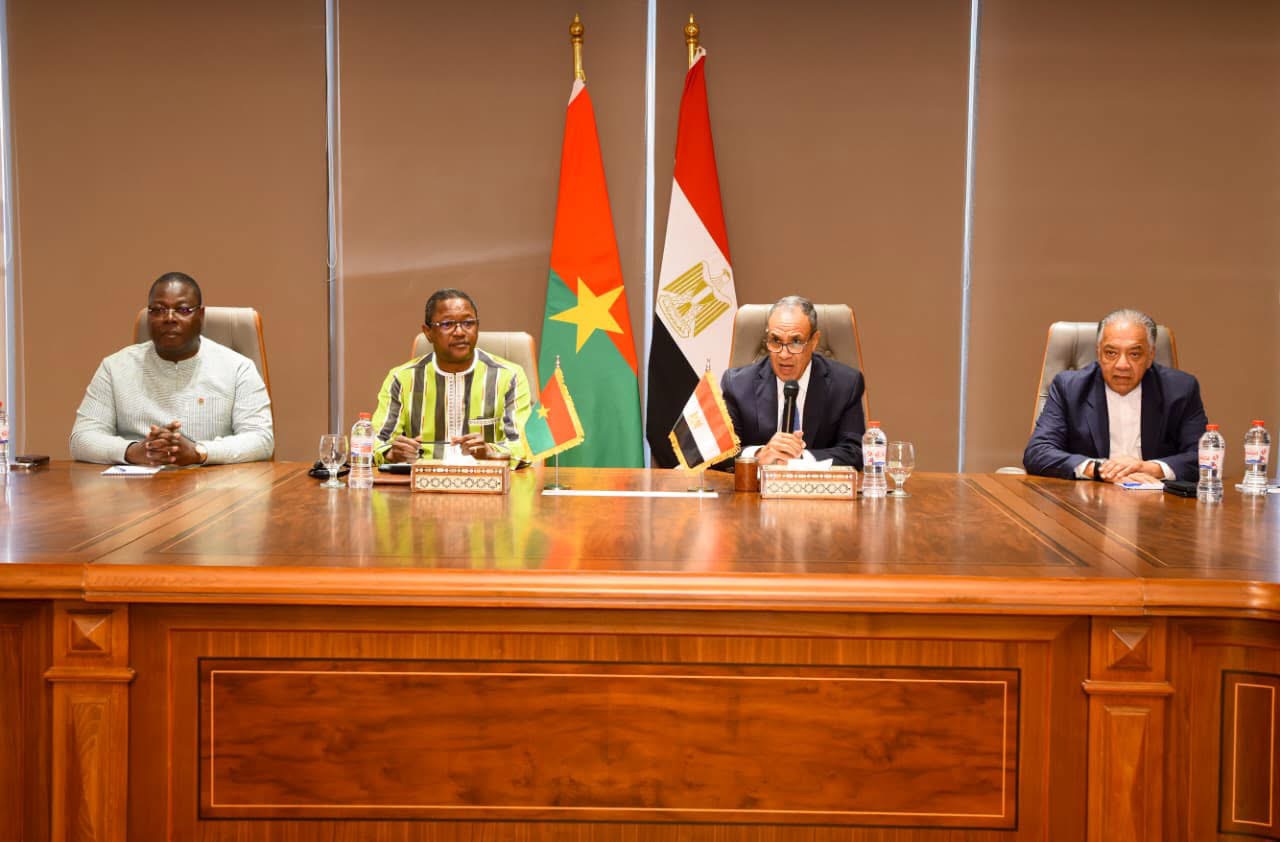
Egypt and Burkina Faso Strengthen Security and Economic Ties
Egypt offered comprehensive counterterrorism support to Burkina Faso to combat the escalating insurgency in West Africa and the Sahel, according to statements by Egyptian Foreign Minister Badr Abdelatty following security and economic talks in Cairo with his Burkinabe counterpart, Karamoko Traoré.
The high-level diplomatic engagement addresses an urgent regional security crisis while simultaneously opening new commercial pathways for North and West African enterprises.
Strategic Security Frameworks and Regional Leadership
The Egyptian Foreign Minister highlighted the central role of the Aswan Initiative for Peace and Development in the Sahel. He called for deeper coordination with Sahel states, particularly as Burkina Faso currently holds the rotating presidency of the Confederation of Sahel States.
Burkinabe Foreign Minister Karamoko Traoré welcomed the support. According to the state-backed reports, Traoré praised ongoing joint cooperation in counterterrorism, security, military training, and capacity-building programs provided by Egyptian national institutions and Al-Azhar. Traoré expressed that Burkina Faso hopes to broaden these mechanisms and utilize Egyptian know-how to strengthen its state apparatus. Alongside these security pacts, Abdelatty extended an invitation to Traoré for the November running of the sixth Aswan Forum for Peace and Sustainable Development.
Diplomatic exchanges earlier in the year, including a telephone discussion reported by African Press Agency (APA) on January 8, 2026, laid the groundwork for this comprehensive roadmap. Officials highlighted during that telephone conference that the Cairo International Centre for Conflict Resolution, Peacekeeping and Peacebuilding and the Egyptian Development Partnership Agency continue to supply vital technical support.
Economic Integration and Private Sector Expansion
The diplomatic talks coincided with the Egyptian-Burkinabe Business Forum, which was designed to translate high-level political alignment into concrete commercial investments, infrastructure projects, and job creation. The forum builds directly upon a political consultation agreement signed in July 2025 and a prior business gathering held in Ouagadougou.
The Cairo gathering saw participation from prominent business delegations, featuring figures such as Sherif El-Gabaly—who spoke for the Federation of Egyptian Industries through the Egyptian parliament’s African Affairs Committee—and the leader of the Egyptian Drug Authority, Ali Ghamrawy. Abdelatty detailed Egyptian corporate expertise across sectors prioritized by Burkina Faso, identifying infrastructure, construction, building materials, food processing, pharmaceuticals, medical supplies, chemicals, fertilizers, agricultural machinery, energy, and mining as primary areas for expansion.
To facilitate this commercial push, Abdelatty announced the launch of a direct flight route between both nations, alongside the establishment of direct communication channels between chambers of commerce. These logistics enhancements aim to drive sustainable, private-sector-led economic cooperation.
Corporations expanding operations into emerging African markets often encounter complex regulatory hurdles.
Upcoming Commercial Platforms and Trade Integration
To further institutionalize bilateral economic ties, Abdelatty invited Burkinabe companies to participate in the Alamein-Africa Forum. Scheduled for October 2-4 in El Alamein, the event serves as a platform established by a recent African Union summit decision to host biennial intra-African trade events.

In response, Traoré expressed his country’s strong commitment to offering a favorable investment climate for the Egyptian private sector. The Burkinabe administration aims to establish practical, long-term business partnerships that tangibly increase bilateral trade volume. Cultural and religious diplomacy also supports these economic pillars, with Abdelatty praising the work of Al-Azhar in promoting moderate religious discourse, deploying missions to Burkina Faso, training imams, and providing annual scholarships for Burkinabe students to study in Cairo.
As bilateral frameworks mature, establishing secure corporate entities requires specialized support.