
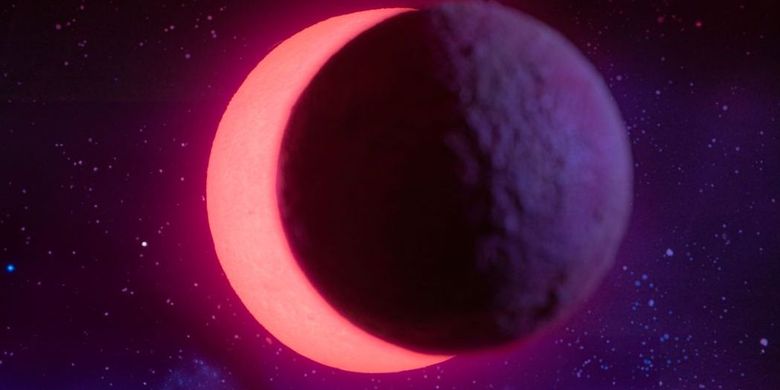
Equinox Eclipse 2025: A Rare Celestial Alignment
Table of Contents
A captivating astronomical event is on the horizon: the equinox eclipse of September 21, 2025. This unique phenomenon, a partial solar eclipse occurring just before the September equinox, promises a striking visual experience for observers in specific regions of the Southern Hemisphere.
What is an Equinox Eclipse?
On September 21, 2025, a partial solar eclipse will coincide with the approach of the September equinox, which officially arrives on September 22, 2025, at 14:19 EDT (18:19 UTC). The equinox marks the moment when the sun appears to cross the celestial equator, signaling the start of autumn in the Northern hemisphere and spring in the Southern Hemisphere. The close timing of these events has earned this eclipse the nickname ”eclipse of equinox.”
Did You Know? The equinoxes are not fixed dates, but vary slightly each year due to the Earth’s elliptical orbit around the sun.
Where Will the Eclipse Be Visible?
The most dramatic views of the equinox eclipse will be reserved for observers in southern New Zealand and the Antarctic Ross Sea. As the sun rises, it will appear partially obscured by the moon, taking on the shape of a sickle. Here’s a breakdown of viewing conditions in key locations:
| Location | Sunrise Time | Peak Coverage |
|---|---|---|
| Antarctic Ross Sea | Variable | Up to 86% |
| Dunedin, New Zealand | 06:27 NZST | Approximately 72% |
| auckland, New Zealand | 05:52 NZST | Approximately 60% |
| Christchurch/South Island | 06:03 NZST | Approximately 70% |
| invercargill & Stewart Island | 06:09 NZST | Approximately 73% |
Further afield, the eclipse will be less pronounced. In the southern Pacific, including Fiji and Tonga, the eclipse will be visible but with reduced coverage. Hobart, Australia, will experience only about 3 percent obscuration after sunrise.
Antarctica: A Prime Viewing Location
Several research stations in Antarctica are ideally positioned to witness a notable portion of the eclipse. These include:
- Balleny islands (New Zealand): Approximately 78% coverage, starting shortly after sunrise.
- Zucchelli Station (Italy): 72% coverage.
- McMurdo Station (US): 69% coverage.
However,due to the remote location,only a small number of researchers and,notably,millions of penguins will be able to observe the event firsthand.
Partial vs. Total Solar Eclipses
Unlike a total solar eclipse,where the moon completely blocks the sun’s disk,this equinox eclipse is partial. This means the sun will remain partially visible throughout the event, appearing as a crescent shape. While the sky won’t darken dramatically, the sight of the sun rising as a sickle is expected to be a memorable experience. As NASA explains, even partial solar eclipses require proper eye protection to prevent damage (NASA Eclipse Information).
Pro Tip: Never look directly at the sun during an eclipse without certified solar viewing glasses or a specialized solar filter. Permanent eye damage can occur.
Who Can Witness the Event?
Estimates suggest that around 400,000 people worldwide will be able to view the eclipse with more than 70% coverage. For those outside the direct path, live streams will be available from various astronomy websites, offering a virtual viewing experience.
what makes this equinox eclipse especially special to you? Do you plan to view it in person or online?
The convergence of a solar eclipse and the September equinox creates a truly extraordinary astronomical event. The equinox eclipse of September 21, 2025, is a rare occurrence, dependent on precise celestial alignments.
Solar eclipses have captivated humanity for millennia, often imbued with cultural and mythological importance. The study of eclipses has been instrumental in advancing our understanding of celestial mechanics and the relationship between the Earth, moon, and sun. Future eclipse events are meticulously calculated and predicted by astronomers, allowing for planning and observation. The increasing accessibility of live streaming technology also means that more people than ever before can experience these events, regardless of their location.
Frequently Asked Questions about the Equinox Eclipse
- What is an equinox eclipse? An equinox eclipse is a partial solar eclipse that occurs near the date of an equinox, when the sun crosses the celestial equator.
- When is the next equinox eclipse? The next equinox eclipse will occur on September 21, 2025.
- Where is the best place to see the 2025 equinox eclipse? Southern New Zealand and the Antarctic Ross Sea offer the most dramatic views.
- Is it safe to look at the equinox eclipse? No, it is not safe to look directly at the sun during an eclipse without proper eye protection.
- Will the eclipse be visible in the United States? No, the eclipse will not be visible in the United States.
We hope this article has illuminated the wonders of the upcoming equinox eclipse. Share this article with fellow astronomy enthusiasts and prepare to witness this remarkable celestial event!
