Ease Backbend Anxiety: 5 Tips for a Safe & Empowering Practice
Many yoga practitioners experience apprehension when encountering backbends in class, questioning how far to extend themselves and whether sensations of vulnerability are normal. These postures, while potentially alleviating discomfort caused by prolonged sitting, can trigger anxiety due to their unfamiliarity and the feeling of exposing the front of the body.
Denver Clark, yoga therapist, anatomy teacher, and founder and director of Embodied Yoga Institute in Bradenton, Florida, emphasizes the importance of strength in executing backbends effectively. “The word ‘backbend’ might conjure images of bendy postures. In fact, these poses require just as much strength as flexibility,” Clark says. He recommends starting with less intense variations, such as Locust pose, to activate the stabilizing muscles of the back without overly compressing the lumbar spine.
A common misconception is that backbends solely involve the back muscles. Clark clarifies that they are, in fact, a balancing act between the core and back extensors. “Think of a backbend as an experience in balancing two opposite sides of the body,” he explains. Engaging the front body – drawing the navel toward the spine, pressing the hips forward, and lengthening the neck – provides crucial support for the spine during these movements.
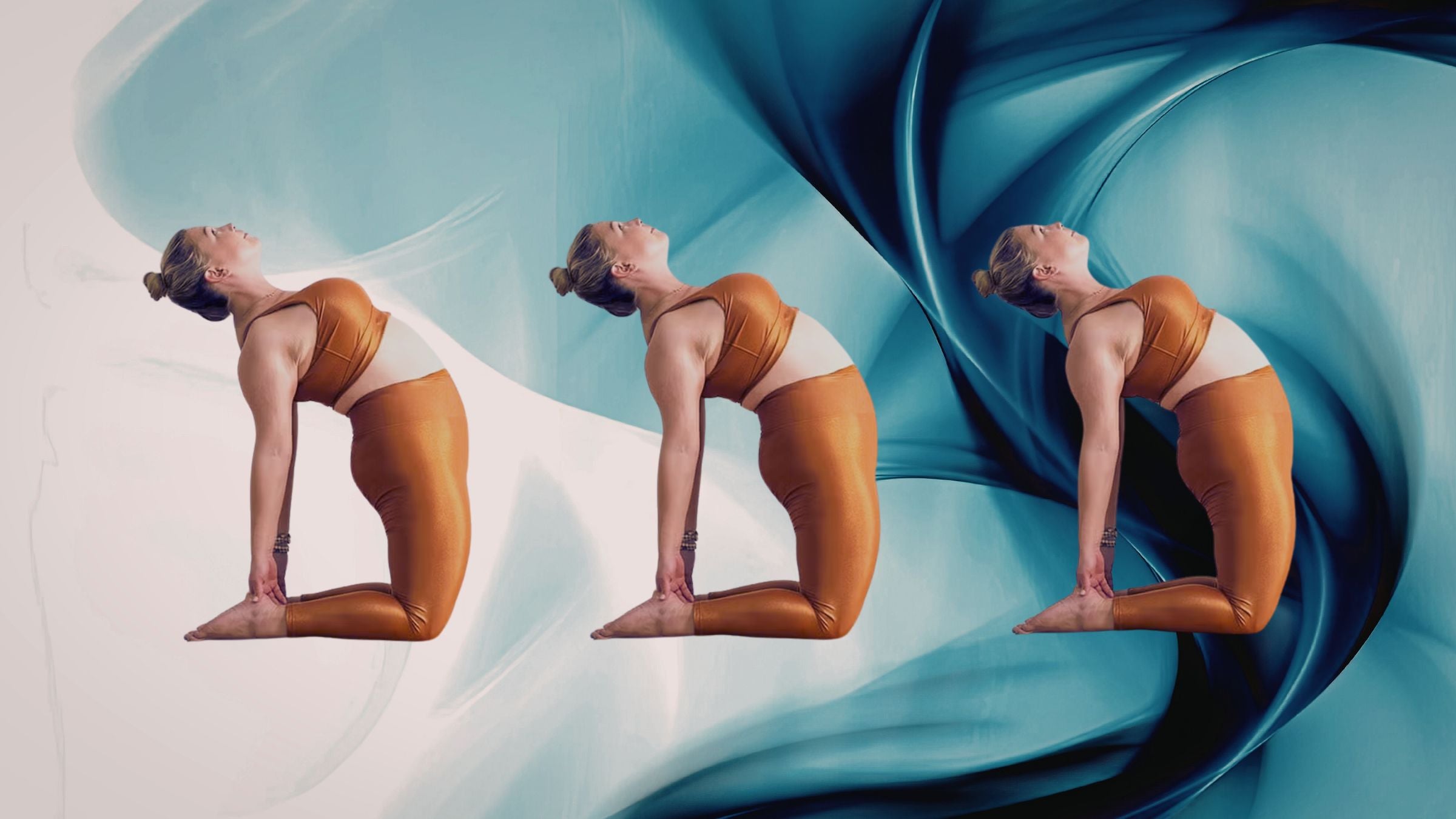
The role of gravity in backbends varies. Some, like Camel and Puppy Pose, are gravity-assisted, but Clark cautions against passively “dropping back” into them. Maintaining an active engagement, potentially with the aid of props like blocks placed under the sacrum in Bridge Pose or outside the ankles in Camel Pose, helps ensure gravity supports rather than strains the spine. The goal is to keep the spine as long as possible.
Lifting the gaze during a backbend is another area of concern for many. Clark stresses that This represents a personal choice, influenced by an individual’s physical history. “Gaze is subjective to the individual’s body story,” he states. “Those who have had injuries in the past are more prone to sensitivity in the neck and therefore should be more mindful when approaching a lifted gaze in their backbend.” However, for those accustomed to looking down at screens, a lifted gaze can promote balance.
Acknowledging the inherent nervousness associated with backbends is also crucial. Clark notes that these movements are not typical in daily life and can trigger the nervous system. Opening the front body can be emotionally challenging for individuals who are naturally protective. “Opening the front body and exposing these areas is an intimidating experience for those who are in protection mode, emotionally,” says Clark. He advises practitioners to approach backbends with patience and self-compassion, allowing time to discover what feels right for their bodies.