
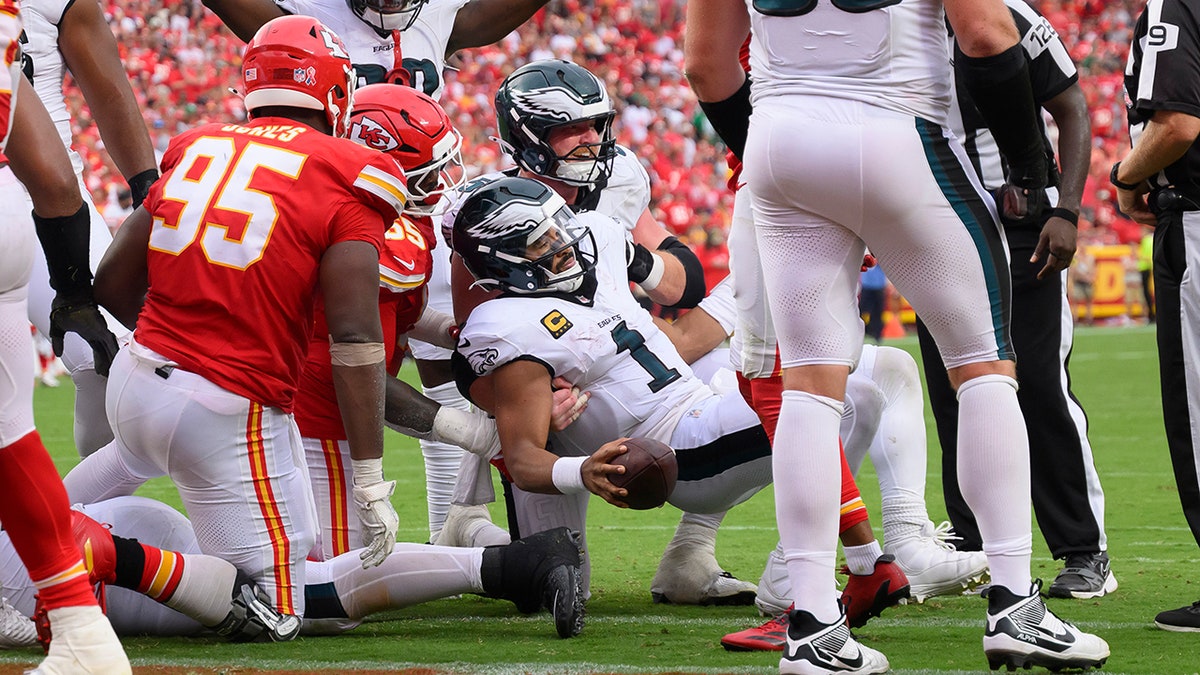
NFL Scrutinizes Eagles‘ ‘Tush Push’ play Following Officiating review
PHILADELPHIA – The Philadelphia Eagles’ controversial “tush push” play is facing renewed scrutiny after the NFL released an officiating video highlighting the challenges of accurately calling the tactic, sparking debate about its future in the league. The video, reviewed during a recent NFL competition committee meeting, showcased the difficulty officials face in determining whether the Eagles’ offensive line and quarterback Jalen Hurts are legally stationary before snapping the ball on the short-yardage play.
The “tush push,” a quarterback sneak where teammates forcefully push from behind, has become a signature play for the Eagles, proving remarkably effective in short-yardage and goal-line situations. Its success rate has led to criticism from opponents and questions about whether it exploits a loophole in the rules. The current review stems from concerns about pre-snap movement and whether the play consistently adheres to rules regarding being set before the snap.
During the meeting, officials acknowledged the play’s complexity. “We want to officiate it tight. We want to be black and white and be as tight as we can be when we get into this situation where teams are in the bunch position and we have to officiate them being onsides, movement early,” an official stated in the video. “Prior to the snap,looks like we have movement by the right guard. We also have movement coming across from the defensive side.This is a very hard play to officiate.I get it.”
FOX Sports rules analyst Dean Blandino has publicly voiced his frustration, stating he was “done” with the play due to the officiating difficulties.
Last year, the Green Bay Packers proposed a ban on the “tush push,” but the proposal failed to pass, with NFL owners falling short of the required 24 votes to outlaw it. The play was utilized in just 0.28% of total plays during the 2024 season, according to ESPN.
The NFL competition committee is expected to continue discussing the play during the offseason, with potential rule changes a possibility for the 2026 season. The debate centers on whether the play provides an unfair advantage and whether consistent, accurate officiating is realistically achievable.
