
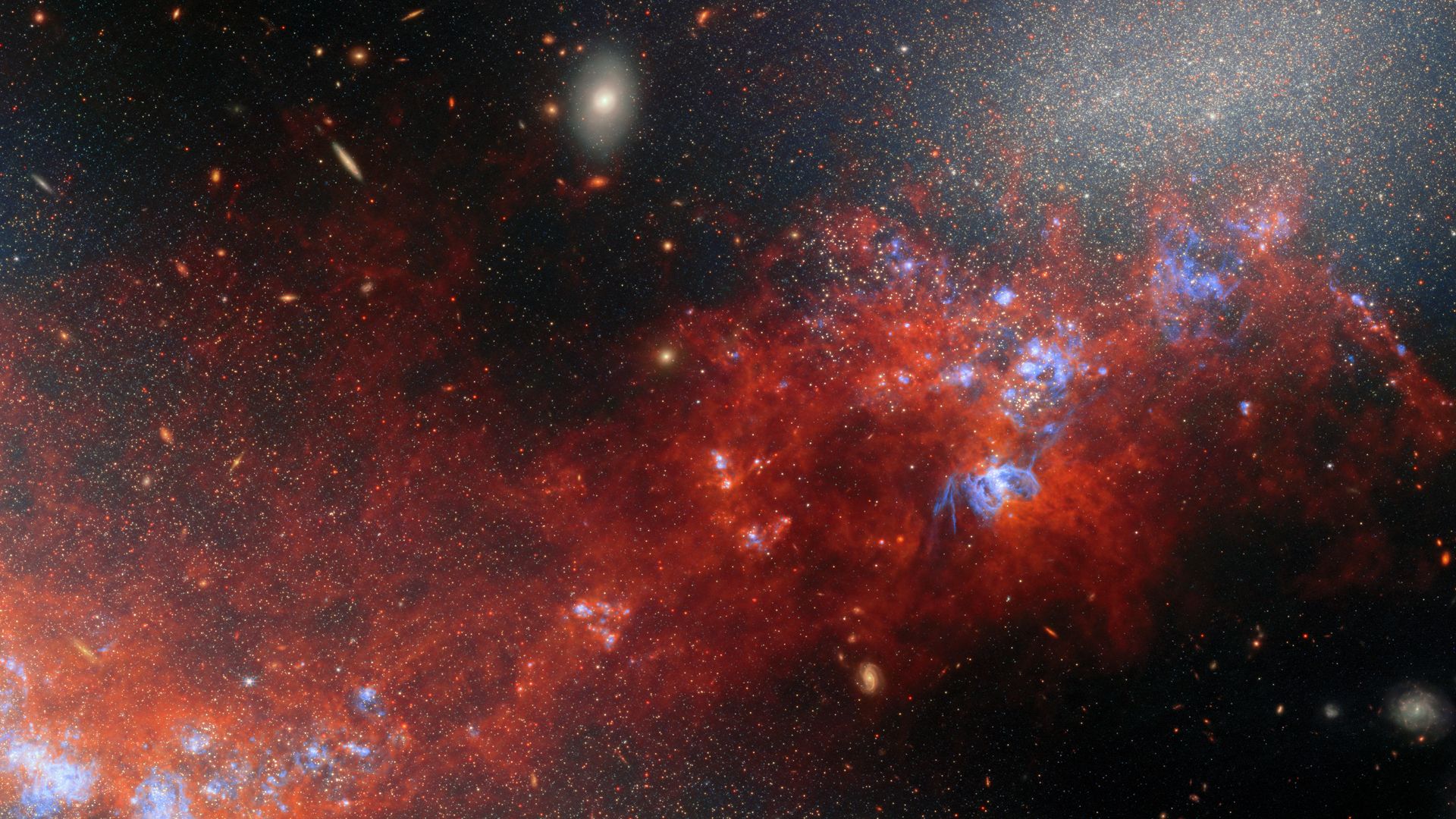
Webb telescope Captures Stunning Image of Interacting Dwarf Galaxies Linked by Glowing Bridge
A newly released image from the James Webb Space Telescope reveals a breathtaking view of two dwarf galaxies, NGC 4490 and NGC 4485, connected by a luminous bridge of gas and star formation. The image offers unprecedented insight into the dynamic interaction between these galactic neighbors, showcasing a cosmic dance that has unfolded over hundreds of millions of years.
The observation provides astronomers wiht a unique chance to study galactic evolution and understand how smaller galaxies grow and change through interactions. By analyzing the distribution of stars of different ages within the galaxies, researchers have pieced together a timeline of their encounter, revealing details about gas exchange and star birth triggered by the galactic interaction.
According to officials at the European Space Agency (ESA), the dwarf galaxies swept past each other approximately 200 million years ago. During this close encounter, NGC 4490 drew gas from NGC 4485, forming the visible bridge of material and igniting waves of star formation, some as recent as 30 million years ago.
“By dissecting these galaxies star by star, researchers were able to map out where young, middle-aged, and old stars reside, and trace the timeline of the galaxies’ interaction,” ESA officials saeid.
This revelation contributes to a broader understanding of how galaxies, particularly dwarf galaxies, evolve within the universe. Dwarf galaxies are often considered building blocks for larger galaxies, and studying their interactions provides clues about the formation and growth of more massive structures.
“By capturing the history of the galactic dancers NGC 4490 and NGC 4485, Webb has revealed new details in how dwarf galaxies interact, giving us a glimpse of how small galaxies near and far grow and evolve,” ESA officials stated.
The image was captured by the Webb telescope’s Near-Infrared Camera (NIRCam). The research team included A. Adamo (Stockholm University),G. Bortolini, and the FEAST JWST team.
