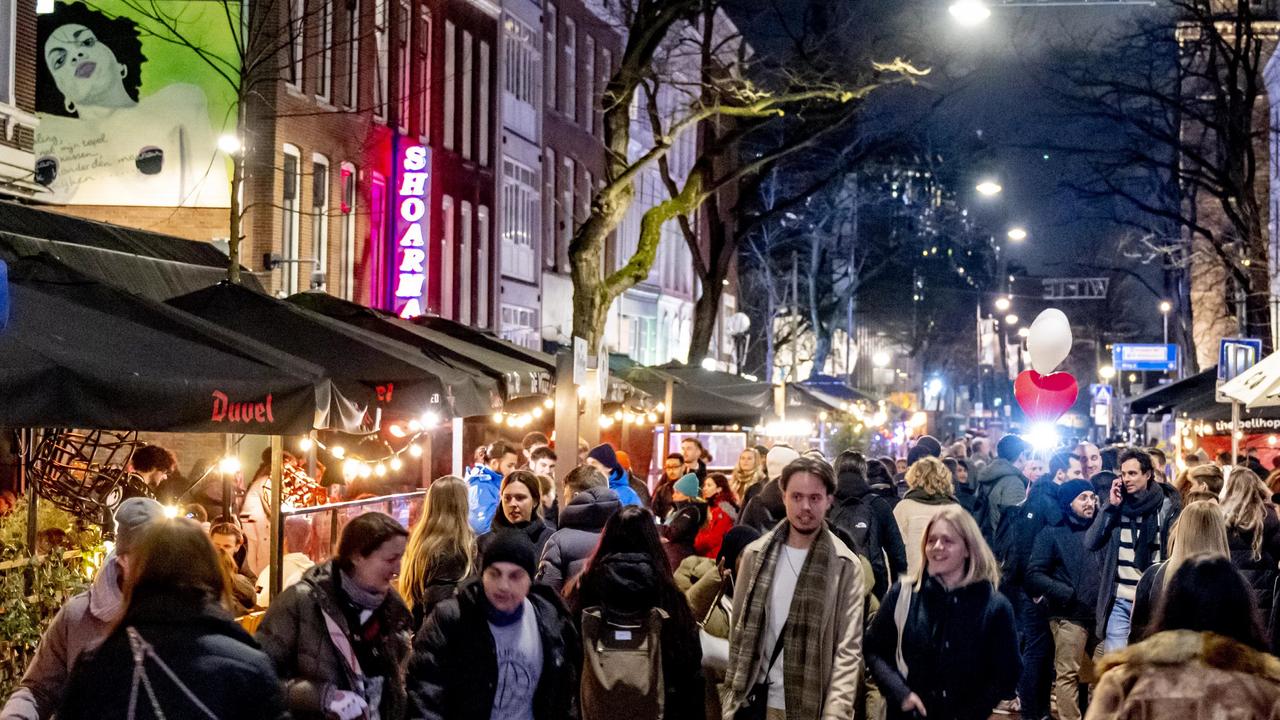
Dutch Youth Abandon Nightclubs for Health, Cost, and Safety Reasons
Young adults in the Netherlands are increasingly choosing to skip late-night clubbing, a trend driven by shifting health priorities, rising costs, and a fundamental change in social habits.
Research from the Trimbos Institute confirms that the decline in nightlife participation among 16-to-35-year-olds, first identified in 2023, is continuing.
Changing social habits
The habit of dancing until the early hours is no longer the standard for many young people. According to Trimbos researcher Michelle van der Horst, the COVID-19 pandemic caused this shift, as a generation missed the formative years when such social behaviors are typically learned.
“You look at your older brothers and sisters and your environment, from which you adopt things.”
Van der Horst told NOS Nieuws. Beyond the pandemic’s impact, young people are placing a higher premium on physical and mental health. Many now weigh the benefits of a full night’s sleep against the exhaustion of a late-night outing.
Financial and safety concerns
Economic factors also weigh heavily on the decision to stay home. Rising costs have made a night out much more expensive, discouraging casual attendance. The environment within clubs is evolving in ways that do not always align with the preferences of younger generations.
Social contact is becoming more focused on conversation, which is often difficult in the loud, intense setting of a traditional nightclub. Safety concerns, including the fear of being filmed, experiencing sexually transgressive behavior, or being drugged, have also been cited by young people as reasons to avoid these venues.
The decline of traditional venues
Dutch nightlife has contracted sharply over the last two decades. Data from the research firm Locatus shows that the number of discotheques in the Netherlands dropped from 547 in 2006 to 172 today. Cafes have seen a similar trend, with the total number falling from 9,984 to 4,538 over the same twenty-year period.
Nightlife in transition
While traditional clubs are disappearing, the nightlife sector is not vanishing; it is diversifying. In Rotterdam, where the number of discotheques has fallen from 44 to 10 over twenty years, local officials argue that the definition of nightlife is simply broadening.
Rotterdam night mayor Thys Boer points to venues like Mono, which operates as a coffee bar during the day and transitions into a club space at night. These hybrid locations are not always categorized as nightclubs, masking the true volume of nighttime activity. Despite this evolution, Boer expressed concern that the reduction in dedicated club spaces limits opportunities for self-development and talent growth among the youth.
Alternative social spaces
New, quieter forms of social interaction are filling the void left by the decline of the traditional club. For instance, the cultural venue Worm in Rotterdam hosts “Artgang,” a weekly event where participants meet to work on creative projects like knitting, embroidery, and sewing.
Mimi van Rinsum, who organizes the event, sees these creative gatherings as a new form of nightlife. “It is a social place to meet people,” she said. “We come together weekly, try out different art forms, and learn new things from each other.”
Research indicates that as traditional nightlife fades, young people are seeking spaces that offer genuine connection rather than just music and dancing. As the sector continues to shift, the focus remains on finding ways to facilitate social growth that fit the current generation’s needs.
Michelle van der Horst, a researcher at the Trimbos Institute, serves as Project Manager in Student & Substance Use. She has noted that while hard drug use among students has risen since the pandemic, excessive alcohol consumption remains the biggest problem for this demographic.
Van der Horst has emphasized that the vast majority of students do not use drugs, cautioning that increased attention to the issue can create a distorted perception of its prevalence.
“If the nightlife setting does not suit you, it is great that new offerings are emerging, such as board game or ping pong evenings,” said Van der Horst.