
Dutch Academy Probes Colonial Past for Present-Day Justice
Multidisciplinary Team Seeks to Foster Inclusivity
A comprehensive three-year study will delve into the colonial history of the Royal Netherlands Academy of Arts and Sciences (KNAW). Researchers aim to transform this historical examination into a tangible step toward creating a more equitable and diverse institution today.
Unearthing Colonial Legacies
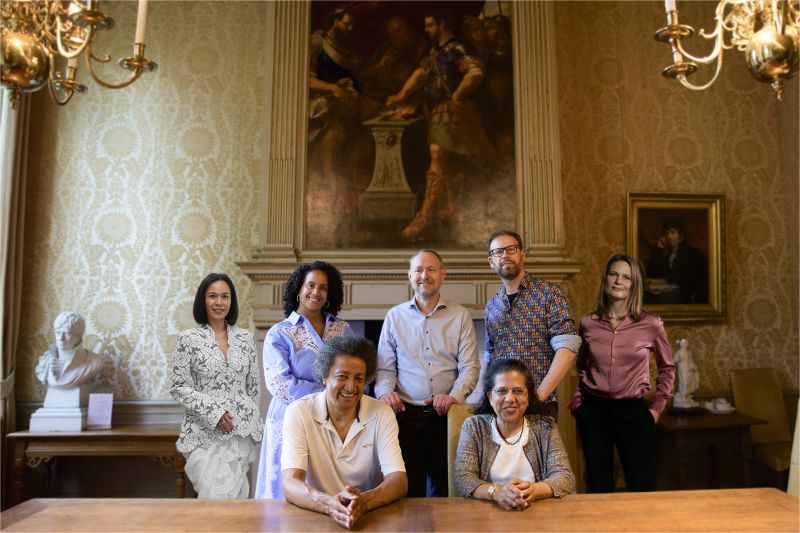
The research consortium, composed of seven scholars from Dutch institutions with connections to Indonesia and Suriname, will launch its investigation next month. The project seeks to contribute significantly to contemporary academic discussions surrounding colonial legacies and their ongoing influence.
The study will scrutinize the academy’s historical operations in formerly colonized territories, including Indonesia, South Africa, the Dutch Caribbean, and Suriname. It will also examine the KNAW’s collections, buildings, and the broader impact of its scientific endeavors.
Challenging ‘Epistemic Extractivism’
A central focus will be “epistemic extractivism,” according to Alana Helberg-Proctor, a senior assistant professor of anthropology at the University of Amsterdam. Researchers will explore crucial questions like who receives credit for specific work and what constitutes a “good scientist” in terms of appearance and presentation.
“We’re all working to answer these different questions from an interdisciplinary perspective, and then we’ll come together to synthesise what we’ve found, and how that might inform improving the current situation. We hope to recognise the patterns that continue in the present from those colonial times.”
—Alana Helberg-Proctor, Senior Assistant Professor of Anthropology
Prioritizing Multiperspectivity
Laurens de Rooy, curator and director of the Vrolik museum at the Amsterdam University Medical Centre, highlighted “multiperspectivity” as a core tenet of the consortium. One aspect of the research will investigate how ideas, objects, and natural history collections were relocated from colonized nations to the KNAW and its affiliated institutes.
The project will also confront colonial assumptions about science, particularly the notion of objective scientific study that disregarded the presence and perspectives of those being studied. Researchers will examine how knowledge was appropriated and presented as original work without acknowledging the contributions of local populations.
Bridging Past and Present
Further research will concentrate on contemporary issues, involving dialogue with individuals within the KNAW and in former or current colonies. This includes engaging with scientists, activists, and others to reflect on the project’s findings.
The research team also includes cultural historian and exhibition maker Sadiah Boonstra, social and cultural historian Caroline Drieënhuizen, philosopher Monika Kirloskar-Steinbach, research chair coordinator and cultural creator Guus Pengel, and historian of science Robert-Jan Wille.
Ensuring Public Accessibility
Helberg-Proctor stressed the importance of making the research findings “easily accessible” to the public, moving beyond lengthy, obscure reports. A documentary team will collaborate with the academics to produce a series of episodes, and an exhibition will be held at the academy itself.
“The KNAW is quite a closed space, and we hope that through the project we can literally open it up and invite people who may have never been inside but have walked past it every day.”
—Alana Helberg-Proctor
A Continuous Process of Improvement
De Rooy emphasized that effective communication is vital to prevent the project’s outcomes from becoming mere archival material. The focus, he stated, is on the ongoing nature of the endeavor.
The consortium and the KNAW aim not only to conduct historical research but also to address the fundamental question: “How can all of this help us to become a more inclusive, diverse and just organisation?” This commitment reflects a broader trend in European institutions to confront their colonial histories, as seen in museums like the Rijksmuseum in Amsterdam, which has been actively re-evaluating and re-contextualizing its colonial-era collections since 2021 (Rijksmuseum).
