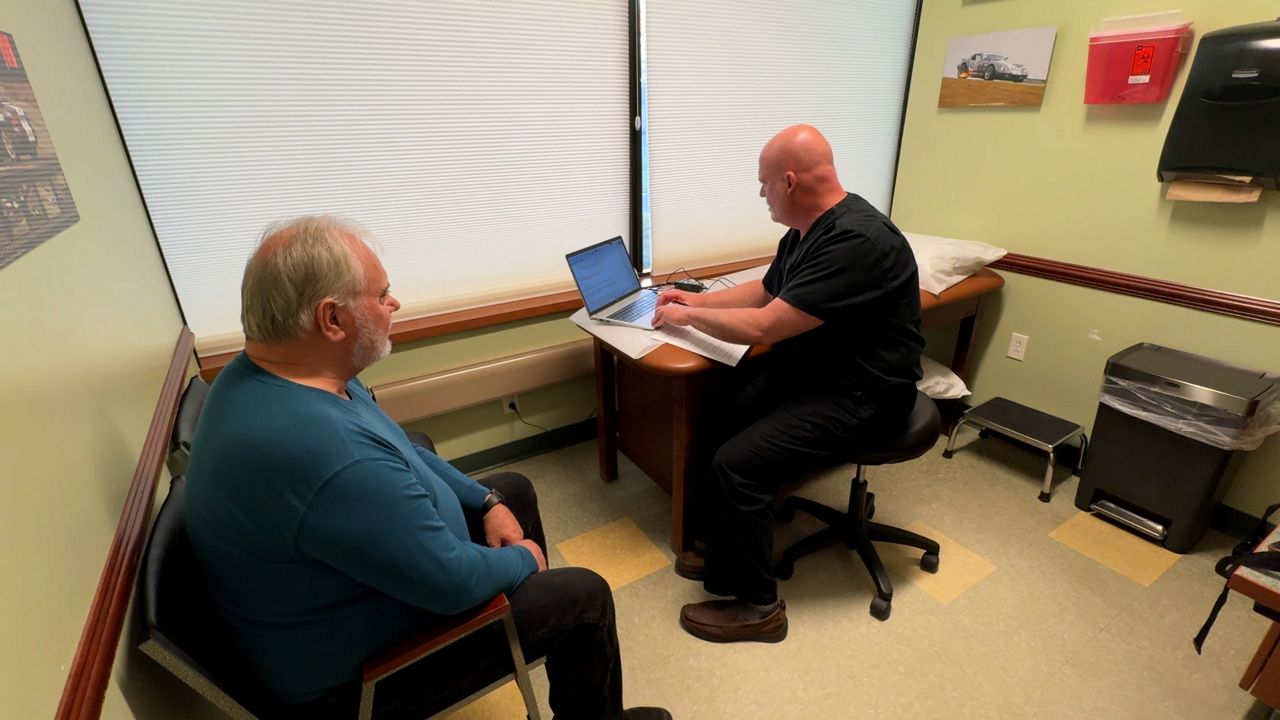
Dr. Andrew Wickline Aims to End Opioid Reliance in Joint Replacements
“Currently, one out of 11 patients will get addicted to opioids,” orthopedic surgeon Dr. Andrew Wickline stated, highlighting a major risk facing joint replacement patients.
Dr. Andrew Wickline is changing the recovery process for hip and knee replacement surgery by aiming to eliminate opioid prescriptions entirely for most patients. Wickline launched a national movement called “March to a Million” with the goal of helping one million patients undergo joint replacements with little to no reliance on opioids.
Key Clinical Takeaways:
- Dr. Andrew Wickline reports that 89 percent of his knee replacement patients and 98 percent of his hip replacement patients do not require an opiate prescription.
- Patients follow a structured 42-day recovery booklet outlining symptom management with ice, minimal exercises, and non-opioid medications such as acetaminophen and anti-inflammatory steroids.
- The initiative challenges traditional recovery models by encouraging at-home rehabilitation instead of frequent, formal physical therapy sessions.
The March to a Million Movement
The national campaign led by Wickline seeks to reshape postoperative protocols across the country. According to Wickline, traditional recovery pathways frequently result in prolonged dependency. “A year later, they still can’t get off of those pills. And that creates a lot of problems, both for the patient and the family,” Wickline said.
To combat this, Wickline’s protocol relies on targeted patient education and alternative medications. Patients receive a 42-day roadmap detailing what to expect during each stage of recovery. Thomas Tripoli, a patient who had both knees replaced by Wickline—most recently in August—noted the impact of the guide. “Dr. Wickline has a booklet. And in that booklet, it maps out 42 days, and the amazing part about it is he’s right in your head. Day one, this is what you’re going to feel, and this is what you’re going to go through,” Tripoli said.
Tripoli managed his postoperative discomfort using ice, minimal stretching exercises, and non-opioid medications like acetaminophen and steroids to reduce inflammation, avoiding opioids altogether. “I can’t remember the last time I walked this good,” Tripoli said.
Educating Surgeons on Alternative Recovery Protocols
Expanding the practice requires shifting the perspective of medical professionals as well as patients. Wickline and his colleagues travel to instruct other medical providers on implementing opioid-free surgical pathways. “We’ve flown all over to educate surgeons that there is a better way to teach surgeons how to teach their patients. ‘Hey, let’s push back on the way we used to do this,’” Wickline said.
This shift also involves redefining physical therapy requirements during recovery. Dr. Kevin Kopko, chairman of orthopedics at St. Joseph’s Health, emphasized that modern protocols can reduce the burden of frequent clinical visits. “The idea that less is more, that you don’t need to go to a formal physical therapist three times a week, you can do it at your home,” Kopko said. Kopko added that altering recovery expectations requires shifting the perspective of both the individual patient and their surrounding community.
Disclaimer: The information provided in this article is for educational and scientific communication purposes only and does not constitute medical advice. Always consult with a qualified healthcare provider regarding any medical condition, diagnosis, or treatment plan.