Dis-Chem founders exit as leadership and stores change
Dis-Chem is overhauling its retail footprint and corporate structure as founding leadership steps away, even as higher operating costs weigh on the pharmacy group’s bottom line. Founders Ivan and Lynette Saltzman have exited the business they started in 1978, leaving chief executive Rui Morais to steer a nationwide store renovation program across South Africa.
Founding Family Members Exit Executive Roles
Ivan Saltzman resigned as an executive director on June 30, 2026, following an initial stint as a non-executive director before leaving the board entirely in July. Stanley Goetsch, a qualified pharmacist with 42 years at the company, retired as an executive director on the same June date. These departures follow a broader withdrawal of the founding family from executive roles. Saltzman handed the chief executive role to Rui Morais in July 2023. Lynette Saltzman left her executive position in 2022 to concentrate on beauty operations, and their son Saul resigned as an executive director last year.
Dan and Mark Saltzman received billions of rand worth of shares in June 2025 through a restructure of the founders’ holdings, later selling roughly R320 million in shares between January and February 2026. This leadership shift coincides with an internal reorganization intended to streamline operations. According to interim results for the six months ending August 31, 2026, the group sits at 60% completion of an organizational redesign slated to finish by December. The overhaul trimmed the executive headcount reporting directly to Morais from 24 down to 14, establishing leaner accountability structures.
Rising Expenses Drag Down Net Profit
The corporate transition unfolds against a challenging financial backdrop for the retailer. Group revenue grew by 8% to reach R22.97 billion during the six-month reporting period, with retail revenue climbing 8.2% to R19.55 billion. Operating expenses jumped 13.1% to R6.2 billion, dragging operating profit down by 10.5% to R1.01 billion. Net profit fell 12% to R581 million, while headline earnings per share dropped from 73.8 cents to 64.3 cents. Management tied much of the cost pressure to ongoing investments in its technology and innovation venture, X, Bigly Labs.
Despite margin compression, retail metrics showed resilience. Front-shop sales volumes expanded 5.5%, outpacing total market volume growth of just 0.1%. Active membership in the Better Rewards loyalty program climbed 27% to reach 8.2 million users, driving 86.1% of retail sales. Momentum continued past the reporting period, with group revenue rising 7.9% during the seven weeks ending October 19, 2026.
The Store of the Future Blueprint
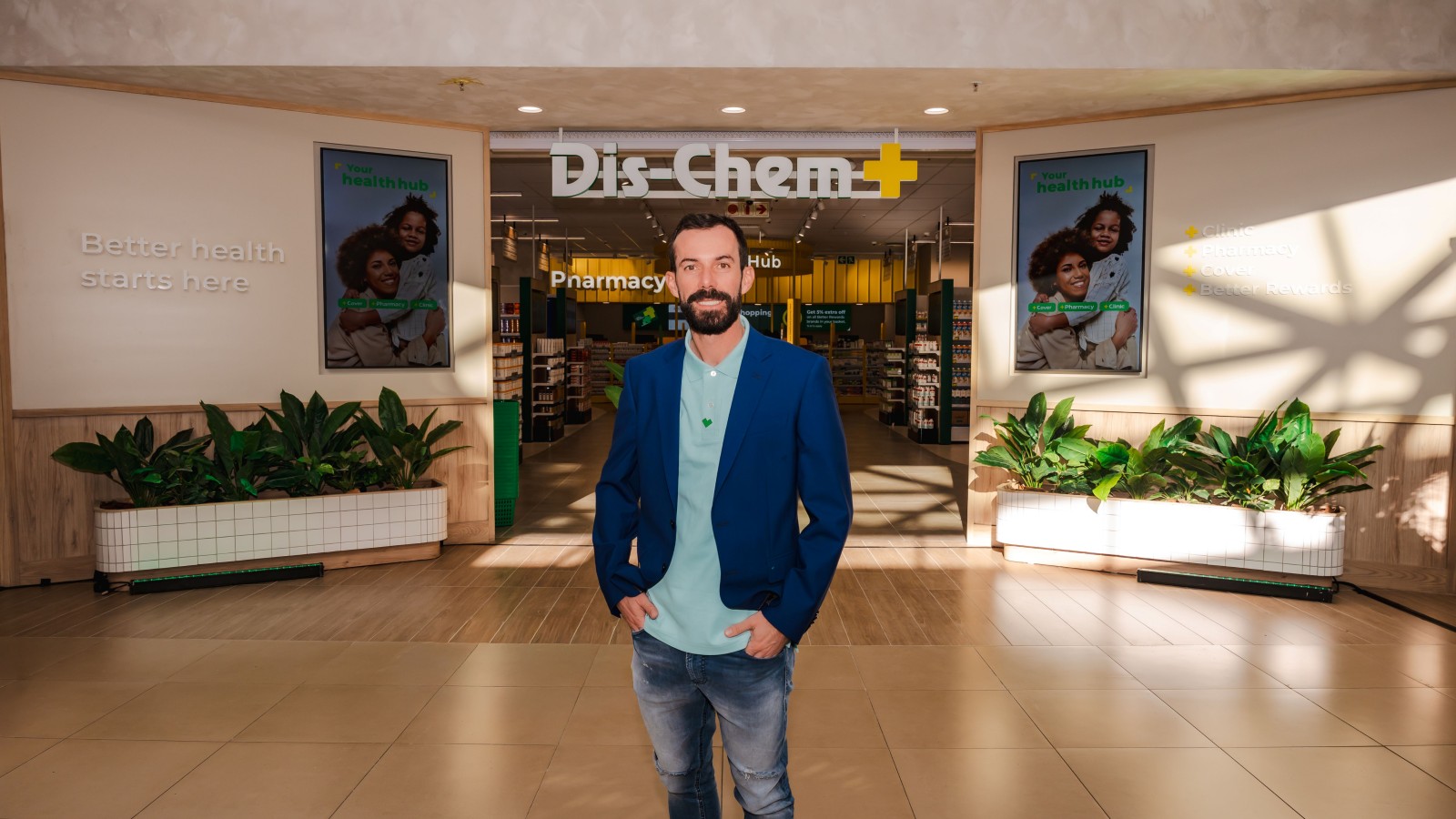
Customers will experience the most visible changes through Dis-Chem’s new Store of the Future layout. Following pilots at Melrose Arch and Irene Village—where trading densities reached 25% higher than comparable early-stage stores under older formats—Morais confirmed Melrose Arch serves as the operational blueprint for future outlets. The company plans to introduce the format to all new locations from August 2026 while systematically renovating its existing store base of 323 locations over the next five years, prioritizing sites with higher revenue potential.
A central fixture of the new design is the Health Hub, consolidating previously scattered services into a single access point. Shoppers can visit pharmacy queues, book clinic appointments, and consult advisers regarding medical, funeral, and life insurance policies. The hub also processes administrative needs such as identity verification, check-ins, payments, and loyalty sign-ups. While the organizational redesign moves toward completion in December, the broader question remains how effectively the new store format and centralized health hubs will offset mounting operational expenses in the quarters ahead.