
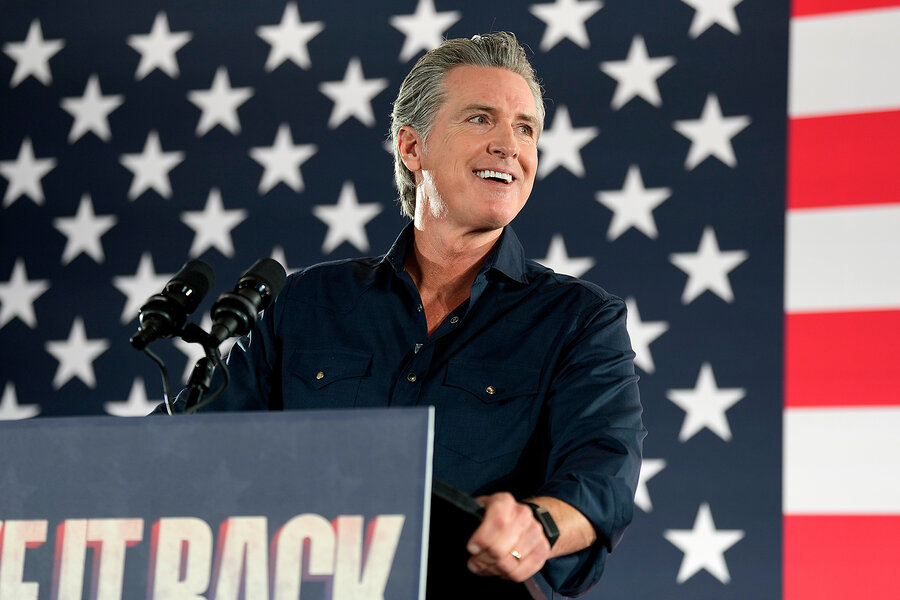
WASHINGTON — The dynamic between President Donald Trump and the nation’s governors is once again taking center stage as the National Governors Association (NGA) convenes its annual winter meeting this week. The gathering, scheduled for February 19-21, comes a year after a tense exchange between Trump and Maine Governor Janet Mills over transgender athletes, an episode that underscored a shift in the Democratic Party’s strategy for countering the Trump administration: leveraging the power of governors.
Mills, now running for the U.S. Senate, faces a competitive primary before a potential November showdown with Republican Senator Susan Collins, a race with implications for Senate control. The NGA meeting also highlights a number of other Democratic governors – Gavin Newsom of California, Josh Shapiro of Pennsylvania, JB Pritzker of Illinois, Andy Beshear of Kentucky and Wes Moore of Maryland – increasingly viewed as potential contenders for the 2028 presidential nomination.
The initial friction surrounding this year’s meeting arose when Oklahoma Governor Kevin Stitt, the NGA chair, announced plans to exclude Democratic governors, a move Trump initially characterized as a “misunderstanding.” He subsequently stated that all Democrats were invited except Maryland Governor Moore and Colorado Governor Jared Polis, referring to Stitt as a “RINO” – a “Republican In Name Only.” Trump has publicly criticized Polis over the case of Tina Peters, a former Colorado county clerk convicted of breaching voting equipment security.
The confrontation between Trump and Mills last February, documented by the Associated Press and widely reported, involved the president threatening to withhold federal funding from Maine over the state’s defense of transgender athletes’ participation in women’s sports. Mills responded with a defiant “Spot you in court,” a moment that resonated nationally. The two are set to meet again this week, marking the first time they will be in the same room since that clash.
This pattern of resistance extended beyond Maine. The Trump administration’s attempts to withdraw National Guard troops from cities like Los Angeles, Chicago, and Portland, Oregon, faced pushback from governors and mayors. Similarly, the drawdown of immigration enforcement personnel from Minneapolis followed sustained opposition from Democratic politicians, including Minnesota Governor Tim Walz. Democratic governors also challenged the administration’s congressional redistricting efforts, particularly in California.
The dynamic at the NGA meetings could also influence the broader political landscape, including the potential Republican field for 2028, with figures like Florida Governor Ron DeSantis potentially positioning themselves as successors to Trump. The recent exchange between Trump and Moore, sparked by a sewage spill in the Potomac River and the Francis Scott Key Bridge collapse in Baltimore, illustrates the ongoing tensions. Trump incorrectly blamed Moore for the sewage spill, which was the responsibility of the D.C. Water utility.
Although governors haven’t traditionally been a direct pathway to the presidency – the last governor to win a first term was George W. Bush in 2000, and Bill Clinton in 1992 – their executive experience is seen as an asset. California’s Newsom, for example, frequently highlights his leadership of the most populous U.S. State and the world’s fourth-largest economy. He has also adopted a confrontational social media strategy, mirroring Trump’s tactics. The Trump administration’s approach to science, as outlined in a May 2025 executive order, has also been a point of contention with several governors.
Several potential Democratic candidates have also published memoirs, including Shapiro’s “Where We Keep the Light” and Newsom’s forthcoming “Young Man in a Hurry.” Beshear is releasing a book focused on his Christian faith, and Moore has already published five books. Despite these developments, former Vice President Kamala Harris currently leads early polls for the 2028 Democratic nomination, largely due to name recognition.
As the governors gather in Washington, the interactions between Trump and his counterparts, particularly during the scheduled breakfast and dinner, are likely to provide further insight into the evolving political dynamics and the potential battles to come.
