Delayed Small Bowel Perforation After Lumbar Trauma: A Case Report
A delayed diagnosis of small bowel perforations and mesenteric lacerations following combined blunt and penetrating lumbar trauma remains a complex clinical challenge associated with substantial morbidity and mortality. According to a case report published in Cureus, initial diagnostic imaging following trauma can occasionally miss acute intra-abdominal injuries, resulting in delayed clinical deterioration that requires immediate surgical intervention. Healthcare providers managing complex trauma cases must maintain high suspicion for occult bowel and mesenteric pathology even when initial computerized tomography (CT) scans show no immediate abnormalities.
Key Clinical Takeaways:
- Initial abdominal CT scans following trauma can occasionally miss acute small bowel perforations and mesenteric lacerations, delaying necessary surgical intervention.
- Portomesenteric vein gas and intestinal intramural gas on follow-up imaging strongly indicate severe ischemic necrosis requiring emergent laparotomy.
- Post-traumatic patients require continuous medical observation and prompt serial imaging if vital signs or physical examinations worsen.
Understanding the Pathophysiology of Delayed Small Bowel Perforations
Isolated small bowel perforations resulting from blunt and penetrating trauma mechanisms are uncommon clinical events that carry elevated mortality rates. Per the case findings documented in the peer-reviewed literature, the underlying pathophysiology often involves delayed ischemic necrosis stemming from minor mesenteric hematomas or unrecognized vascular tears. Over several hours, this ischemia weakens the bowel wall until a delayed blowout occurs.
Complementary findings from historical reviews on PubMed Central note that delayed small bowel perforations can present anywhere from hours to days following the initial insult. In many instances, the primary diagnostic indicator is the appearance of portomesenteric venous gas, which signals advanced mucosal breakdown and bacterial translocation into the portal circulation. Clinicians evaluating patients with multi-region trauma must recognize that normal initial laboratory values and negative admission scans do not completely rule out evolving mesenteric ischemia.
Clinical Manifestations and Serial Diagnostic Protocols
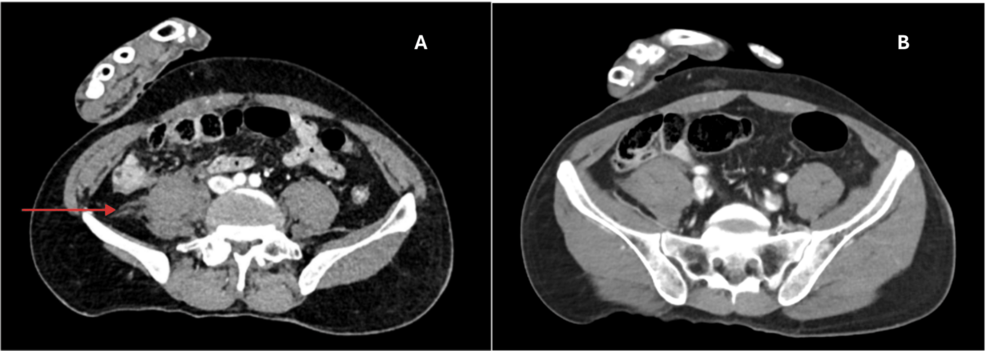
Patients who sustain combined lumbar trauma frequently present with distracting injuries, such as fractures or soft tissue damage, which can mask acute abdominal tenderness. As detailed in the Cureus case study, a 33-year-old male admitted after a motor vehicle accident initially displayed normal hemodynamics and negative abdominal CT findings, only to experience sharp clinical deterioration roughly 20 hours later. Follow-up diagnostic evaluations revealed extensive intraperitoneal free fluid, jejunal dilatation, and portomesenteric vein gas.
When general conditions deteriorate unexpectedly, standard protocols dictate immediate reassessment through serial physical examinations and repeat multidetector CT imaging.
Surgical Intervention and Management of Mesenteric Lacerations
Emergent exploratory laparotomy remains the definitive standard of care once delayed bowel perforation or ischemic necrosis is confirmed. Intraoperative findings typically demonstrate areas of dark, non-viable bowel wall alongside mesenteric injury requiring segmental resection and primary anastomosis or stoma creation, depending on the patient’s hemodynamic stability. Managing these complex surgical recoveries often necessitates specialized postoperative care pathways.
Ensuring seamless continuity of care from the intensive care unit to rehabilitation requires robust multidisciplinary coordination.
Future Trajectory in Trauma Imaging and Patient Monitoring
The ongoing challenge in trauma medicine lies in refining diagnostic thresholds to catch occult mesenteric injuries before transmural necrosis develops. As clinical research continues to map the exact predictors of delayed bowel ischemia, hospitals must maintain rigorous monitoring standards.
*Disclaimer: The information provided in this article is for educational and scientific communication purposes only and does not constitute medical advice. Always consult with a qualified healthcare provider regarding any medical condition, diagnosis, or treatment plan.*