
Deep Sea Life More Connected Than Believed
Brittle Star Study Reveals Global Ocean Highways
Marine life in the deep sea, once thought to be isolated, is proving to be remarkably interconnected. New research from Museums Victoria has unveiled a hidden global network, potentially revolutionizing our understanding of life in Earth’s most extreme environments.
Ancient Wanderings Under the Waves
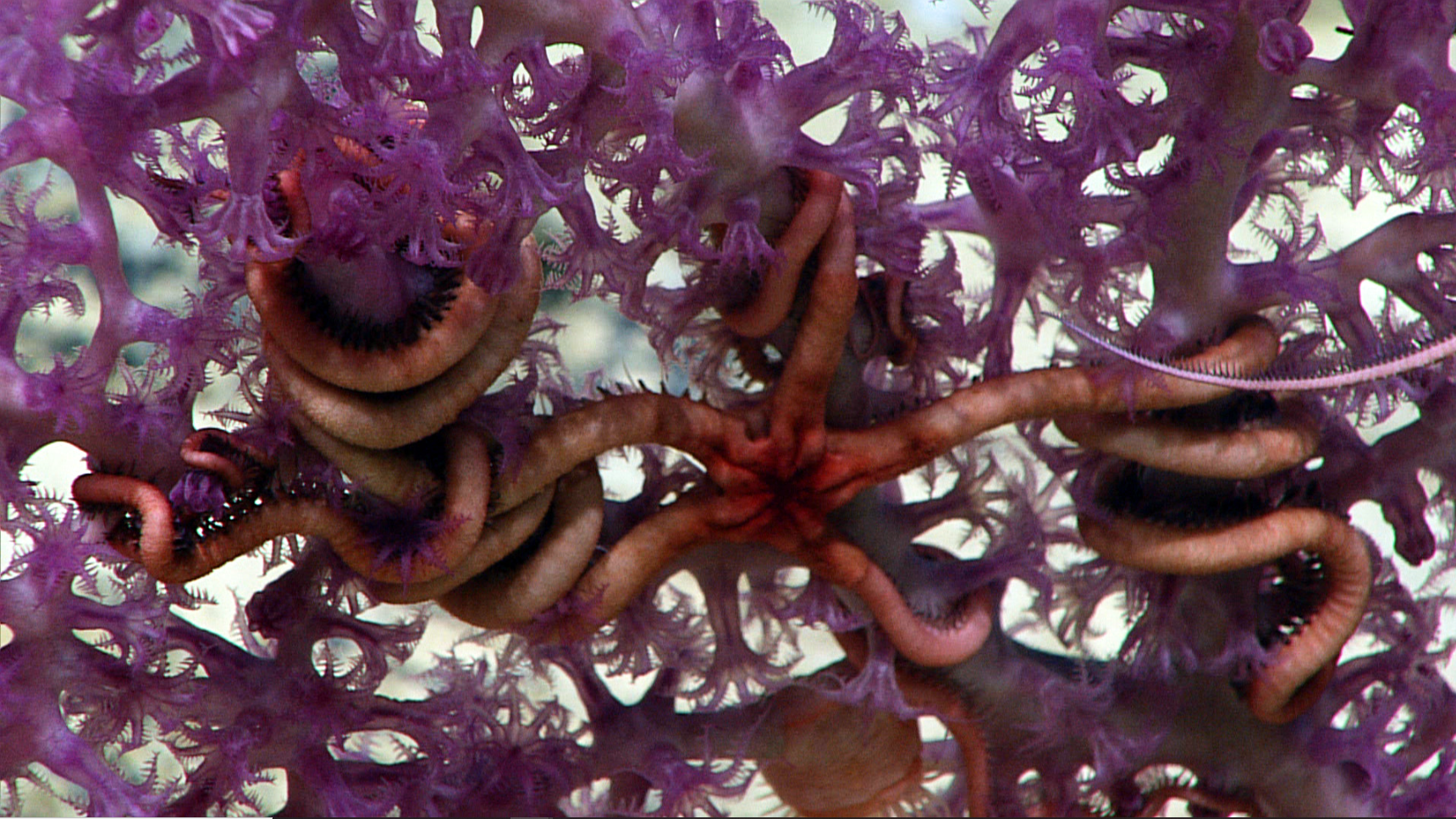
A groundbreaking study published in Nature has meticulously mapped the global distribution and evolutionary links of brittle stars, an ancient group of spiny marine invertebrates. These creatures, found from equatorial to polar regions and from shallow waters to abyssal plains, are now understood to have undertaken vast migrations across oceans.
By analyzing the DNA of thousands of specimens collected over numerous expeditions and housed in natural history museums worldwide, scientists discovered that these deep-sea dwellers have “quietly migrated across entire oceans” over millions of years. This extensive connectivity, spanning from Iceland to Tasmania, has remained largely unnoticed until now.
Unprecedented Data Unlocks Ocean Secrets
The research utilized an “unprecedented” dataset, offering fresh insights into the evolution and dispersal of marine species over the last 100 million years. Dr. **Tim O’Hara**, the study’s lead author and senior curator of Marine Invertebrates at Museums Victoria Research Institute, highlighted the surprising nature of these findings.
“You might think of the deep sea as remote and isolated, but for many animals on the seafloor, it’s actually a connected superhighway. Over long time scales, deep-sea species have expanded their ranges by thousands of kilometres. This connectivity is a global phenomenon that’s gone unnoticed, until now.”
—Dr Tim O’Hara, Senior Curator of Marine Invertebrates at Museums Victoria Research Institute
The study’s comprehensive scope, drawing DNA from 2,699 brittle star specimens across 48 institutions, represents the most extensive research of its kind. Brittle stars have existed for over 480 million years, with some species inhabiting depths exceeding 3,500 meters.
Unlike shallow-water marine life, which faces limitations from temperature variations, deep-sea environments offer greater stability, facilitating species dispersal over immense distances. Many brittle stars possess yolk-rich larvae capable of drifting on deep ocean currents for extended periods, enabling them to colonize distant regions.
Modern Connectivity Echoes Ancient Pathways
This discovery of ancient, large-scale dispersal patterns resonates with modern oceanographic understanding. For instance, satellite tracking of whales has revealed astonishing migratory routes covering thousands of miles, demonstrating the ocean’s persistent role as a vast, connecting medium for marine life (National Geographic).
The findings suggest that the deep ocean floor, far from being a collection of isolated habitats, functions more like a unified superhighway for mobile species, challenging previous assumptions about the limitations of deep-sea ecosystems.
