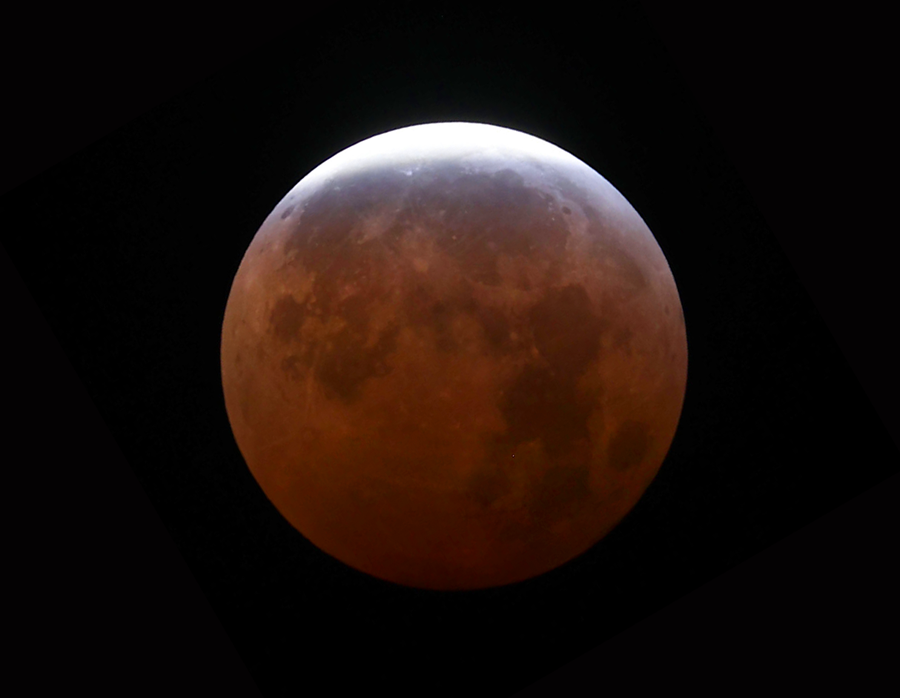
Deep Partial Lunar Eclipse: How to Watch the August 27-28 Event
A deep partial lunar eclipse will occur on the night of August 27–28, 2026, obscuring 96.2% of the Moon’s disk behind Earth’s umbral shadow. Visible across North America, South America, Europe, Africa, and parts of Asia, this event offers a significant astronomical spectacle spanning over five hours of total progression.
Global Visibility and Timing of the 2026 Eclipse
According to data from Timeanddate, the eclipse will be accessible to approximately 3.34 billion people, representing 41.21% of the global population. The phenomenon is a “whole-Earth event,” meaning that for any location where the Moon is above the horizon during the night, the eclipse will be observable at the exact same moment, though local clock times will vary based on time zones.
In North America, the event begins on the night of August 27. For example, in Charleston, the penumbral phase commences at 9:23 p.m. local time on August 27, with the maximum eclipse occurring shortly after midnight at 12:12 a.m. on August 28. EarthSky reports that the total duration of the event from the first penumbral contact to the last is 339 minutes, with the Moon submerged in the dark umbral shadow for 199 minutes.
Understanding the Mechanics of the Umbral Shadow
Unlike a total lunar eclipse, this event will leave a small portion of the Moon illuminated. At the moment of maximum eclipse, 96% of the Moon will be hidden within the Earth’s darkest shadow, the umbra. This creates a high-contrast visual effect where a bright white patch remains visible along the northeastern limb of the lunar surface.
Observers may also witness a red glow on the darkened portion of the Moon. EarthSky notes that this coloration depends heavily on local atmospheric conditions; regions with clearer skies may see the red hue more distinctly as sunlight filters through Earth’s atmosphere, while areas with high particulate matter, such as wildfire-affected zones, might experience a darker, less colorful eclipse.
Preparation and Safety for Amateur Astronomers
A distinct advantage of lunar eclipses is their safety; unlike solar eclipses, they require no specialized eye protection or filters. While the phenomenon is visible to the naked eye, many enthusiasts utilize binoculars or telescopes to enhance the resolution of the Moon’s surface as the shadow encroaches.

Weather remains the primary variable for successful viewing. Cloud cover can obscure the event entirely, making real-time monitoring of meteorological data essential.
The Relationship Between Lunar and Solar Cycles
Astronomical patterns dictate that lunar eclipses rarely occur in isolation. According to Timeanddate, a solar eclipse typically occurs approximately two weeks before or after a lunar eclipse. This 2026 event serves as a reminder of the precise orbital mechanics governing our solar system. Because the Earth, Sun, and Moon align in a specific configuration, these events are predictable with accuracy down to the second.
Infrastructure and Long-Term Astronomical Impacts
While the eclipse itself poses no physical threat to ground infrastructure, the event highlights the importance of precise timing and logistical coordination for space-related observations.
As the date approaches, observers should verify their local sunset and moonrise times. Because the eclipse happens overnight, the line of sight is critical.
The 2026 event stands as a reminder of the accessibility of space observation. With nearly half of the world’s population positioned to witness at least the penumbral phase, the eclipse offers a unique opportunity for both casual stargazers and professional researchers to observe the mechanics of Earth’s shadow in real-time.