DC Council Passed Free Transit Law; Metro Proposes Fare Hikes, Service Cuts
The D.C. Council passed a law in 2022 to make Metrobus free for all riders and provide residents a $100 monthly transit subsidy, but the measure was never funded as Metro now proposes fare increases of 11 percent or more and service cuts for next year.
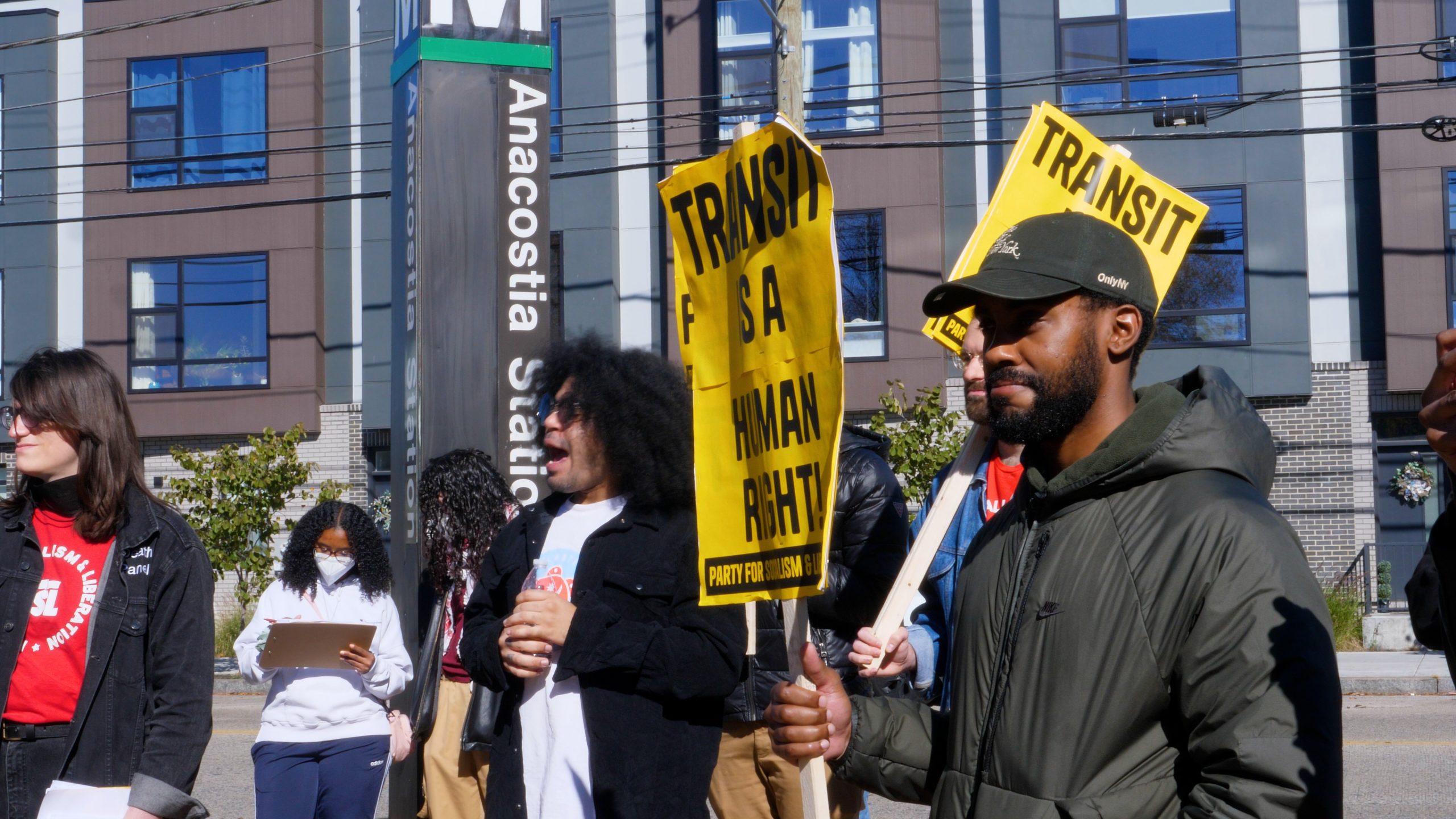
Metro faces a budget gap exceeding $130 million and is considering eliminating or reducing frequency on some bus routes, halting 24-hour service on 17 routes and adjusting weekend rail hours, the Washington Post reported. The agency operates on a $2.7 billion budget this fiscal year. On Nov. 7, the Pan-African Community Action (PACA) distributed free SmarTrip cards and held a rally at Anacostia Metro Station. Metro Transit Police and FBI agents shut down the event after one hour, organizers said.
“Today we out here because of the obscenity of them talking about and probably going to implement the raising of fares for us to travel and get around and do what we need to do to survive, and cutting the services, the service of it. This is an abomination,” said Netfa Freeman, a PACA organizer. Riders at the rally described rising costs. "They need to fix the Metro because it should not go from maybe $4 to $6 a day to now I’m paying $10 a day." That’s every day. Absolutely not,” said Aneesa, a rider who gave only her first name. PACA organizers connect transit access to broader inequities in Wards 7 and 8, citing a lack of grocery stores and health facilities and a Black unemployment rate that topped 10 percent earlier this year — more than two-and-a-half times the rate for white residents.
The Trump administration has deployed the National Guard throughout the District at roughly $3 million per day, with a daily presence at Anacostia station alongside FBI and Homeland Security Investigations agents. “Now D.C. faces the deployment of the National Guard to intimidate, incarcerate, attack, and internally colonize people trying to go about their daily lives,” said Rasa, an organizer who gave only her first name.
“They interrupted our program and forced us to move off of property. They issued an order that we needed to be removed from public property,” Rasa said. Oliver, a PACA organizer who gave only his first name, disputed police authority to disperse the gathering.
“Speech and performance activity, speaking, doing what we’re doing here, allowed on Metro property,” he said. Kwasi Brooks led chants of “Free, free, no Metro fee” and “Whose streets? Our streets” during the rally. Toby, a PACA organizer who gave only his first name, said WMATA previously cited implementation complexity for not enacting the 2022 law.
“We’re highlighting this contradiction. We’re saying that the Metro should be free,” Toby said. Alex, an organizer who gave only a first name, cited the Community Control D.C. platform’s demand for free, expanded, 24-hour transit unconditioned on income, immigration or housing status.
Metro Proposes Deeper Cuts and Higher Fares
The Washington Metropolitan Area Transit Authority is weighing service reductions and fare increases larger than earlier plans to close a funding gap now exceeding $130 million, the Washington Post reported.
The agency operates on a $2.7 billion budget this fiscal year and says it is approaching a “fiscal cliff,” the Post reported.
Metro, the tri-jurisdictional agency created by interstate compact among the District of Columbia, Maryland, Virginia and the federal government, sets fares and service levels through its board of directors — two voting members per jurisdiction — and holds sovereign immunity in all three jurisdictions.
It has no independent taxation authority and depends on its member jurisdictions for operating funding, a structural constraint that leaves it unable to implement the D.C. Council’s 2022 free-fare law without appropriated revenue from those partners.