
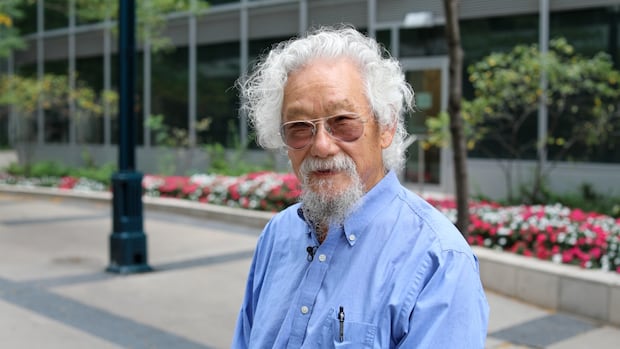
Suzuki: Growth Systems Are Humanity’s “Enemy”
Renowned Environmentalist Declares Climate Fight Lost, Urges Radical Systemic Change
Famed environmentalist David Suzuki has delivered a stark warning: humanity has fundamentally failed in its battle against climate change, and the prevailing economic and political systems are now the primary adversaries.
A Dire Climate Assessment
With decades of activism behind him, Suzuki asserts it is “too late” to reverse climate change. He argues that global societies remain ensnared by economic models dependent on perpetual growth, a path he now labels as destructive.
This critical assessment comes as Prime Minister Mark Carney‘s administration considers fast-tracking major projects, potentially including new fossil fuel infrastructure. Suzuki contends that even leaders like Carney are trapped by these established systems, making a complete dismantling of current structures the only remaining avenue for survival.
“We have fundamentally failed to shift the narrative” on climate change, Suzuki stated, characterizing the systems pursuing constant expansion as “our enemy.”
Focus on Fossil Fuels Criticized
In a recent podcast appearance, Suzuki discussed the “madness” of continued investment in fossil fuels. He explored what a world irrevocably altered by climate change might look like and offered lessons for future environmental advocates.
The urgency of his message is amplified by the fact that global carbon emissions have continued to rise. In 2023, the International Energy Agency reported that global CO2 emissions from energy consumption reached an all-time high, underscoring the scale of the challenge Suzuki highlights (IEA 2023).
A Call for Systemic Overhaul
Suzuki‘s perspective challenges conventional approaches, suggesting that incremental changes are insufficient to address the existential threat of climate change. He advocates for a radical departure from current economic and political paradigms.
His views were shared during an interview on the podcast “Front Burner,” where he detailed his concerns about the trajectory of environmental policy and the societal structures that perpetuate unsustainable practices.
Transcripts and listening options for “Front Burner” can be found on the CBC’s website.
