
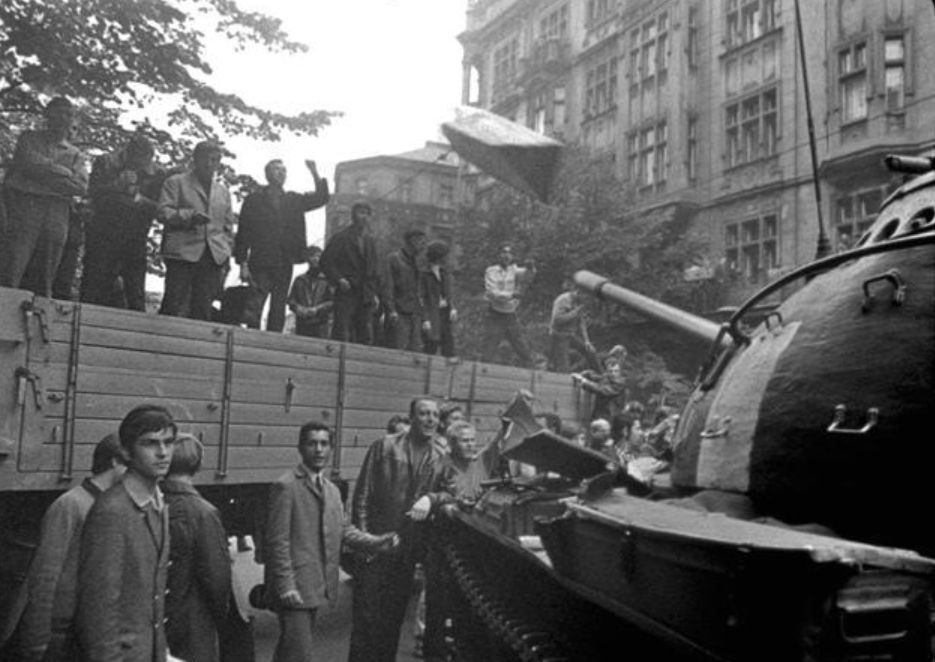
Filmmakers Confront the 1968 Soviet Occupation of Czechoslovakia
Table of Contents
approximately 20 fictional films have addressed the events of August 21, 1968, in Czechoslovakia following the Prague Spring. While many focus on the initial resistance, a compelling body of work explores the complexities of life under normalization. These films range from starkly realistic portrayals to experimental and, at times, unsettling interpretations of Czech identity and the Soviet presence.
“Uninvited Guest” (1969): A parable of Occupation
Director Vladimír Venclík’s 1969 short film, “Uninvited Guest,” presents a uniquely symbolic depiction of the Soviet occupation. The narrative centers on a couple whose quiet evening is disrupted by an imposing figure-played with striking effect by Pavel Landovský-who embodies the Soviet Union. The “guest” brazenly enters thier home, bringing with him an overwhelming presence and a demand for accommodation.
The film unfolds as the couple gradually accepts, and even begins to accommodate, the intruder. this progression-from initial fear to reluctant acceptance-serves as a chilling parable of human nature and the complex relationship between czechoslovakia and the Soviet Union.
Pro Tip: Consider the film’s allegorical nature when interpreting the actions of the characters.
The film’s concise, humorous, and pointed approach did not escape the attention of censors, triggering an investigation. Despite being completed in 1969, Venclík’s release was delayed until 1971, as the film circulated among his colleagues at FAMU (Film and TV School of the Academy of Performing Arts in Prague).The school initially provided a protective shield, but ultimately could not sustain it.
Did You Know? the Prague Spring, a period of political liberalization in czechoslovakia, began in January 1968 and was brutally suppressed by the Warsaw Pact invasion in August of the same year.
The Legacy of Cinematic Depiction
The films created in the wake of the 1968 invasion and during the subsequent normalization period offer a vital historical and cultural record. They challenge conventional notions of Czech pride, explore avant-garde cinematic techniques, and, in some cases, present deeply uncomfortable truths about collaboration and acceptance. These films continue to resonate today, prompting reflection on the enduring impact of political oppression and the complexities of national identity.
| Film Title | Director | Year | Key Themes |
|---|---|---|---|
| Uninvited Guest | Vladimír Venclík | 1969 | Occupation, Allegory, Human nature |
Contextualizing the Occupation
The Soviet-led invasion of Czechoslovakia in 1968 was a pivotal moment in the Cold War. It extinguished the hopes for “socialism with a human face” championed by Alexander Dubček, the First Secretary of the Communist Party of Czechoslovakia. The invasion led to a period of “normalization,” characterized by political repression, censorship, and the suppression of dissent. The films emerging from this era reflect the anxieties and frustrations of a society under occupation, offering a unique lens through which to understand this turbulent period.
Frequently Asked questions
- What was the Prague Spring? The Prague Spring was a period of political liberalization and reform in Czechoslovakia during 1968, aiming for “socialism with a human face.”
- Why did the Soviet union invade Czechoslovakia? The Soviet Union feared that the reforms of the Prague Spring would lead to Czechoslovakia leaving the Warsaw Pact.
- What is ”normalization” in the context of Czechoslovakia? Normalization refers to the period of political repression and censorship that followed the soviet invasion in 1968.
- How did filmmakers respond to the occupation? Filmmakers responded in diverse ways, creating films that ranged from direct depictions of resistance to allegorical explorations of occupation and its psychological effects.
- Is “Uninvited Guest” still relevant today? Yes, the film’s themes of power dynamics, acceptance, and the complexities of human relationships remain universally relevant.
What other films have powerfully depicted the impact of political upheaval on individual lives? And how can cinematic representations shape our understanding of historical events?
We hope this article has provided valuable insight into the cinematic responses to the 1968 Soviet occupation of Czechoslovakia. If you found this data helpful, please share it with others and join the conversation in the comments below. Don’t forget to subscribe to our newsletter for more in-depth analysis of global events and cultural trends.
