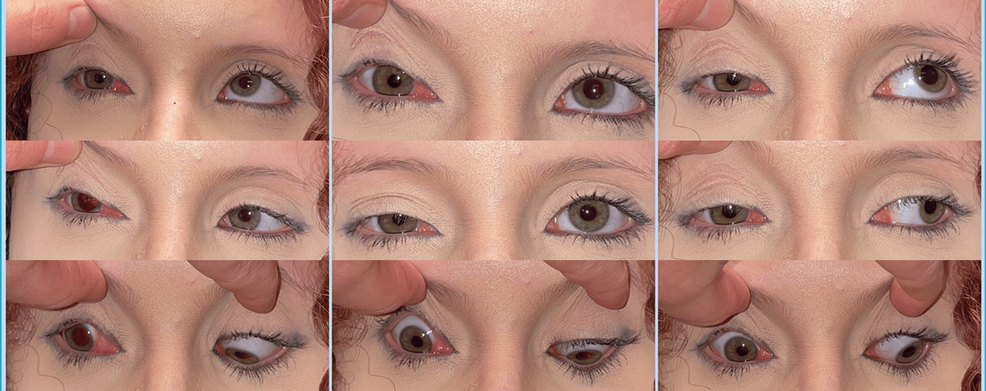
Cyclic oculomotor nerve palsy alters visual acuity and accommodation
<>
A recurring cycle lasting an average of 72 seconds continuously alters visual acuity and accommodation phases in congenital cyclic oculomotor nerve palsy, according to a longitudinal case update published in October 2026 by Cureus. The rare condition causes third cranial nerve paresis at birth, followed by lifelong involuntary periodic spasms affecting the eyelid, pupil, and extraocular muscles without any pauses between paralytic and spastic states.
The patient presented in early infancy with a congenital partial right oculomotor nerve palsy that lacked initial ptosis, Cureus reported. Cyclic pupillary spasms developed subsequently, while cyclic accommodation was first suspected at age five after clinicians noted distinct visual acuity shifts between phases. By age 11, the patient developed cyclic ptosis.
Throughout a 13-year observation window, the periodicity of these phases varied unpredictably from cycle to cycle, and individual muscle spasms within a single cycle often lacked synchronicity.
Pathogenesis of Monocular Cyclic Oculomotor Nerve Palsy Remains Unknown
While an extensive review in 1975 and a subsequent review of 124 recorded cases characterized the biphasic nature of monocular cyclic oculomotor nerve palsy, the underlying pathogenesis remains entirely unknown. Typically, the paralytic phase lasts for approximately one minute, with the spastic phase persisting for about half that duration.
The sphincter pupillae is involved in every documented case. Meanwhile, the levator palpebrae superioris and medial rectus muscles are affected less frequently. Other cranial nerves remain completely uninvolved.
Anesthesia and Eye Movements Alter Cycle Phases
Patients experience continuous, alternating paralytic and spastic phases that persist throughout the day and during sleep. These durations typically range from one to three minutes.
General anesthesia can abolish the spastic phases, while voluntary eye movements such as abduction or adduction can alter the timing of specific cycle phases.
Amblyopia and Strabismus Occur as Secondary Complications
Amblyopia and strabismus occur frequently as secondary complications of this lifelong disorder. In most clinical presentations, a dilated, unreactive pupil and upper eyelid ptosis characterize the paralytic phase. Pupillary constriction and upper eyelid elevation mark the spastic phase.
Although both phases are usually evident at initial presentation, documented cases occasionally record a delay of months or years between initial paresis and the emergence of cyclic spasms.
Disclaimer: The information provided in this article is for educational and scientific communication purposes only and does not constitute medical advice. Always consult with a qualified healthcare provider regarding any medical condition, diagnosis, or treatment plan.