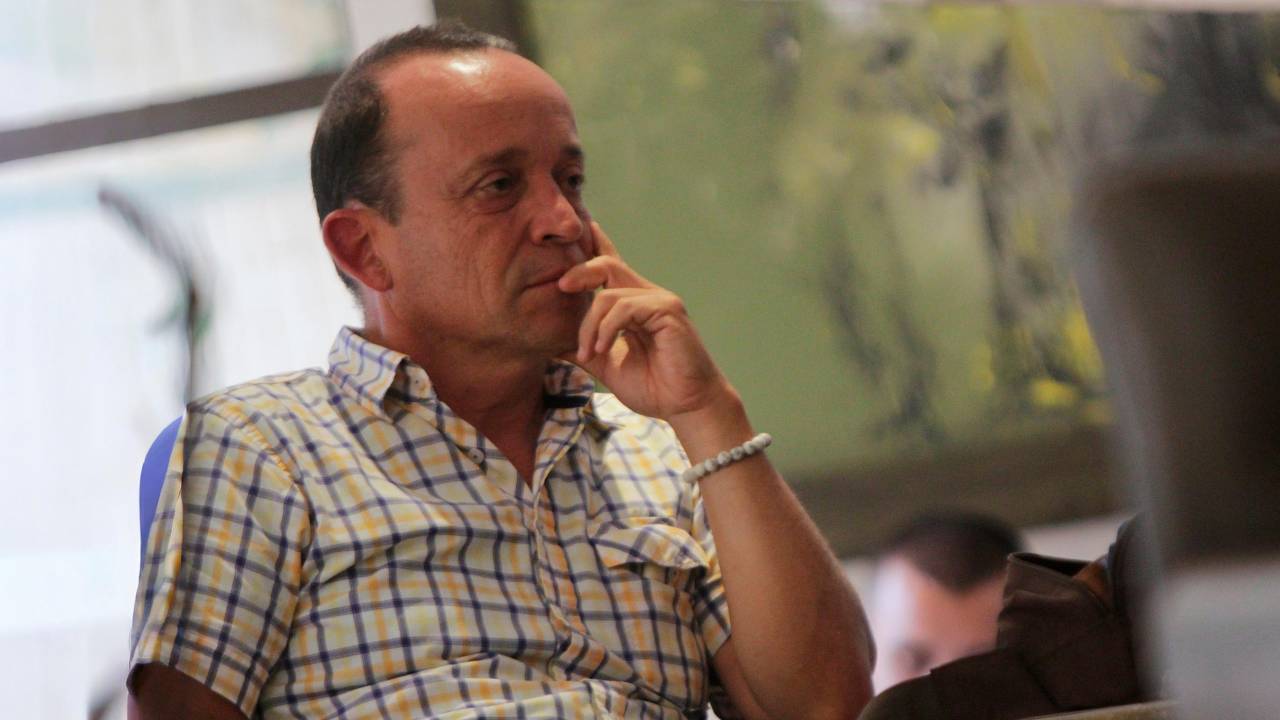
Court Denies Tutela Action for Santiago Uribe Vélez, El Colombiano reports
Santiago Uribe Vélez lost his final legal recourse on September 30, 2026, when the Civil, Agraria and Rural Cassation Chamber of the Supreme Court of Justice denied his tutela action, leaving his 28-year prison sentence for conspiracy and murder in connection with the paramilitary group known as the “12 Apostles” completely in firm effect, El Colombiano reported.
The decision brings a definitive end to months of challenges brought by the defense team, led by lawyer Jaime Granados, against a 28-year sentence handed down by the Superior Tribunal of Antioquia. Uribe Vélez had argued that the Supreme Court’s Penal Cassation Chamber violated his constitutional rights to due process, liberty, equality, and access to justice by refusing to hear a second cassation appeal.
The Path from Absolution to the 28-Year Sentence
The legal battle spans decades, focusing on the paramilitary organization that operated in northern Antioquia during the 1990s. On November 13, 2024, the First Specialized Criminal Circuit Court of Antioquia acquitted Uribe Vélez and ordered his immediate release. The prosecution, the Public Ministry, and civil party representatives immediately appealed that acquittal.
On November 25, 2025, the Superior Tribunal of Antioquia revoked the initial acquittal, convicting Uribe Vélez to 28 years in prison. The court also imposed a fine of 6,500 minimum monthly legal wages, a 20-year disqualification from holding public rights and functions, and a 54-month ban on owning or carrying firearms.
Following that conviction, the defense filed a special challenge. On June 3, 2026, the Penal Cassation Chamber of the Supreme Court reviewed that special challenge and confirmed the 28-year prison sentence in its entirety. Just two days later, on June 5, 2026, the same chamber rejected out of hand an ordinary cassation appeal that the defense attempted to file against that confirmation.

Arguments Rejected by the Civil Cassation Chamber
Seeking to overturn the June 5 rejection, the defense filed a tutela action. The core claim was that the Penal Chamber cut the legal process short before the defense could formally file its cassation demand and detail specific legal grievances. The defense requested that the Supreme Court nullify the June 5 ruling, suspend the execution of the sentence, and release Uribe Vélez while the matter was reviewed.
The Civil, Agraria and Rural Cassation Chamber rejected those arguments in its September 30, 2026 ruling. The corporate body concluded that the Penal Chamber acted lawfully when it refused to admit a second cassation challenge. The court reasoned that because the Penal Chamber had already resolved the special challenge as a court of final instance, allowing an additional appeal would effectively transform the Supreme Court into an impermissible third instance.
The ruling emphasized that existing jurisprudence establishes no right to a secondary cassation appeal when the Penal Chamber has already resolved a special challenge. That special mechanism remains the definitive avenue for reviewing a first-instance conviction.
Current Status of the Penal Proceeding
With the denial of the tutela action by the Civil Cassation Chamber, no further domestic legal avenues remain to contest the conviction. The 28-year prison sentence, the 6,500 minimum wage fine, the 20-year public office ban, and the firearm prohibition stand fully confirmed by Colombia’s highest judicial authorities.