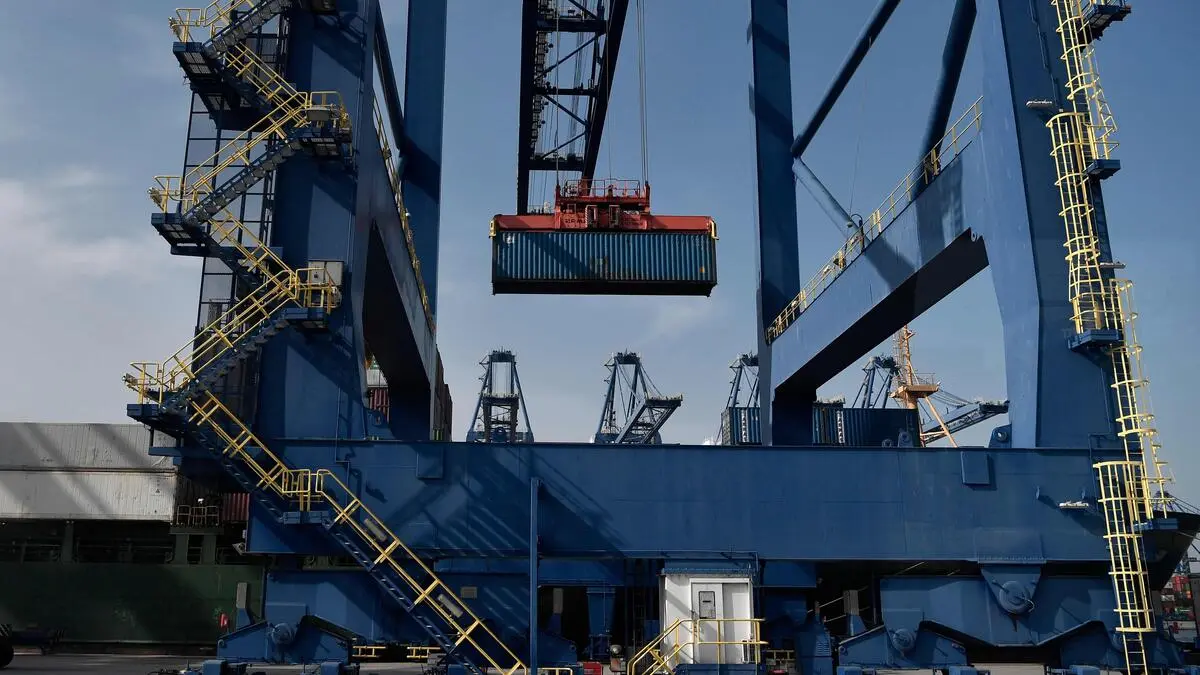
Cosco Shipping Ports amends statute to allow investments across Europe
Cosco Shipping Ports, a subsidiary of Cosco Group, amended its corporate statute in August to allow operations and investments across all of Europe and beyond. Die Presse reported that the Piraeus Port Authority, in which Cosco holds a 67 percent stake, finalized the rule change during the summer vacation season to expand far beyond its Greek maritime base.
Statute Change Expands Piraeus Port Authority Reach
The amendment permits the Piraeus Port Authority to run ports, manage infrastructure, and invest in private companies both inside Greece and internationally. Han Chao stated after the vote that the measure aligns with long-term strategy while noting that no specific investment targets exist yet.
He noted that the port authority pushed the rule change through during the holiday season to minimize public scrutiny.
Tsimonis expressed concern that the port authority could build a massive presence in different parts of the Greek private sector.

Strategic Port Networks Across the European Union
Cosco maintains direct holdings in eight container terminals across Belgium, the Netherlands, Spain, Italy, and Greece. Rival Chinese firms Hutchison Ports and China Merchants Ports Holdings operate major facilities elsewhere, including the key Rotterdam terminal managed by Europe Container Terminals.
Data compiled by Lloyd’s List indicates that Chinese entities hold investments in more than 30 container terminals across the European Union. These include 20 terminals located within the 15 highest-volume container ports on the continent. Research from the Clingendael Institute highlights the geographic logic of these holdings, which span Mediterranean entry points for Suez traffic and northern gateways for transatlantic and Asian trade.
Aside from Piraeus and Rotterdam, Chinese investments account for less than ten percent of total handling capacity across European ports. Cosco Ports holds a 3.2 percent market share in Northern Europe. Analysts note that while operational control remains localized, the broader network integrates European logistics with Chinese software systems and data platforms.

EU Tightens Screening of Foreign Port Investments
European ports handle 74 percent of the bloc’s external trade. A port strategy published in March by the European Commission emphasizes that maritime hubs serve as critical supply chain anchors, energy conduits, and dual-use military-civilian infrastructure required for troop mobility.
The European Union revised its foreign direct investment screening regulations to catch acquisitions by EU-registered firms ultimately controlled from outside the bloc. National governments retain final veto power over individual deals, with member states granted until January 2028 to incorporate the updated rules into domestic law.
Frans-Paul van der Putten, a researcher at the Clingendael Institute, cautioned against alarmist rhetoric while acknowledging long-term vulnerabilities. He argued that extensive maritime footprints could become significant strategic liabilities during a major geopolitical confrontation.