Copwatching: Citizen Journalism or Provocation? A Debate with Long Island Audit
<>
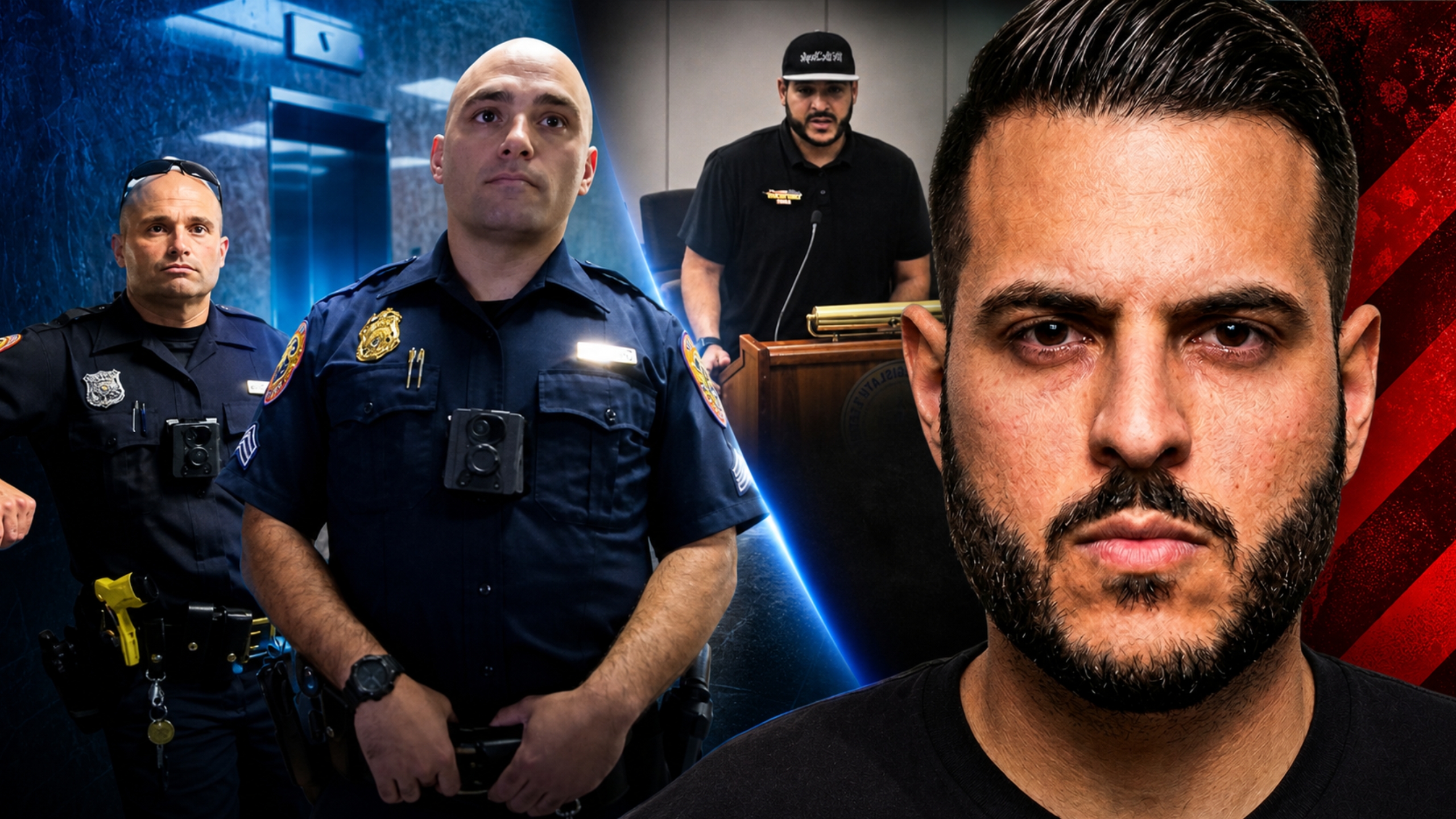
As cell phone cameras and live-streamed confrontations redefine police oversight, copwatcher Sean Paul Reyes—known online as Long Island Audit—joined hosts Taya Graham and Stephen Janis on the Police Accountability Report livestream to debate whether citizen monitoring is vital journalism or deliberate provocation.
The Suffolk County Confrontation and the First Amendment Battle
The debate centered on a confrontation outside Suffolk County Police Union headquarters on Long Island, where Reyes approached union officials to question public spending. The encounter escalated quickly when union leadership, including Suffolk County Police Union President Lou Lucivillo, exited the building and placed Reyes in handcuffs. Reyes was initially arrested and charged with criminal trespass in the third degree.
According to Reyes, the Suffolk County District Attorney’s office subsequently dismissed the criminal trespass charge because the property failed to meet the legal requirements for closed-access exclusion. The charge was reduced to a simple trespass violation. Despite the legal downgrade, the episode reignited intense public debate regarding the boundaries of civilian recording, private property access, and First Amendment protections.
When public interactions with law enforcement or union officials cross into legal disputes, understanding municipal codes and protecting constitutional rights requires specialized guidance.
Journalism Versus Provocation: Analyzing the Criticisms
During the livestream, Graham and Janis reviewed viewer comments reflecting deep polarization over Reyes’s methods. Critics labeled his approach “ambush journalism” and argued that real journalists make appointments rather than confronting workers unexpectedly. Reyes pushed back against the critique, questioning whether an appointment would have ever been granted given the nature of his inquiries.
“I’m asking why hundreds of millions of dollars of Suffolk County taxpayer money… have been put in the pockets of other people who have had their rights violated,” Reyes stated during the broadcast, emphasizing his lifelong residency in Suffolk County and his focus on police union power structures.
Janis supported this perspective, drawing parallels to traditional reporting on Capitol Hill and municipal centers where reporters routinely approach officials who prefer silence. Janis noted that organized, constructive dissent is the cornerstone of a functional democracy, warning that restricting the ability to question public spending leaves citizens powerless against institutional control.
Unpacking the Financial Mechanics of Police Unions
Beyond the mechanics of street-level recording, the conversation shifted toward the macroeconomic footprint of law enforcement unions.
Janis contrasted these findings with similar urban metrics, noting that excessive municipal spending on police benefits often crowds out funding for essential community infrastructure.
For local taxpayers and civic organizations seeking to audit municipal budgets and uncover hidden municipal liabilities, turning to professional investigative resources is essential.
The Broader Implications for Accountability and Surveillance
The conversation expanded to national trends, touching on the federal expansion of agencies like Immigration and Customs Enforcement (ICE) and the proliferation of automated surveillance infrastructure, including flock cameras. Both hosts and guest argued that unchecked funding for law enforcement agencies without matching transparency creates an increasingly authoritarian dynamic.
Reyes emphasized that his ongoing work aims to pierce through official propaganda and force accountability into public view, despite personal threats and institutional pushback.
As the landscape of civic monitoring evolves alongside digital media, maintaining structured documentation and legal resilience remains paramount.