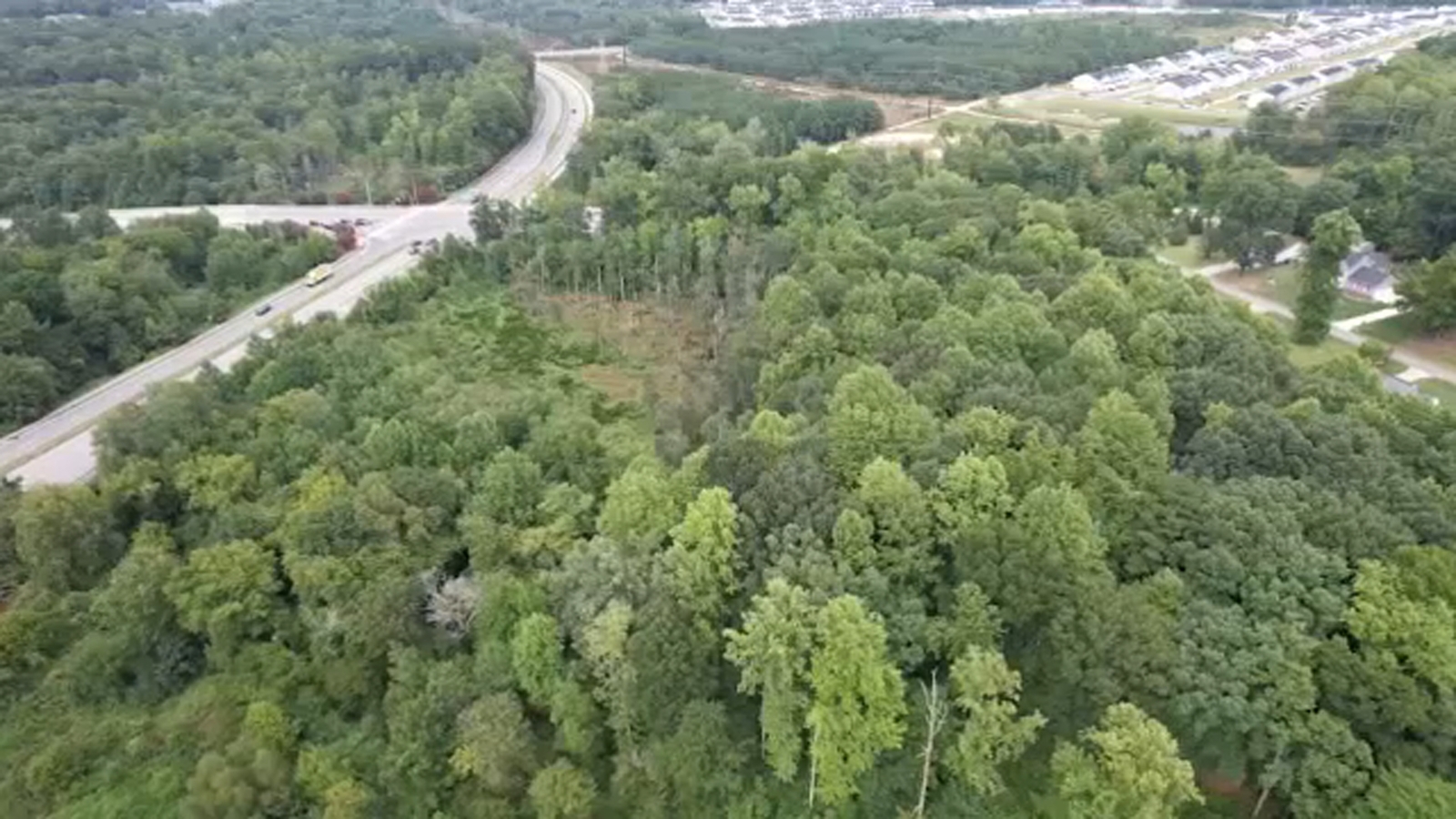
Controversial Southeast Raleigh Data Center Project Moves Forward Despite Opposition
Plans for a contentious 100,000-square-foot data center in southeast Raleigh remain active despite community pushback and the withdrawal of an annexation request. The proposed facility, officially designated as Radius DC Raleigh 1, targets a 13.64-acre site at 3101 Jones Sausage Road directly across from the Parrish Meadows residential neighborhood.
While the physical site sits in unincorporated territory, the decision by developers—identified on current tax rolls as B3-SFRE JSR LLC and Charlotte-based Beacon Partners—to pull their annexation petition alters how the project accesses essential municipal utilities.
Jones Sausage Road Development and Infrastructure Challenges
The 26-page city annexation petition originally sought to bring the 14-acre property into Raleigh’s city limits to tap its municipal water system. Without city annexation, building in unincorporated Wake County forces developers to secure water access from alternative municipalities, as reported by the News & Observer. City staff categorized the project during a June 2026 presentation as a medium-scale data facility requiring 12 megawatts of critical load. That operational footprint stands well below a hyperscale campus, which can demand more than 100 megawatts and over 100 acres of land. Submittal documentation provided to Raleigh Downtown indicates that the developers intend to utilize a closed-loop air-cooling system. Under that design configuration, municipal water gained through annexation would serve domestic needs like restrooms and fire protection instead of continuous evaporative cooling.
Beacon Partners maintains an industrial footprint along the Jones Sausage Road corridor. Since 2023, the builder has put together or constructed more than 1.4 million square feet of industrial property across East Wake County, which includes the nearby master-planned Beacon Commerce Park. Current tax rolls value the target parcel at roughly $2.3 million, with developers estimating the completed facility will reach an $180 million valuation.
Transparency Disputes and Community Opposition
Public filings for the initial annexation listed the primary land use as basic office space rather than explicitly identifying the structure as a data center. That documentation choice drew transparency complaints from former Raleigh City Council Member Mary Black, who served from 2022 to 2024. Black voiced concerns regarding Raleigh’s current lack of data-center-specific regulations and stated her support for a moratorium on new data centers, aligning with several other North Carolina towns that have frozen approvals to draft targeted rules.

District D representative Jane Harrison, who also leads the council committee focused on growth and natural resources as Mayor Pro Tem, raised comparable questions about project transparency alongside practical concerns. Harrison highlighted potential impacts from industrial noise, vibrations, and heat, while questioning the project’s reliance on renewable energy. She also pointed to regional water constraints following recent drought periods and rising electricity costs, though she noted belief in existing municipal guardrails while keeping the door open to future moratorium discussions.
Path Forward for Radius DC Raleigh 1
Even if annexation requests or utility agreements eventually return to the Raleigh City Council, securing the industrial designation represents only the first phase of the regulatory journey. Developers must still obtain a special-use permit from the city’s Board of Adjustment, whose members are appointed directly by the city council.