Consumer Reports Ranks Generac, Kohler, Champion Above Briggs & Stratton for Standby Generators
Consumer Reports has released its latest assessment of whole-house standby generators, placing models from Generac, Kohler, and Champion ahead of Briggs & Stratton.
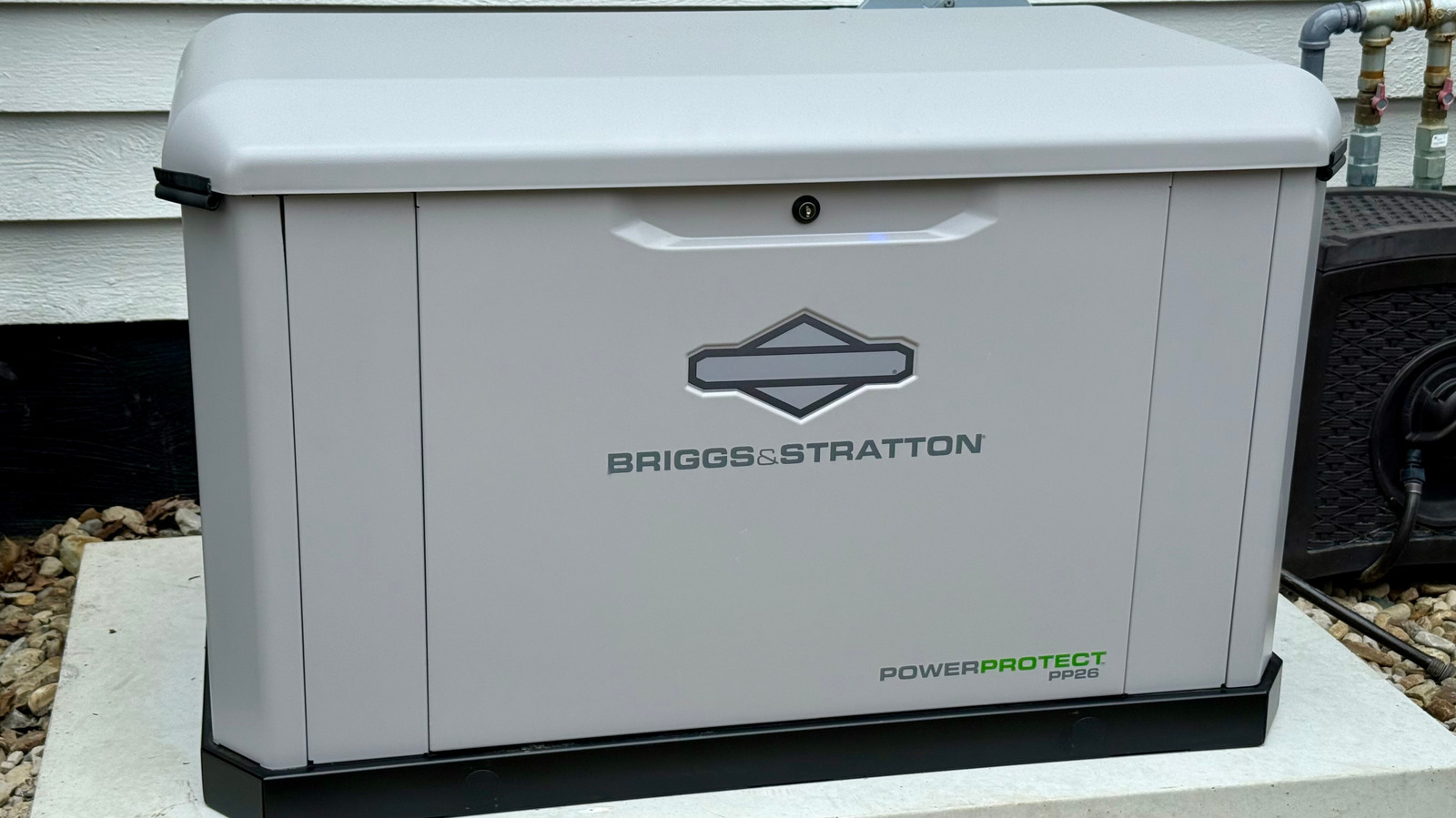
According to a report by SlashGear, Briggs & Stratton received the lowest overall score, with its 40746 13 kilowatt-hour model falling behind competitors due to concerns regarding noise production and fuel efficiency.
“We kind of smiled, turned on the generator, we walked around and it was wonderful,” Ball said. The homeowner, Maureen Ball, installed a standby system after a hurricane left her without power for four days.
When selecting a system, experts suggest homeowners first determine their specific power requirements. “The first thing you need to do is to make a list of the stuff that you absolutely can’t live without during a storm,” Eric Hagerman, Home Editor at Consumer Reports, told ABC7NY.
Consumer Reports evaluated generators based on rigorous lab testing that incorporated real-world elements such as ease of setup, usability, and average runtime. The Generac G007043, which offers a 22 kilowatt-hour capacity, earned praise for its “superb” power delivery and reliable quality.
While the unit features mobile app connectivity and self-testing capabilities, it is noted for “mediocre” fuel efficiency. The Generac unit delivers 22,000 watts on propane and 19,500 watts on natural gas, with an average runtime of 195 hours on propane.
The Kohler 20RCAL-200SELS also received high marks for its ease of use and quality, offering 20,000 watts of output using either natural gas or propane. Like the Generac model, it includes smart functionality for maintenance checks, though Consumer Reports noted it has sub-par energy efficiency, with an average propane runtime of 141 hours.
For those requiring less than 15,000 watts, the Champion 100179 and 100177 models were identified as value options. These units received higher scores than the Generac and Kohler offerings, with Consumer Reports noting impressive runtimes for their size categories. The Champion generators are designed to kick in automatically, providing enough power to run all systems in a typical home simultaneously.
For smaller requirements, portable units are also available. A light generator providing up to 2,000 watts can power a refrigerator, lights, and chargers, with Yamaha models noted for fuel efficiency.
A midsize inverter provides up to 3,500 watts, enough for a window air conditioner and one appliance such as a coffee maker, washing machine, or hair dryer, with the Predator model performing well in tests. For households requiring a large sump-pump or water-well pump, a portable generator providing up to 7,500 watts can run these tools alongside a gas furnace.
Generac traces its origins to 1959, when it was founded to produce portable generators for Sears, Roebuck and Co. under the Craftsman brand. The organization marked a significant turning point in 1989 by introducing the first gaseous-fueled automatic home standby system, a development that helped define its current focus on residential power solutions.
Headquartered in Waukesha, Wisconsin, the company operates multiple manufacturing facilities across the state and has grown to supply power systems ranging in output from 800 watts to 250 kilowatts.
Pricing for whole-home standby systems ranges from approximately $4,100 to $7,000 depending on the model and retailer.