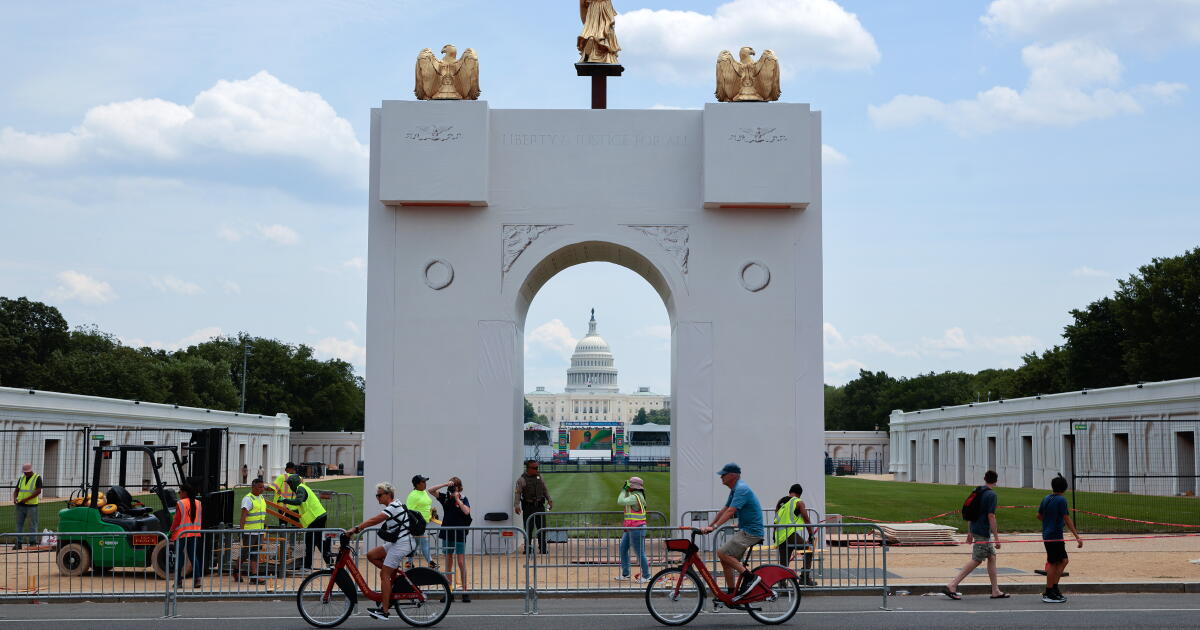
Construction to Begin on Trump’s Great Triumphal Arch in DC
Construction crews will begin excavation work within a two-week period for the Great Triumphal Arch and Military Observation Deck in Washington, D.C., Interior Secretary Doug Burgum announced on Thursday. The 250-foot-tall vanity project, backed by President Donald Trump, carries a projected price tag ranging from $100 million to $250 million and faces immediate legal challenges from veterans over its location between the Lincoln Memorial and Arlington National Cemetery.
Excavation Timeline and Architectural Specifications
Interior Secretary Doug Burgum announced on social media that preparation for excavation will start over a two-week period. The project is designed to stand 250 feet tall in the sacred space separating the Lincoln Memorial and Arlington National Cemetery.
https://x.com/SecretaryBurgum/status/2095587973907755133
President Trump told CBS News that the arch is for “Me,” adding that Washington has waited up to 200 years for the structure. Administration officials plan to fund the monument using a mix of taxpayer money and private donations. The intended completion date is slated for before the end of the current presidential term.
For municipal leaders and regional stakeholders, managing large-scale federal alterations within historic districts requires strict adherence to federal and local zoning frameworks.
Controversy, Comparisons, and Legal Challenges
The project’s financing model and aesthetic choices have drawn immediate scrutiny. Critics point to stylistic parallels with foreign monuments, such as Saddam Hussein’s Victory Arch of swords in Baghdad or Kim Il Sung’s Mansu Hill Grand Monument in North Korea.
The arch joins other administration capital projects, including the White House State Ballroom. Originally pitched at a $200 million price tag funded entirely by private sources, The Washington Post reported in June that the ballroom’s cost has climbed to $600 million, with more than half financed by taxpayers.
Opposition to the Triumphal Arch has already moved to the judicial system. A group of Vietnam War veterans filed a lawsuit to halt construction. The plaintiffs argue that the project lacks necessary congressional approval and will obstruct views between the Lincoln Memorial and Arlington National Cemetery. In response, the Trump administration maintains that congressional approval is unnecessary, citing a 1925 plan authorized by Congress for column construction in the capital.
Disputes over federal land use and historic preservation often require specialized arbitration and advocacy.
Economic Strains and the Path Forward
Funding structures for federal monuments have consistently sparked debate over public resource allocation. Ensuring accountability in public works projects necessitates robust oversight.
