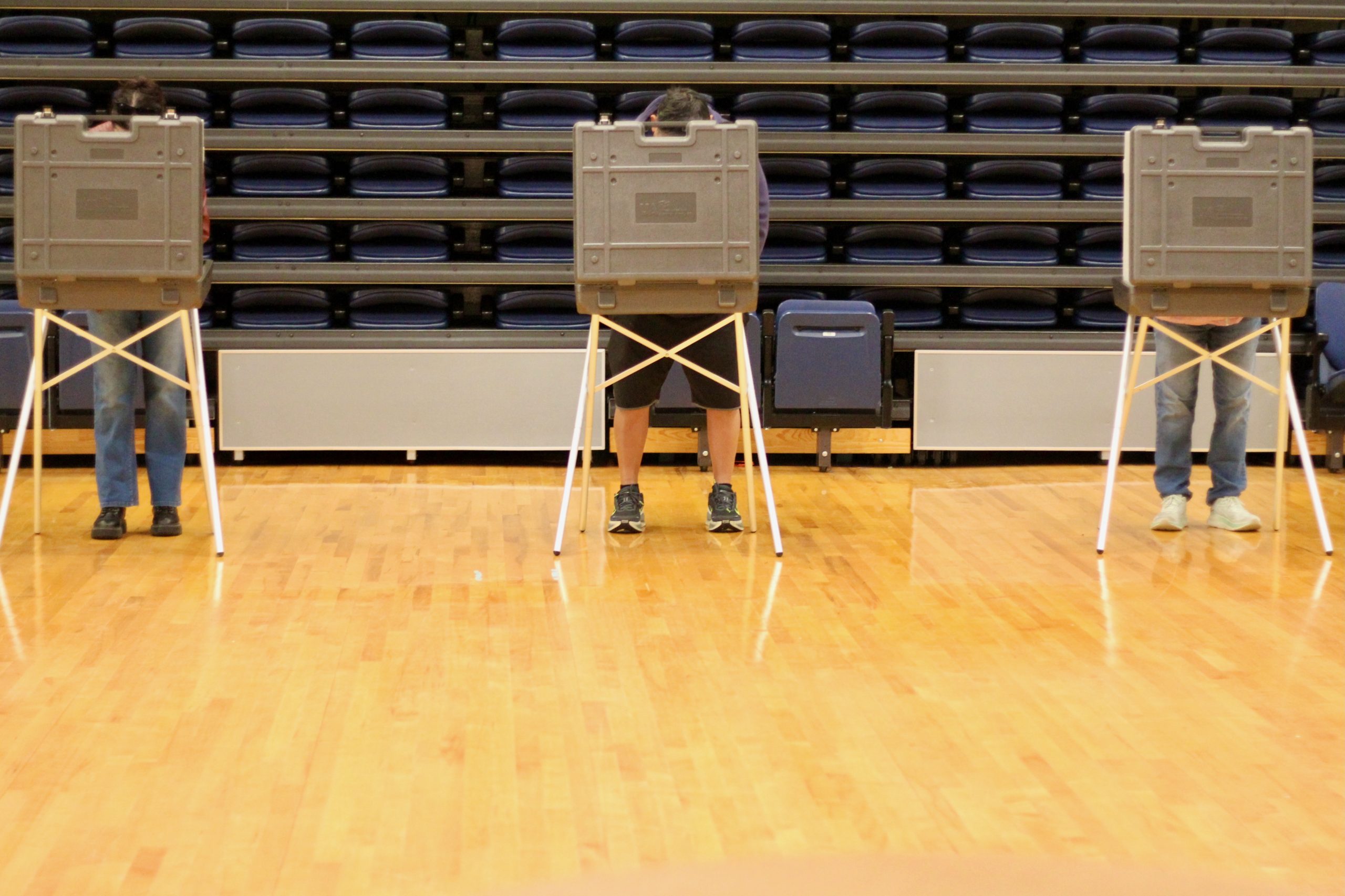
Connecticut voters cast ballots for governor and General Assembly
“My message to voters is, ‘Please, don’t worry, we’ve got this covered. The elections will be safe and secure here in the state of Connecticut,’” Secretary of the State Stephanie Thomas said.
Connecticut’s yearlong campaign for governor draws to a close Tuesday as voters go to the polls in all 169 cities and towns, with more than 500,000 of the 2.22 million eligible voters already having cast ballots. Polls are open until 8 p.m. Thomas stated at a Tuesday morning press conference that no major issues had been reported to her office.
Voting Security and Early Turnout Across the State
Federal election monitors were spotted outside polling locations in New Haven, though Thomas noted that the power of those federal officials was limited. Her office managed election administration while standing ready to respond to any physical or cybersecurity threats during the general election. Staff members also prepared to correct false information concerning voting rights.
This election serves as a test for Connecticut’s second statewide election featuring early in-person voting and its first with no-excuse absentee voting. Turnout reached roughly 23 percent before polls opened Tuesday. By the close of early voting Sunday night, 505,973 ballots had been cast. That total included 455,169 ballots submitted during the two-week early voting window and 50,804 returned via absentee ballot.
An additional 20,854 absentee ballots had been issued but not yet returned as of Monday. To be counted, those absentee ballots must reach local clerk’s offices or official drop boxes outside town halls by 8 p.m. Tuesday. During early voting, registered Democrats outpaced Republicans by a nearly 4-1 margin initially, though that gap narrowed to roughly 2-1 with 216,155 Democratic votes to 89,157 Republican votes, alongside 149,857 unaffiliated or minor-party voters. Unaffiliated voters remain the state’s largest bloc at 934,070, followed by 802,247 Democrats and 485,827 Republicans.
The Gubernatorial Contest and Campaign Finances
The race features Gov. Ned Lamont and his Republican challenger, state Sen. Ryan Fazio of Greenwich. Fazio cast his ballot on Oct. 19 during the opening day of early voting and focused his Tuesday schedule on Fairfield County stops in Stamford, Norwalk, Fairfield, Milford, Trumbull, Westport, and New Canaan. His election night gathering is scheduled at the Doubletree by Hilton hotel in Stamford.
Good Morning Connecticut Happy Election Day! Polls are now open all across the state. Polls will close at 8:00pm. Voters will vote for statewide offices, Congress, and both chambers in the general assembly.
Lamont voted Tuesday morning at Greenwich High School and planned a northward route through Stamford, Norwalk, Fairfield, Bridgeport, New Haven, Meriden, Newington, Hartford, and West Hartford, culminating in an election night party at Dunkin Park in Hartford.
The contest represents the first gubernatorial election since the General Assembly raised the public financing grant to $18 million. Campaign spending between the two contenders remained roughly even through Oct. 27. Lamont spent $18.7 million of the $20 million he contributed to his own campaign account, which included a $2.2 million loan. Fazio spent $17 million, leaving $2 million available. Between Oct. 21 and Oct. 27, Fazio spent over $2 million, directing nearly all of it toward television ads and direct mail, while Lamont spent $1.16 million primarily on television.
Voter Perspectives Outside the Precincts
Outside the West Hartford Town Hall on Tuesday morning, voter traffic remained light but steady. Neighbors Dawn Bratter and Patty Coleman arrived to cast their in-person ballots with contrasting views.
Bratter said she voted for Fazio and against Lamont, pointing to state taxes and high utility costs as her primary motivations. “Anybody but Lamont,” Bratter said.
Coleman, a lifelong Democrat nearing retirement, expressed concern over the high cost of electricity and general living expenses. However, she withheld blame from Lamont, citing broader anxieties about the federal administration under President Donald Trump. Though she considered voting for Fazio, she questioned whether a Republican candidate would challenge federal policies.
“I’m not sure that if Fazio gets into office he will be that person,” Coleman said.
Control of the General Assembly
Neither major party anticipated a major change in the balance of power within the General Assembly, where Democrats have held strong majorities since the 2018 midterm. Democrats currently maintain a 102-49 advantage in the House and a 25-11 lead in the Senate.
On Thursday, Democrats plan to back House Speaker Matt Ritter of Hartford for a fourth term and House Majority Leader Jason Rojas of East Hartford as his second-in-command. Senate Democrats intend to endorse Senate Majority Leader Bob Duff of Norwalk to succeed retiring Senate President Pro Tem Martin M. Looney, with Sen. Gary Winfield of New Haven stepping into Duff’s former role. House Minority Leader Vincent J. Candelora and Senate Minority Leader Stephen Harding are expected to retain their GOP leadership positions.
New legislative terms begin January 6, marking the opening of the annual legislative session. The winning gubernatorial candidate will be sworn in and address a joint session of the General Assembly that same day.