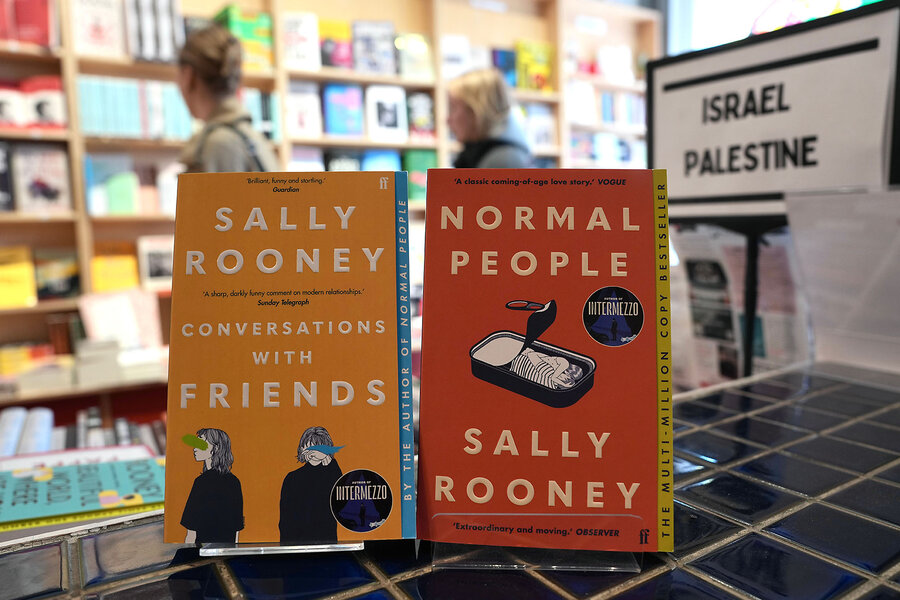
Faber withdraws Sally Rooney books to avoid UK terrorism laws
Irish author Sally Rooney’s books are vanishing from central London bookshops as her publisher, Faber, withdraws titles from sale to avoid flouting United Kingdom terrorism laws after she donated royalties to Palestine Action.
Publisher Withdraws Books Over Terrorism Laws
In Hatchards on Piccadilly, staff members report that only one novel by the prize-winning author remains on the shelves and that they will not order any more. The withdrawal stems from Rooney’s announcement that she is donating her royalties to Palestine Action, an organization proscribed as a terrorist group in the United Kingdom. Because that financial support could constitute a criminal offense under British legislation, Faber took the titles out of circulation.
Some critics dismiss the publisher’s move as virtue-signaling by an author whose choices should be openly challenged. Others view it as a troubling escalation of censorship within Western democracies. The controversy highlights a widening fault line in the arts over the Israeli-Palestinian conflict, forcing publishers, booksellers, and event promoters to draw difficult lines between legitimate political expression and prejudice.
Jemimah Steinfeld, chief executive of the U.K.’s Index on Censorship, notes that restrictions cut both ways. She warns that more is at stake than missing books on shelves or canceled gigs on stages. “We are at a time of increased tensions and division. We need more dialogue, rather than the closure of spaces,” she tells the Monitor.
Cancellations and Pressure Across International Stages
The Rooney case follows a string of similar controversies involving international artists facing professional consequences for their political positions. American rapper Macklemore was dropped from British musician Ed Sheeran’s U.S. tour after voicing support for Palestinians. Macklemore previously apologized for wearing a Jewish caricature costume on stage, an incident many viewed as antisemitic. While Rooney’s case involves government terrorism legislation targeting financial contributions, Macklemore’s involves private booking decisions.
Amnesty International UK chief executive Kerry Moscogiuri points to crackdowns on university protests and street demonstrations as evidence of a deeper erosion of free speech in the country. Meanwhile, Jewish and Israeli artists and events face silencing in various forms, as Palestine solidarity organizations exert pressure on venues to get performances canceled.
Performances by Radiohead guitarist Jonny Greenwood, Israeli musician Dudu Tassa, and the British band Oi Va Voi have all faced disruption. Steinfeld points out that Jewish and Israeli artists also experience systematic silencing. Palestine solidarity organizations have frequently pressured venues to cancel scheduled performances. She adds that many artists are never invited to perform in the first place because they support Israel, fail to criticize it strongly enough, or simply hold Israeli nationality.
Breaking News: Faber, the publisher of Sally Rooney, has said it will "no longer supply her works in the UK in any format" following legislation on the Palestine Action group from the UK government.👇 https://t.co/C23onfmkPQ
Divided Opinions Among Artists on Political Speech
Artists themselves remain deeply divided over where boundaries should be drawn. Members of the Irish hip-hop group Kneecap faced accusations of crossing a red line after expressing support for Hamas and Hezbollah from the stage, an allegation they reject. Welsh singer Charlotte Church denied accusations of antisemitism after leading a choir in singing “From the River to the Sea,” a phrase many interpret as denying Israel’s right to exist.
Some performers argue that concert venues should remain neutral spaces. Metallica lead singer James Hetfield recently told fans that his band is not there to influence them. Bragg notes that if Macklemore wants to bring attention to the situation in Palestine during a concert, it is his right to do so. Macklemore has since launched an independent tour under the banner of his political stance.
Academic Links Campus Free Speech Restrictions to Antisemitism Definition
While attacks on Jewish people in the U.K. are unambiguous hate crimes, fierce disagreements persist over criticism of Israel and its military campaign in Gaza. Nicola Pratt, an academic at the University of Warwick in England, states that a broad definition of antisemitism has driven a widespread crackdown on free speech across university campuses since the October 7, 2023, Hamas attack on Israel. Her research identified more than 100 far-reaching restrictions implemented within an 18-month period.
Slogans rarely include footnotes or caveats.
World-renowned Irish novelist Sally Rooney and her publisher, Faber, have decided to stop supplying her books to U. K. retailers because of her pledge to give some of her royalties to a pro-Palestinian activist group designated as a terrorist organization in Britain. The U. K.… pic.twitter.com/4WKbYYj63k
Peter Tatchell, a longtime activist in Britain, argues that a double standard exists where free speech protections vanish the moment individuals criticize Israel’s military actions against Palestinian civilians.
Frequently Asked Questions About Art, Law, and Censorship
Why did Faber withdraw Sally Rooney’s books from U.K. bookshops?
Faber pulled the titles because Rooney announced she was donating her royalties to Palestine Action, an organization proscribed as a terrorist group in the United Kingdom. Continuing to sell her books could expose the publisher and distributors to criminal liability under British terrorism laws.
How have other musicians been affected by the fallout over the conflict?
Performances by artists including Radiohead guitarist Jonny Greenwood, Israeli musician Dudu Tassa, and the British band Oi Va Voi have been canceled or disrupted. American rapper Macklemore was also removed from Ed Sheeran’s U.S. tour following his statements supporting Palestinians.
What specific research findings did academics present regarding campus speech?
Nicola Pratt of the University of Warwick documented more than 100 far-reaching restrictions on free speech implemented across U.K. university campuses within an 18-month window following the October 7, 2023, Hamas attack on Israel, attributing the trend to an overly broad institutional definition of antisemitism.
Faber has confirmed it will stop supplying Sally Rooney's books in the UK, saying it cannot pay the Irish author royalties because of her pledge to support the banned group Palestine Actionhttps://t.co/Fyz56syZQK