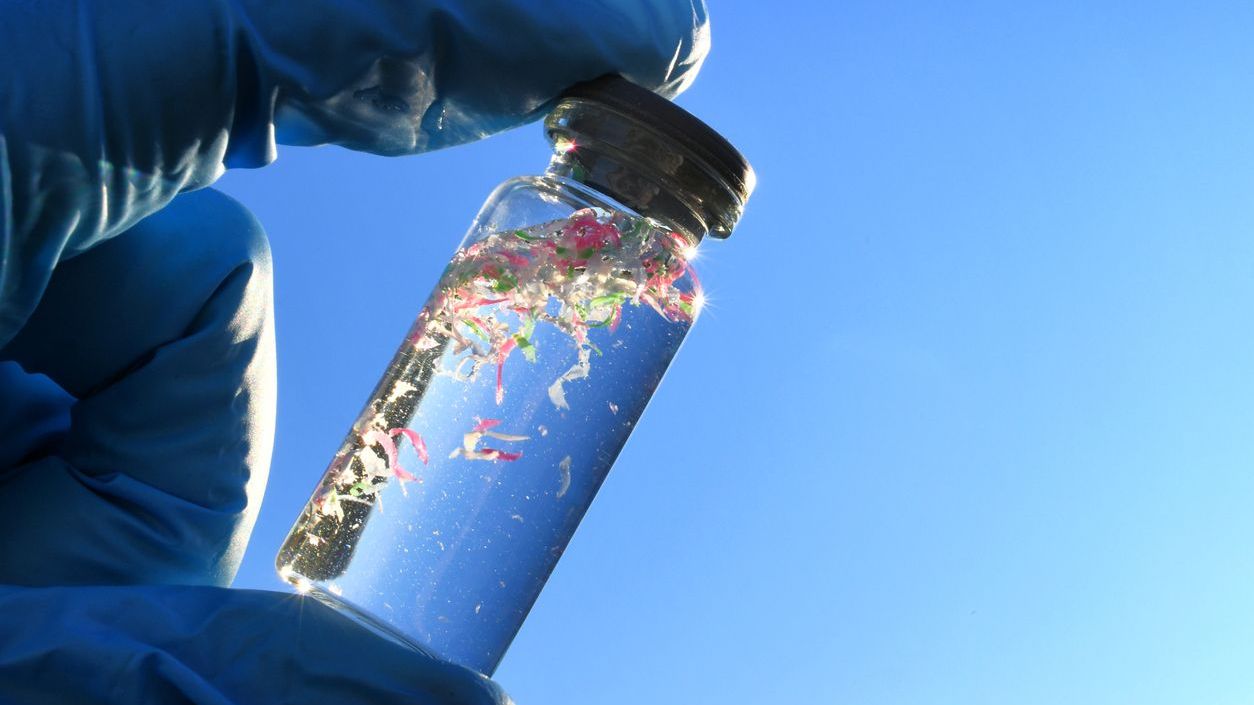
Columbia study says microplastics trigger reactive chemical activity
Microplastics Trigger Reactive Chemical Activity in Water Sources
Plastics once assumed to be inert break down into micro- and nanoparticles that generate high-energy reactive radicals in water, according to research published in Nature. Scientists at Columbia University and the University of California, Berkeley, discovered that as large pieces of plastic fracture, their surface area expands dramatically in relation to volume. This expansion exposes the surrounding liquid to chemically active sites that produce reactive oxygen species capable of damaging animal and human tissue.
- Microplastics previously viewed as passive, inert fragments become chemically active in water as their surface-area-to-volume ratio increases through fragmentation.
- Researchers found that a single liter of bottled water contains an average of roughly 240,000 detectable plastic particles, predominantly nanoplastics.
- Water acts as a primary vector where reactive oxygen species form, offering a physical mechanism that connects plastic exposure to documented biological damage.
Surface Area Expansion Drives Chemical Reactivity in Bottled Water
The study challenges the long-held industry assumption that standard polymers used in food packaging, water containers, and toys remain entirely passive. “Naarmate plastic in steeds kleinere deeltjes uiteenvalt, neemt het oppervlak enorm toe,” explains Wei Min, professor of chemistry and biomedical engineering at Columbia, noting that the resulting high-energy reactive radicals likely drive the biological harm observed in biological systems.
Previous laboratory testing by Min’s team quantified an average of 240,000 detectable plastic particles per liter of bottled water, largely consisting of nanoplastics. Subsequent epidemiological evaluations have since associated chronic micro- and nanoplastic exposure with serious clinical events including heart attacks, strokes, dementia, and brain tumors. Yet the precise intracellular mechanism remained elusive due to the material’s perceived chemical passivity.
Cellular Pathways and the Role of Aqueous Environments
The new findings establish water as a central participant rather than a neutral bystander in plastic toxicity. Co-author Naixin Qian points out that when microplastics interface with aqueous environments like bottled beverages or the human bloodstream—which consists largely of water—they generate reactive oxygen species. This chemical shift provides a plausible pathway for the tissue degradation documented in previous animal and human studies.
The research team intends to apply these mechanistic insights toward altering the underlying chemical structure of widely manufactured plastics to minimize toxic radical generation at the molecular level.
Disclaimer: The information provided in this article is for educational and scientific communication purposes only and does not constitute medical advice.