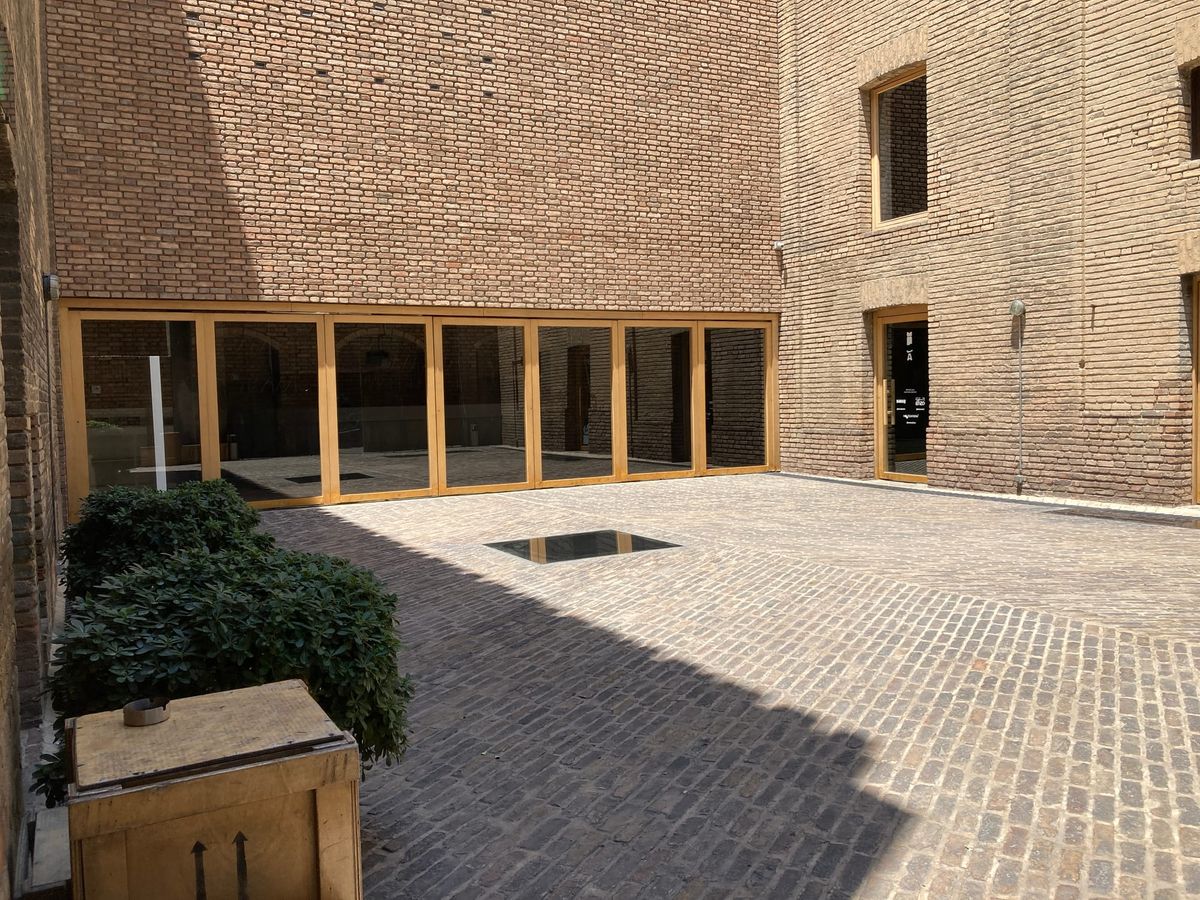
Closed Until Further Notice: Keeping a Tehran Art Institution Alive During Wartime
On February 28, 2026, at 9:30 in the morning, the Pejman Foundation suspended public operations at the Argo Factory contemporary art space in Tehran, Iran, after a fighter jet flew overhead and an explosion shook the city. Founder and director Hamidreza Pejman announced the indefinite closure, citing a convergence of wartime hazards, economic collapse, regulatory clampdowns, and diaspora pressures that rendered safe public programming impossible.
The Breaking Point of Wartime Operations in Tehran
The decision to shutter the non-profit art institution followed months of mounting tension across Iran, sparked by mass protests in December 2025 and escalated by military conflict involving the United States and Israel. According to Pejman, the ultimate closure was not triggered by a single policy disagreement within his staff, but by the stark reality of active warfare where human life instantly eclipsed all routine institutional debates.
Normal administrative disagreements over budgets, exhibition calendars, and wall placements evaporated the moment war entered the airspace above the capital. As Pejman recounted in an interview published in the Middle East Report, consensus within the team ceased to be a sign of organizational health and instead became a reflection of compressed choices. When survival demands a singular focus, the luxury of multiple operational paths disappears entirely.
Regulatory Scrutiny and External Pressures
Operating a cultural institution in Tehran during an active military conflict involves navigating multiple overlapping layers of hostility. While the immediate threat of airstrikes created logistical paralysis, administrative and political pressures persisted even during brief respites in the fighting. In April 2026, during a declared ceasefire intended to offer civic relief, an unknown institution abruptly forced the closure of the Cinematheque—the Argo Factory’s in-house film-screening program—under the pretext of missing permits.

At the same time, external opposition groups and diaspora figures expressed intense hostility toward cultural workers who chose to remain operational under the supervision of the existing government. Pejman noted that hardline elements within the diaspora and pro-war factions effectively demanded a scorched-earth reality for Iran, leaving local cultural spaces caught between institutional suffocation by state authorities and total delegitimization by external critics.
Economic Strains and the Shift to Cautious Continuity
Beyond military danger and political oversight, the foundational crisis for the Pejman Foundation remains mathematical. Plummeting national economic indicators, shrinking corporate sponsorships, and evaporating marketing budgets left the non-profit unable to sustain basic overhead costs, including staff salaries and foundational maintenance. Without financial viability, ambitious curatorial initiatives became entirely unsustainable.

Rather than dissolving entirely, the leadership redefined what closure means for the institution. The space remains physically restricted to protect staff and visitors from direct harm and unintended political consequences, but administrative connections and logistical monitoring continue behind closed doors. Maintaining this underground continuity ensures that the institution preserves its network while awaiting conditions stable enough to resume public cultural work.
Disagreement is a luxury of stable environments, and in Tehran’s current climate, survival demands that cultural institutions adapt their shape rather than break under the weight of unyielding external forces.