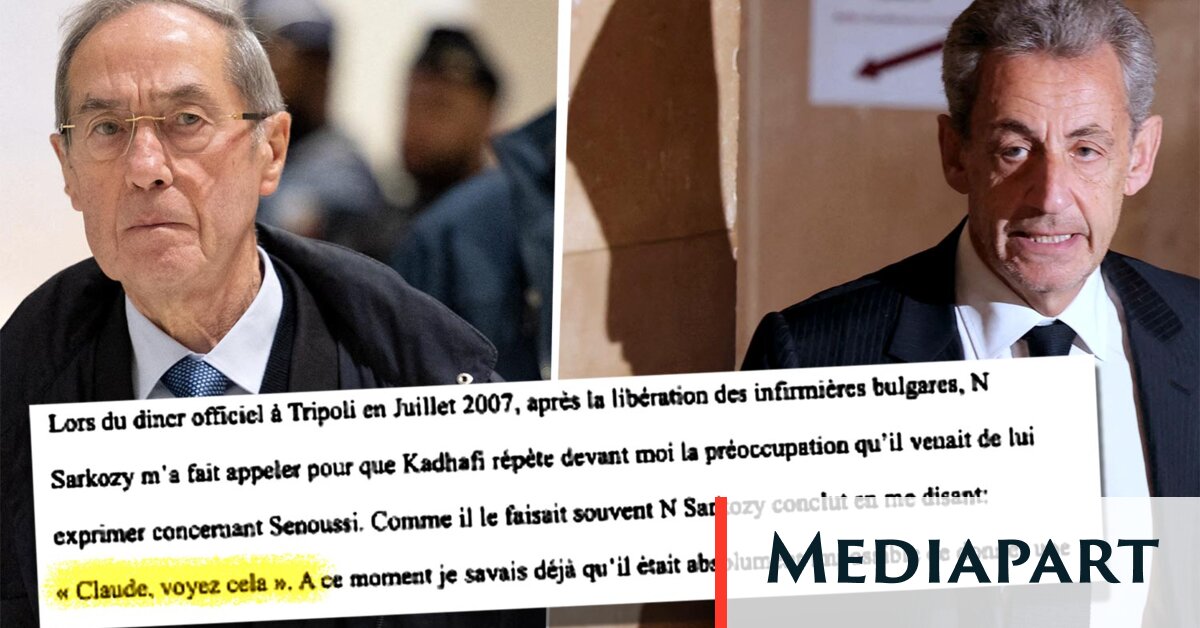
Claude Guéant Confronts Nicolas Sarkozy in Libyan Funding Trial
Former French President Nicolas Sarkozy is challenging his conviction over alleged Libyan funding in an appeal trial. The proceedings have sparked a public rift as Sarkozy distances himself from former ally Claude Guéant, who has expressed disgust over the betrayal, highlighting the fragility of political loyalties under legal scrutiny.
What we have is more than a courtroom drama; This proves a study in the collapse of political patronage. When the architecture of power shifts from the Élysée Palace to a defendant’s dock, the “loyal allies” of yesterday turn into the liabilities of today. The current legal battle over alleged Libyan funding is not merely about financial irregularities—it is about the systemic risk inherent in the intersection of state diplomacy and private campaign finance.
The fallout creates a vacuum of stability that ripples through the diplomatic corridors of Europe. For global firms operating in the region, such volatility underscores the necessity of engaging political risk analysts to navigate the unpredictable shifts in leadership and the legal precedents being set for former heads of state.
The Anatomy of a Political Sacrifice
The tension reached a breaking point during the appeal trial, crystallized by the phrase, « Claude, voyez cela » (Claude, look at this). This moment signaled a definitive break between Nicolas Sarkozy and Claude Guéant, the man who once served as his most trusted confidant. The strategy is transparent: survival through dissociation.
Sarkozy has attempted to maintain a thin veneer of camaraderie, stating, “I am the first to be sorry that Claude Guéant is not here.”
It is a calculated contradiction. Even as expressing regret over Guéant’s absence, Sarkozy has simultaneously shifted the narrative to distance himself from the mechanisms of the alleged Libyan funding. In the high-stakes game of geopolitical survival, the “loyal ally” is often the first piece sacrificed to protect the center of power.
Guéant’s response was not one of silent acceptance, but of visceral rejection. The former official expressed his “disgust” (écœurement) regarding the comments made by Sarkozy during the trial.
“I have been incredibly disappointed… What he has done is not right.”
This public rupture exposes the raw power dynamics of the French political elite. When the shield of executive privilege vanishes, the remaining bonds are often revealed to be transactional rather than ideological.
The “Truth” as a Legal Weapon
Sarkozy has framed his appeal around a moral imperative, asserting that he owes France “the truth.” By positioning himself as a seeker of transparency, he attempts to pivot from the role of the accused to that of the whistleblower of his own administration’s complexities.
However, the “truth” in these proceedings is a contested territory. The allegations of Libyan funding suggest a breach of national sovereignty and a compromise of democratic integrity. When a state’s former leader is accused of accepting funds from a foreign regime, it transforms a domestic legal issue into a transnational security concern.
The complexity of tracking these alleged flows of capital across borders is immense. Such cases highlight why multinational corporations and state entities increasingly rely on forensic financial advisors to ensure that their own cross-border transactions are insulated from the taint of political corruption or illicit state funding.
The legal battle is now a war of attrition. Sarkozy is not just fighting a conviction; he is fighting for the historical narrative of his presidency.
Macro-Implications for European Statecraft
The trial’s outcome will set a critical precedent for how the European Union and its member states handle the accountability of former leaders. If the convictions hold, it reinforces the principle that no office is an eternal shield against the judiciary. If they are overturned, it may signal a ceiling on the legal reach of the state regarding “diplomatic” funding.
- Judicial Independence: The trial tests the ability of the French courts to adjudicate the actions of a former president without political interference.
- Foreign Influence: The case brings to light the vulnerabilities of Western democratic funding to foreign regime interference, specifically from the Libyan state.
- Diplomatic Fallout: The public airing of these allegations complicates France’s long-term diplomatic posture in North Africa.
For those navigating these turbulent waters, the intersection of law and diplomacy requires a specialized approach. The necessitate for international legal consultants is paramount when the legalities of one nation overlap with the geopolitical interests of another.
One sentence defines the current state of the alliance: loyalty is a luxury that the accused cannot afford.
The Shifting Chessboard
As the appeal trial progresses, the narrative has shifted from the evidence of funding to the evidence of betrayal. The “disgust” felt by Claude Guéant is a symptom of a larger systemic collapse. The alliance that once managed the affairs of a G7 nation has dissolved into a series of accusations and defensive maneuvers.
This case serves as a stark reminder that in the realm of global geopolitics, the only permanent constant is the volatility of trust. The transition from the corridors of power to the witness stand is often abrupt, leaving behind a trail of broken alliances and contested truths.
For the global business community, the lesson is clear: political stability is an illusion. Whether it is a funding scandal in Paris or a regime shift in North Africa, the only defense is a robust network of vetted professional partners. To navigate the risks of an unstable global order, firms must look toward the World Today News Directory to identify the legal, financial, and risk consultants capable of anchoring an organization when the geopolitical ground shifts.