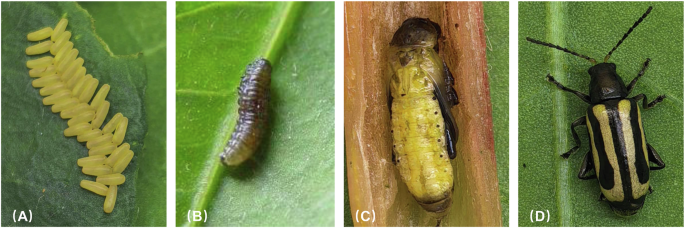
Chromosome-Level Genome Assembly and Functional Annotation of the Biocontrol Agent Agasicles hygrophila
Researchers have completed a chromosome-level genome assembly for Agasicles hygrophila, a beetle widely used as a host-specific biocontrol agent against invasive weeds, according to a study published in Nature.
The project provides a genetic blueprint for the insect, which is used to manage A. philoxeroides populations.
Scientists collected larvae from Fuzhou, Fujian, China, and maintained a laboratory colony for approximately 30 generations before extracting DNA for sequencing. High-molecular-weight genomic DNA was extracted using a modified CTAB protocol. The team utilized a combination of short-read, HiFi, and Hi-C technologies to map the genome.
The resulting data shows a total genome size of approximately 632.72 Mb. Of this, 90.03% of the sequences were successfully anchored onto 19 chromosomes, providing a high-resolution view of the beetle’s genetic structure.
The assembly process involved multiple validation steps to ensure accuracy. Researchers used BUSCO analysis to confirm the preservation of core genes, achieving a completeness score of 99.34%.
| Assembly Metric | Value |
|---|---|
| Final Genome Size | 632.72 Mb |
| Contig N50 | 1.46 Mb |
| Scaffold N50 | 29.85 Mb |
| Protein-coding Genes | 14,068 |
Beyond the chromosomal mapping, the study identified 14,068 protein-coding genes. Functional annotation revealed that 94.43% of these genes could be linked to known biological roles using public databases such as SwissProt, KEGG, and Gene Ontology.
The genome also contains a large proportion of repetitive sequences, which account for 68.60% of the total genetic material. Transposable elements, including DNA transposons and various retrotransposons, make up the majority of these repetitive regions.
While the current assembly provides a high-quality reference for A. hygrophila, 449 scaffolds containing approximately 63.09 Mb of sequence remain unplaced. The researchers said that these segments did not show consistent Hi-C linkage during the scaffolding process, leaving their exact chromosomal locations to be determined in future studies.
De novo assembly was performed using NextDenovo (v2.5.2) with parameters optimized for HiFi data. The initial assembly was polished using short-read data with NextPolish (v1.4.0). HapHiC (v1.0.2) was also used to assist chromosome-level scaffolding.