China’s Wang Yi Praises Pakistan’s Role in Regional Peace Efforts
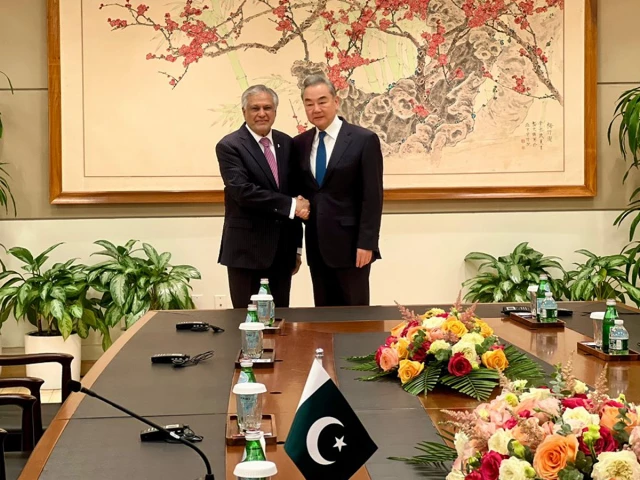
Chinese Foreign Minister Wang Yi met with Pakistan’s Foreign Minister Ishaq Dar in Beijing on Friday, where he reiterated China’s appreciation for Pakistan’s “constructive role” in facilitating indirect talks between the United States and Iran—a diplomatic channel that has gained urgency amid escalating tensions in the Red Sea and broader Middle East instability. The meeting, confirmed by both ministries, underscored Beijing’s deepening engagement with Islamabad as a key mediator in regional conflicts, while also signaling China’s strategic alignment with Pakistan’s position on U.S.-Iran diplomacy.
Wang Yi’s remarks, delivered during a closed-door session, emphasized Pakistan’s “critical contributions” in fostering dialogue between Washington and Tehran, a process that has seen sporadic but critical breakthroughs in recent months. The Chinese foreign minister’s praise came as Pakistan has positioned itself as a neutral but influential interlocutor between the two adversarial powers, a role that has drawn attention from both the U.S. And Iran. Dar, in response, highlighted Pakistan’s commitment to “peaceful resolutions” in the region, framing the country’s diplomatic efforts as part of a broader strategy to mitigate spillover effects from the Israel-Hamas war and Houthi attacks in the Red Sea.
The timing of the meeting is significant. Just days earlier, U.S. Secretary of State Antony Blinken had engaged in his own discussions with Pakistani officials in Islamabad, seeking to leverage Pakistan’s regional influence to de-escalate tensions. Meanwhile, Iran has increasingly turned to Pakistan as a backchannel for indirect communications with the U.S., particularly after the collapse of the 2015 nuclear deal and the resumption of sanctions. China’s endorsement of Pakistan’s role aligns with Beijing’s own diplomatic playbook, which prioritizes multilateralism and opposition to unilateral coercive measures—positions that have placed China at odds with both Washington and Tehran on separate occasions.

Beyond the U.S.-Iran talks, Wang Yi’s visit to Pakistan’s foreign minister also touched on bilateral cooperation, particularly in trade and infrastructure. Pakistan remains a critical partner in China’s Belt and Road Initiative (BRI), with the China-Pakistan Economic Corridor (CPEC) serving as a cornerstone of Beijing’s regional connectivity strategy. While the two countries have made progress on economic projects, including the expansion of the Gwadar Port and energy infrastructure, recent delays in CPEC’s implementation have raised questions about Pakistan’s ability to sustain its role as a linchpin for Chinese investments in South Asia.
Diplomatic sources in Beijing and Islamabad confirmed that the meeting did not produce any immediate breakthroughs on economic cooperation, but it did reinforce the strategic partnership between the two nations. The focus remained firmly on regional stability, with both sides reaffirming their opposition to external interference in Pakistan’s internal affairs—a veiled reference to India’s growing influence in the region and Washington’s occasional pressure on Islamabad over counterterrorism and nuclear policy.
As the U.S. And Iran continue indirect negotiations, Pakistan’s ability to maintain its neutral stance will be tested. The country’s foreign ministry has stated that it remains “fully committed” to facilitating dialogue, but the absence of a direct U.S.-Iran channel—despite multiple rounds of talks—has left Pakistan’s role in limbo. Meanwhile, China’s growing involvement in the process reflects Beijing’s broader strategy to position itself as a mediator in regional conflicts, a role that has gained traction as Western powers struggle to contain the fallout from the Israel-Hamas war and Houthi attacks.

The next critical juncture in these talks is expected to take place in the coming weeks, with Pakistan hosting another round of indirect U.S.-Iran negotiations. The outcome of these discussions will not only shape the trajectory of regional diplomacy but also determine the extent of Pakistan’s influence in shaping China’s own foreign policy priorities in South Asia.