
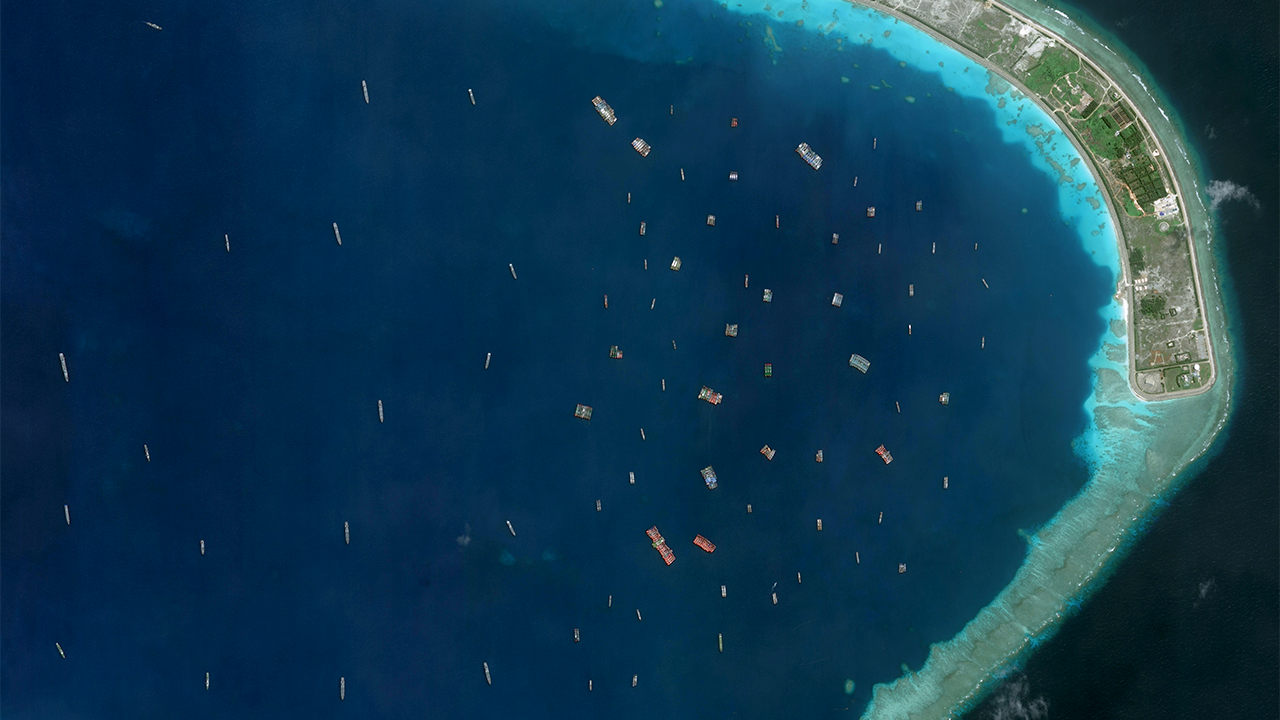
China’s maritime militia maintained a record-high average daily presence of 241 vessels in the South China Sea throughout 2025, according to new analysis of satellite imagery, continuing a trend of elevated activity first observed in 2024. The data, compiled by the Asia Maritime Transparency Initiative (AMTI), reveals a concentration of these vessels around Mischief Reef and Whitsun Reef, areas of ongoing tension with the Philippines.
Tracking the activity of these ships is challenging, as many do not utilize automatic identification systems (AIS). AMTI’s analysis relies on consistent monitoring of commercial satellite imagery across 12 reefs, including the recent addition of Johnson Reef, where a moderate concentration of vessels was observed. The study focuses on vessels between 45 and 65 meters in length, a size common among Chinese militia trawlers and less frequently seen among other regional fishing fleets or coast guard vessels.
The 2025 figures represent a slight increase from the 232 vessels recorded daily in 2024. Activity typically dips from January through mid-February before rising with the spring deployment following Lunar New Year. Two notable surges in vessel presence were observed at most locations in June and late November, mirroring patterns from previous years.
Mischief Reef and Whitsun Reef together account for nearly half of the total observed militia activity. Both features exhibited similar seasonal patterns, with Mischief Reef demonstrating a slightly higher overall presence, including four instances where over 200 vessels were detected. This concentration reinforces the reef’s role as a monitoring point for areas of contention with the Philippines, specifically Sabina Shoal and Second Thomas Shoal.
Other reefs also saw increases in both average and peak militia presence. Johnson Reef, newly included in the dataset, showed seasonal activity during the summer and fall. Iroquois Reef experienced a clear rise in activity throughout the year, while Thitu Reef recorded increases despite a concurrent decrease in the presence of China Coast Guard (CCG) vessels. Gaven Reef reached peak levels comparable to 2024 but maintained a higher average daily presence.
Notably, Fiery Cross Reef experienced a significant decline in militia activity, averaging only 32 vessels per day in 2024 and exhibiting almost no observable presence in 2025. AMTI analysts suggest this may indicate a reallocation of resources rather than an overall reduction in militia deployment, given simultaneous increases at other locations in the eastern Spratly Islands.
The analysis also compared militia activity with that of the CCG. Militia presence remained low at Scarborough Shoal, despite record-high CCG activity there, suggesting the professional militia fleet is deployed to patrol highly contested areas while the larger Spratly Backbone Fishing Fleet remains anchored at Mischief and Whitsun Reefs. Sabina Shoal also saw a modest militia footprint, though deployment timing differed from 2024. Second Thomas Shoal continued to show minimal militia activity, consistent with past observations.
The redistribution of militia activity observed in 2025 was less pronounced than the shift in CCG patrols seen in the previous year. This may reflect a diminishing perceived value of the Spratly Backbone fleet, now widely recognized as not being legitimate fishing vessels, and a prioritization of sustaining persistent CCG and professional militia operations around Scarborough and Sabina Shoals.
Mischief Reef, as of September 28, 2025, remains the primary hub for China’s maritime militia, while Fiery Cross Reef has seen a dramatic reduction in activity.
