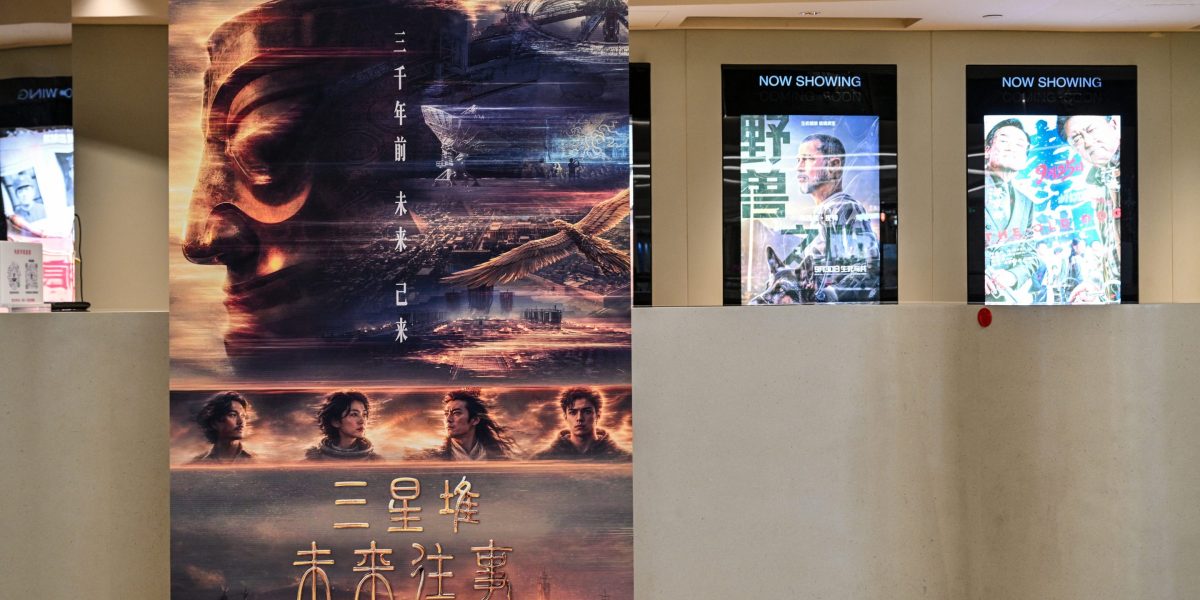
China’s First AI-Generated Feature Film Flops at Box Office
China’s first fully artificial intelligence-generated theatrical feature film, the sci-fi thriller Sanxingdui: Future Past, grossed just $180,000 to $181,000 following its October 23 release, falling far short of its $1.5 million budget and highlighting a sharp divide between consumer acceptance of short-form AI content and full-length cinema.
Sanxingdui: Future Past Earns Less than $20 per Screen
Produced by Bona Film Group, Sanxingdui: Future Past follows an archaeologist attempting to save a future world enslaved by artificial intelligence, according to Chinese state media cited by Fortune. Despite securing a wide theatrical release with over 10,000 screens scheduled on opening day, the film brought in an estimated $180,000 through Monday, according to ticketing platform Maoyan. Cartoon Brew reported a slightly higher figure of $181,000, noting a return of less than $20 per screen across its opening run. The production carried a budget of $1.5 million, according to AFP. Nearly 100 people worked on the film for over two years, the company stated, with both character voices and visuals generated by artificial intelligence.
Jiang Defu, at Bona Film Group, acknowledged the lukewarm reception in an interview with Chinese film outlet Yuli. He defended the project as a necessary industry trial. “We are the first to try it, the first to get a theatrical release permit, and the first to be tested by the audience,” Jiang said, adding that the milestone was difficult to achieve.
Social media responses in domestic markets highlighted viewer friction. One user on the Instagram-like platform Xiaohongshu wrote that China’s first artificial intelligence movie was deeply unsettling, while another praised the technology for enabling low-cost storytelling with creative freedom.

Contrasting Fortunes in Short-Form and Microdramas
The sluggish box office performance stands in stark contrast to the rapid expansion of artificial intelligence in China’s microdrama sector. According to data from Caixin, more than 95% of the 120,000 Chinese microdramas released in the first quarter of 2026 were generated using artificial intelligence, up from near-zero levels a year prior. Production costs for these short digital narratives have fallen to as little as $3,000.
A separate low-budget release demonstrated that audiences respond to human imperfection and sincerity over polished digital synthesis. The Chinese animated film Niu Lai, produced by a mother and son for $200, featured clunky animation and amateur performances that resonated as a meme and a box office phenomenon, grossing nearly $10 million.
Stanley Rosen, a University of Southern California professor specializing in Chinese film and society, noted that public skepticism remains high regarding full-length synthetic cinema. “The public is highly skeptical about AI use in major feature films, despite their general acceptance of short-form films,” Rosen said. He added that future releases of this nature would likely struggle in theaters unless they achieved the production standards of major blockbusters like Avatar or Nezha 2, suggesting that streaming platforms such as Netflix and Amazon Prime Video might prove more viable homes.
Studios Integrate Synthetic Media Despite Labor Tensions
Rosen observed that the commercial underperformance of Sanxingdui: Future Past will prompt industry executives to reevaluate capital allocation for similar projects. “The financial loss of Sanxingdui: Future Past will compel others contemplating using AI for feature films to tread more carefully,” he said.
