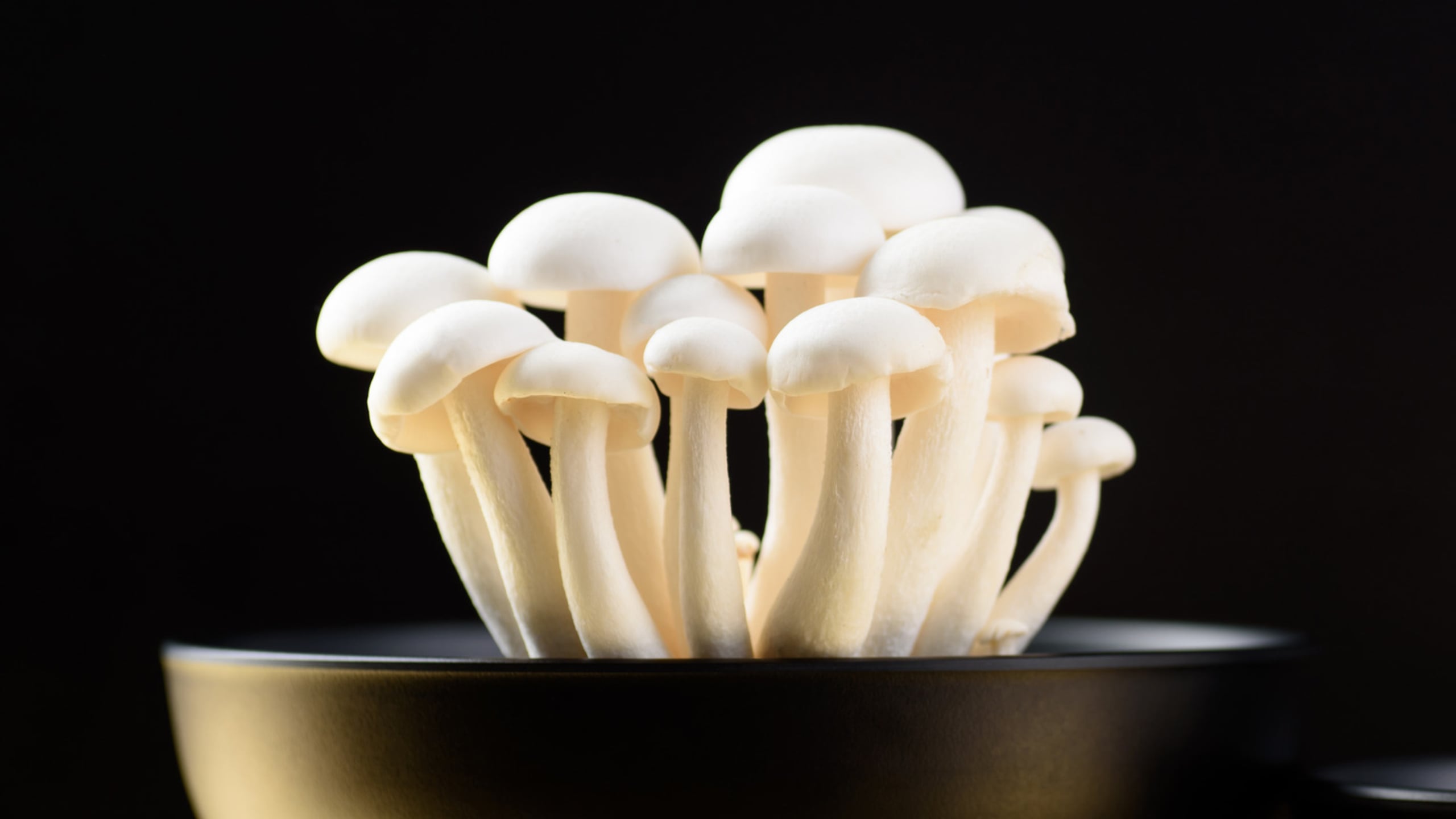
China study: Beech mushroom proteins increase perceived saltiness by up to 71%
Researchers in China have isolated three tiny protein fragments from edible beech mushrooms that increase the perceived saltiness of salt solutions by up to 71 percent in laboratory tests, according to a study published in npj Science of Food and reported by ScienceAlert.
The Tech TL;DR:
- Scientists identified three specific umami peptide sequences—ASHGEGF, LDDGF, and GDDWT—from the edible beech mushroom (Hypsizygus marmoreus) that amplify salty taste perception.
- In controlled sip-and-spit taste tests conducted by 14 trained assessors, adding the peptide ASHGEGF at 1 milligram per milliliter increased perceived saltiness by 70.59 percent while extending the duration of the sensation from 75 seconds to 105 seconds.
- Computational screening and molecular docking simulations suggest these peptides form stable associations with TMC4, a membrane protein associated with salt taste, via hydrogen bonding.
Isolating Mushroom Peptides Through Computational Screening
Led by teams at Gannan Medical University and Shanxi Medical University, the study began by breaking down edible beech mushroom (Hypsizygus marmoreus) proteins using enzymes. According to findings covered by ScienceAlert, the researchers separated out fractions containing smaller molecules, finding that trypsin produced the strongest saltiness under the conditions tested.
That process yielded 6,092 peptide sequences. To manage the immense computational load, the research team deployed machine learning and computational screening tools to evaluate solubility, stability, toxicity, and allergenicity. This pipeline narrowed the candidates down to five prospective sequences for synthesis and laboratory analysis.

Trained Assessors and Electronic Tongue Validate Salty Peptides
To test the synthesized molecules, the study enlisted 14 trained assessors aged 19 to 34. Using a sip-and-spit method alongside reference solutions, the panel evaluated a control solution containing 3 milligrams of sodium chloride per milliliter against solutions containing 1 milligram per milliliter of each candidate peptide.
Three sequences stood out:
- ASHGEGF: Increased saltiness rating by 70.59 percent.
- LDDGF: Increased saltiness rating by 49.02 percent.
- GDDWT: Increased saltiness rating by 47.06 percent.
An electronic tongue—an analytical instrument measuring chemical samples via electrical signals—corroborated the human panel data, registering higher saltiness readings for all three peptide-amended mixtures compared to the plain salt control. Fitted taste-intensity curves demonstrated that the flavor persistence extended significantly, lasting 105 seconds with ASHGEGF compared to 75 seconds for plain salt.
Simulations Show How Peptides Associate with Salt Taste Proteins
ScienceAlert emphasizes that these findings require careful interpretation. A 71 percent increase in perceived saltiness does not equate to a direct 71 percent reduction in actual sodium content, as the test solutions maintained identical salt concentrations and the researchers have not yet established exact reduction thresholds.
To investigate the underlying biochemistry, the team modeled TMC4, a membrane protein linked to human salt taste pathways. Molecular dynamics simulations indicated that the peptides form stable hydrogen-bond associations with the protein structure. However, the study authors note that actual human cell experiments and receptor studies remain necessary to confirm the exact in vivo mechanism.