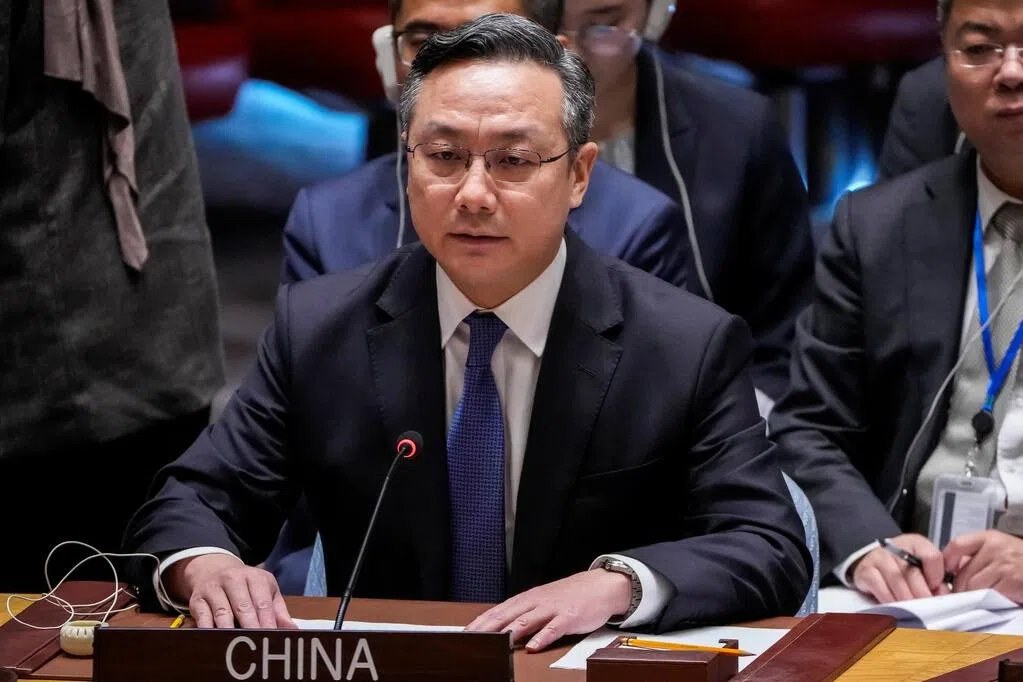
China Rebuffs Western Nations Over Human Rights Criticisms at UN General Assembly
Twenty-eight countries stood together in a United Nations committee on October 1, to oppose unilateral coercive measures. Four days later on October 5, Chinese Deputy Permanent Representative to the United Nations Sun Lei stated at the UN General Assembly Third Committee general debate that the UK, Australia, Japan, Ireland, Czech Republic, and Lithuania possess no qualification to criticize China’s human rights record.
The 28-Nation Collective Rejection at the United Nations
The joint statement delivered by Chinese Permanent Representative to the UN Fu Cong on October 1 represented a coordinated pushback by 28 nations against unilateral economic measures and sanctions. Cuba, Iran, North Korea, Venezuela, and Russia joined developing nations to challenge what the bloc termed illegal political coercion. These measures bypass multilateral rules, weaponize domestic laws to levy extra tariffs, and disrupt global supply chains under the guise of national security and human rights.
Sun Lei Rejects Western Criticisms
Responding to criticisms from six Western nations during the Third Committee debate on October 5, Sun Lei dismissed the allegations as politically motivated interference. Sun stated that the representatives of Britain, Australia, Japan, Ireland, Czech Republic, and Lithuania hold a “human rights tutor” mindset while ignoring severe domestic issues.

Sun contrasted these conditions with China’s domestic metrics, noting the eradication of absolute poverty for nearly 100 million people and the formation of a middle-income group exceeding 400 million citizens. Sun added that public support and satisfaction ratings for the Chinese government have exceeded 90% over multiple years.
Contrasting Domestic Metrics and Historical Grievances
The diplomatic exchange highlighted sharp disagreements over social and economic conditions between Beijing and the participating Western delegations. Sun cited UK poverty data indicating more than 14 million people live below the poverty line, with half in extreme poverty, alongside polling showing 75% of British citizens worry about democratic prospects.
For Japan, Sun pointed to a 15% relative household poverty rate and unaddressed minority rights concerning the Ainu and Ryukyu populations. Sun also criticized historical militarism and contemporary security policy shifts. Turning to Australia and the Czech Republic, Sun noted declining public trust in government institutions and falling youth confidence in democratic structures.
Regional Stability and Sovereignty Frameworks
Addressing territorial governance, Sun maintained that the Hong Kong National Security Law restored order and enhanced the special administrative region’s democratic system with broad local support. On ethnic policies, Sun stated that the implementation of the Ethnic Unity Progress Promotion Law ensures the political, economic, cultural, and religious rights of all ethnic groups in Xinjiang and Tibet.
The debate highlighted deep divisions over multilateralism, unilateral sanctions, and sovereignty standards as developing nations challenge traditional Western-led human rights assessments at the United Nations.