
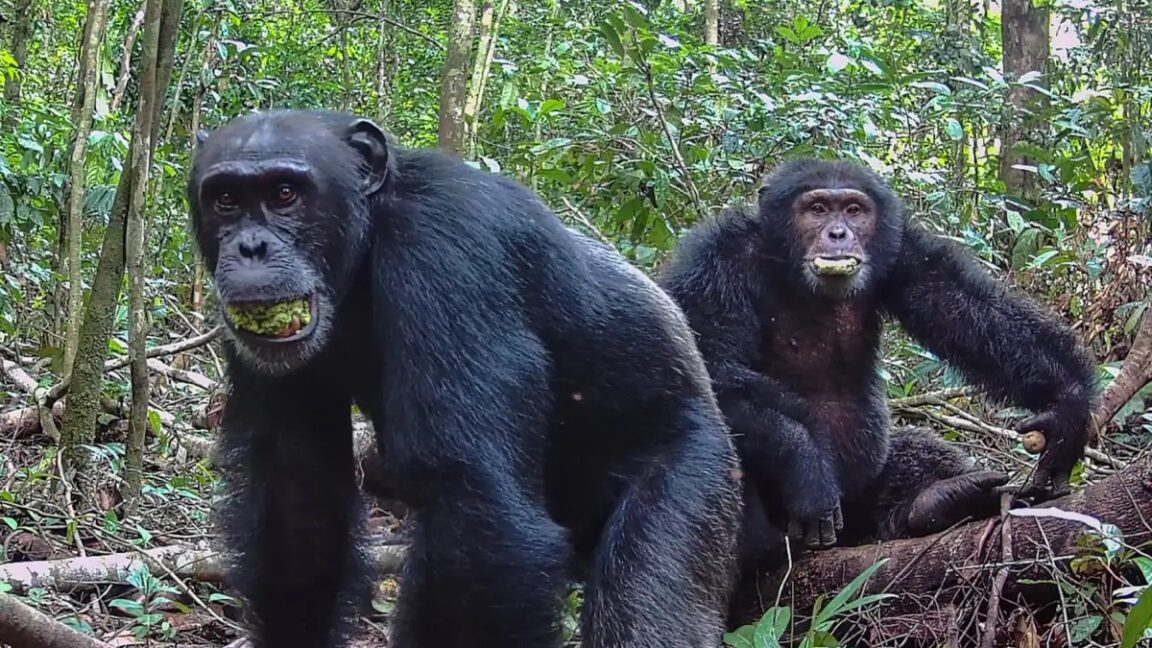
Wild Chimpanzees Routinely Consume Alcohol Equivalent to Nearly Two Drinks Daily, Study Finds
Ngogo, Uganda & Tai, Ivory Coast – A new study reveals wild chimpanzees at two African sites are regularly ingesting ethanol through fermented fruit, consuming an amount equivalent to nearly two alcoholic drinks per day.Researchers from the Ngogo Chimpanzee Project (Uganda) and a site at Tai (Ivory Coast) analyzed fallen fruit pulp and found ethanol concentrations of 0.32 percent in Ugandan fruit and 0.31 percent in Ivorian fruit.
Given chimpanzees consume between 5 to 10 percent of their body weight - approximately 45 kilograms – in fruit daily, this translates to a significant ethanol intake. “Our findings imply that our ancestors were similarly chronically exposed to dietary alcohol,” explained co-author aleksey Maro, a graduate student at UC Berkeley, in an interview with New Scientist.
The study, published in Science Advances (DOI: 10.1126/sciadv.adw1665), suggests this consistent exposure may explain the human attraction to alcohol. The “drunken monkey hypothesis” posits that early humans evolved an association between alcohol and the reward of finding sugary fruits.
“Maybe for chimpanzees, this is a great way to create social bonds, to hang out together on the forest floor, eating those fallen fruits,” noted University of St. Andrews primatologist Catherine Hobaiter, who was not involved in the research, in a statement to BBC News.
Researchers acknowledge apes ingest ethanol accidentally, unlike deliberate human consumption. Further research is underway,with Maro currently collecting urine samples from chimpanzees in Ngogo to identify alcohol metabolites and refine estimates of ethanol intake. A 2022 study on spider monkeys similarly found alcohol metabolites in urine samples. This builds on a 2016 report showing captive aye-ayes and slow lorises prefer nectar with higher alcohol content, as noted by study author Robert Dudley.
