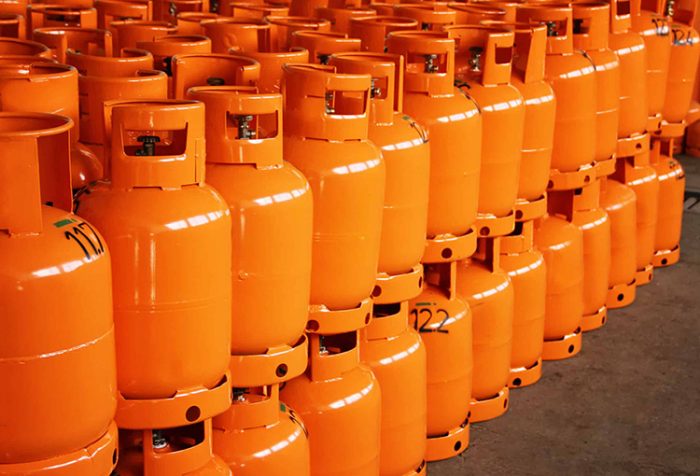
Chilean Gas Subsidy 2026: How to Apply, Eligibility, and Government Updates
The Chilean government has expanded access to the LPG subsidy for low-income households through direct bank transfers, aiming to alleviate energy poverty amid persistent inflation and regional disparities in fuel access, particularly affecting vulnerable communities in remote and extreme climate zones where delivery logistics and bureaucratic hurdles have historically delayed aid.
On April 23, 2026, Chile’s Ministry of Energy confirmed that the 2026 LPG subsidy—formally known as the Bono Gas Licuado—will be distributed via direct deposit into Banco Estado accounts, eliminating the need for paper vouchers or in-person pickup at municipal offices. This shift, announced by Minister of Energy Juan Carlos Jobet during a press briefing in Santiago, targets approximately 3.1 million households registered in the Registro Social de Hogares (RSH) at or below the 80th percentile, a threshold designed to capture those most affected by rising energy costs.
The policy change responds to long-standing criticisms of the voucher system, which beneficiaries in regions like Aysén, Magallanes, and the Atacama Desert have described as unreliable due to geographic isolation, limited banking infrastructure, and delays in voucher validation. In 2023, the Office of the Comptroller General found that 22% of rural subsidy claims were rejected due to documentation errors, disproportionately impacting Indigenous communities and elderly residents.
“We’ve heard from mayors in Coyhaique and Punta Arenas that families were choosing between heating their homes and buying food,” said Carmen Ruiz, Director of the Asociación de Municipalidades de Chile, in an interview with Radio Universidad de Chile on April 20. “Direct transfer isn’t just more efficient—it’s a matter of dignity. When the state fails to deliver basic support on time, it erodes trust in public institutions.”
The subsidy amount remains fixed at 6,000 Chilean pesos per month (approximately $6.20 USD), a figure unchanged since 2022 despite a 41% increase in national LPG prices over the same period, according to data from the Chilean Ministry of Energy. Critics argue the static value renders the benefit increasingly inadequate, particularly in southern regions where winter temperatures regularly drop below -10°C and LPG consumption doubles.
“A fixed subsidy in an inflationary environment is a regressive policy,” noted Dr. Elena Vargas, economist at the Centro de Estudios Públicos (CEP), during a panel at the Universidad de Chile’s School of Government on April 18. “If we don’t index this benefit to inflation or regional cost-of-living indices, we’re not fighting poverty—we’re managing its symptoms.”
Implementation relies on cross-agency coordination between the Ministry of Energy, Banco Estado, and the Servicio de Impuestos Internos (SII) to verify eligibility using RSH data. Households must have an active Banco Estado account or open one within 30 days of notification—a requirement that has raised concerns among advocacy groups about digital exclusion.
In response, the Fundación Chile 21 has launched a pilot program in the Araucanía region, partnering with local community technology hubs to assist elderly and rural residents in opening bank accounts and navigating the online application portal. “We’re not just helping people access a benefit,” explained Mateo Salinas, the foundation’s digital inclusion coordinator. “We’re rebuilding the bridge between state services and the people who need them most.”
Meanwhile, municipal governments in Antofagasta and Coquimbo have reported increased demand for social work case managers to help residents verify their RSH status and troubleshoot payment delays. These professionals, often employed by municipal social development offices, are becoming critical intermediaries in the subsidy’s delivery chain—especially as complaints about misdirected funds or frozen accounts rise.
The shift to direct deposit also carries broader implications for financial inclusion. By requiring beneficiaries to hold a Banco Estado account, the policy inadvertently promotes banking access among unbanked populations—estimated at 18% of Chile’s rural households by the Central Bank of Chile in 2025. Economists suggest this could stimulate local economies as recipients gain access to credit, savings tools, and digital payment platforms.
However, risks remain. In early April, the Defensoría de la Niñez reported cases where subsidy deposits were intercepted due to identity theft linked to outdated RSH records—a vulnerability exacerbated by the lack of two-factor authentication in the current verification system. The Ministry has pledged to implement biometric verification by July 2026, though no timeline has been confirmed for rural rollout.
As Chile approaches its winter energy peak, the LPG subsidy stands at a crossroads: a well-intentioned mechanism strained by economic pressure, geographic inequality, and bureaucratic inertia. Its evolution—from paper vouchers to digital transfers—reflects a broader struggle to modernize social protection in a way that is both efficient and equitable.
The true measure of this policy won’t be in the number of transfers processed, but in whether a grandmother in Puerto Natales can wake up in July knowing her heater will turn on—not since she filled out a form correctly, but because the state finally learned how to deliver help without making her beg for it.
For communities navigating these changes, trusted social welfare attorneys and advocacy networks remain essential allies in ensuring that policy intent translates into lived reality.